
Otros Entregables Manifests Another Way for Architecture
Karina Caballero and Camila Ulloa Vásquez reflect on a generational shift of boundaries and norms in architectural practice today.
August 4, 2025
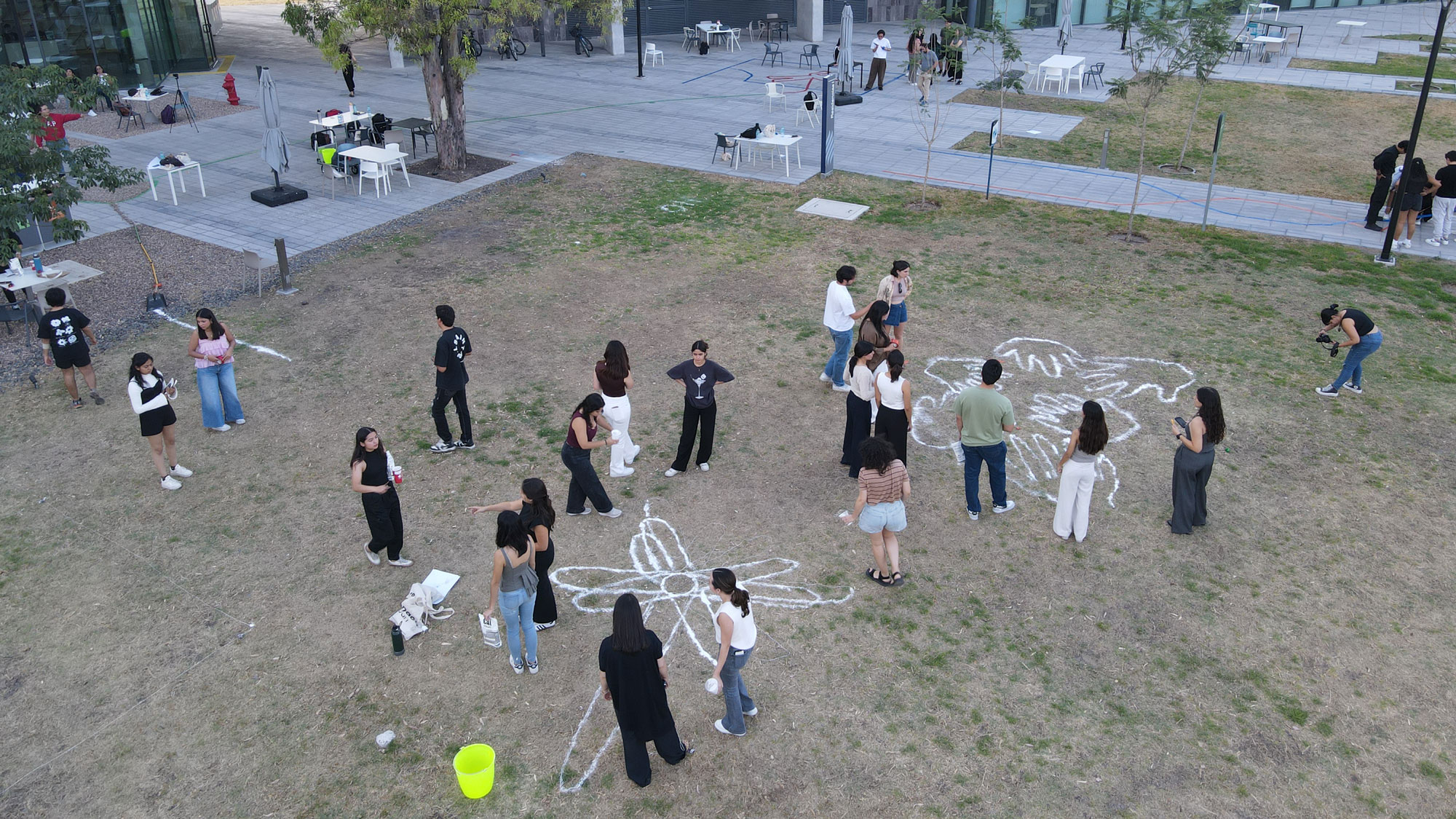
Otros Entregables | Tecnológico de Monterrey Campus Querétaro installation and event, Querétaro, Mexico, 2025. Image credit: Antonio Juárez
Karina Caballero and Camila Ulloa Vásquez of Otros Entregables are 2025 League Prize winners.
Karina Caballero and Camila Ulloa Vásquez founded Mexico City-based platform Otros Entregables (Other Deliverables) in 2023. Through their podcast, live events, and curatorial initiatives, Otros Entregables aims to expand the boundaries of traditional architectural deliverables and discourse. For their 2025 League Prize installation, the duo convened a series of gatherings at architecture schools across Mexico and recorded students’ answers to prompts which questioned how architecture is taught, practiced, and communicated.
Caballero and Ulloa Vásquez reflected on these responses with the League’s digital producer Sydney Combs in a wide-ranging discussion that explores intergenerational divides, conversation as a form of architecture, and what they hope is next for the field.
*
Sydney Combs: Your installation centered around a question, “If you could redesign what it means to be an architect today, what would you change?” I’m curious how your question relates to this year’s theme: Plot.
Karina Caballero: Camila and I are very concerned with narratives around architecture, because we felt in our daily work at offices that the narrative was dominated by the same people. We realized that we needed another narrative, where people who are producing other ways of making architecture can find a place. So we started to talk with friends and colleagues, and we realized that the narrative needed a plot.
We like to listen to people and the best way to make people say things is to ask questions. We don’t like to assume, and we are very critical about that because we are concerned that the way we produce architecture does not take into account people’s real needs. So we wanted to ask first and, with that gesture of asking, try to change a little bit of the plot.
Camila Ulloa Vásquez: There is a narrative [of architecture] that is very fixed, very rigid, very focused on, as Karina said, the same people. We wanted to [talk to] students and young architects specifically, because we thought they were the ones who are just starting to see that narrative—they’re not inhabiting it yet—and could be a bit more open to questioning the discipline.
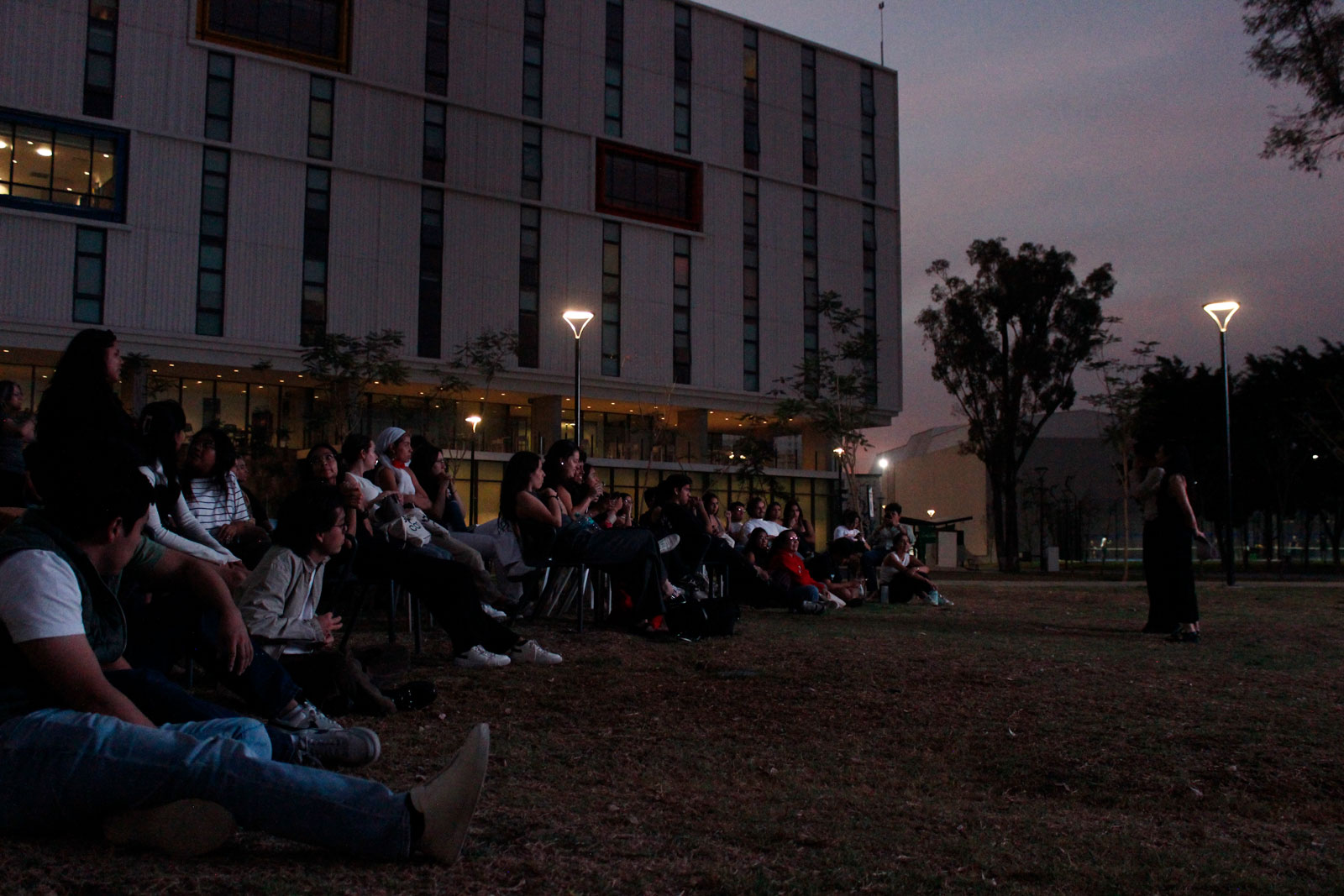
Otros Entregables | Tecnológico de Monterrey Campus Querétaro gathering, Querétaro, Mexico, 2025. Image credit: Lily Ceballos
Combs: I’d love to hear more about your installation. It wasn’t a built object, it was a “collective event.” What were you hoping to accomplish by bringing people together in that format?
Ulloa Vásquez: We like to say that conversation is the main axis [of our practice]. All of the activities that we do center conversation, because we believe that when two or more people come together, they are already resisting a bit of how we are living. So from the beginning we knew that we had to do something related to conversation and temporality. [An event] is not something that lasts forever; it’s spontaneous. And everyone who comes together at the event can go to other places and continue the conversation with more people and in other spaces. This format brought a whole [set of] different perspectives from different students from different universities.
Caballero: [The format is] part of our critique of architecture. We are used to seeing architecture through a final project or built thing. We are critical of that. We believe that not everything needs to be built. What happens when you build and then what you build becomes garbage? We are more concerned with relationships with architecture. You can see that in our installation: for us, it was about the process, the conversations, not a final object. It’s part of our practice to decide what to build and what not to build.
Combs: Do you consider your podcast and these conversations a form of architecture?
Caballero: It’s an interesting question. I think older generations think, “If you are an architect, you need to build something.” And that’s okay. There are beautiful projects that need to be built, especially in Latin America. We still need a lot of infrastructure and housing.
But the main idea of our podcast is to show people who have studied architecture but have different ways of practicing. If you build, you want to make the world better, but if you have a different [form of] practice you also want to make the world better, just in different ways. I think both parts complement each other. The buildings need criticism and criticism needs buildings to say something. As Cami said, conversation is the starting point of our practice, and we hope that people will listen [to the podcast] and change the way they are practicing—especially when deciding what to build and what not to build and in what form and for whom.
Ulloa Vásquez: In the past few years, there have been a lot of questions about what architecture is and what it is not. I think a lot of architects would say that it’s very difficult to define architecture: it is science and it is also art. Every architect has their own definition of architecture. But through conversations on the podcast, participants have explored the idea of architecture as an expanded field. That’s why we like to say that we are still architects—because we are trying to say that we need to expand the field and that we are not stepping away from architecture by doing other things. We can bring those other things to the discipline.
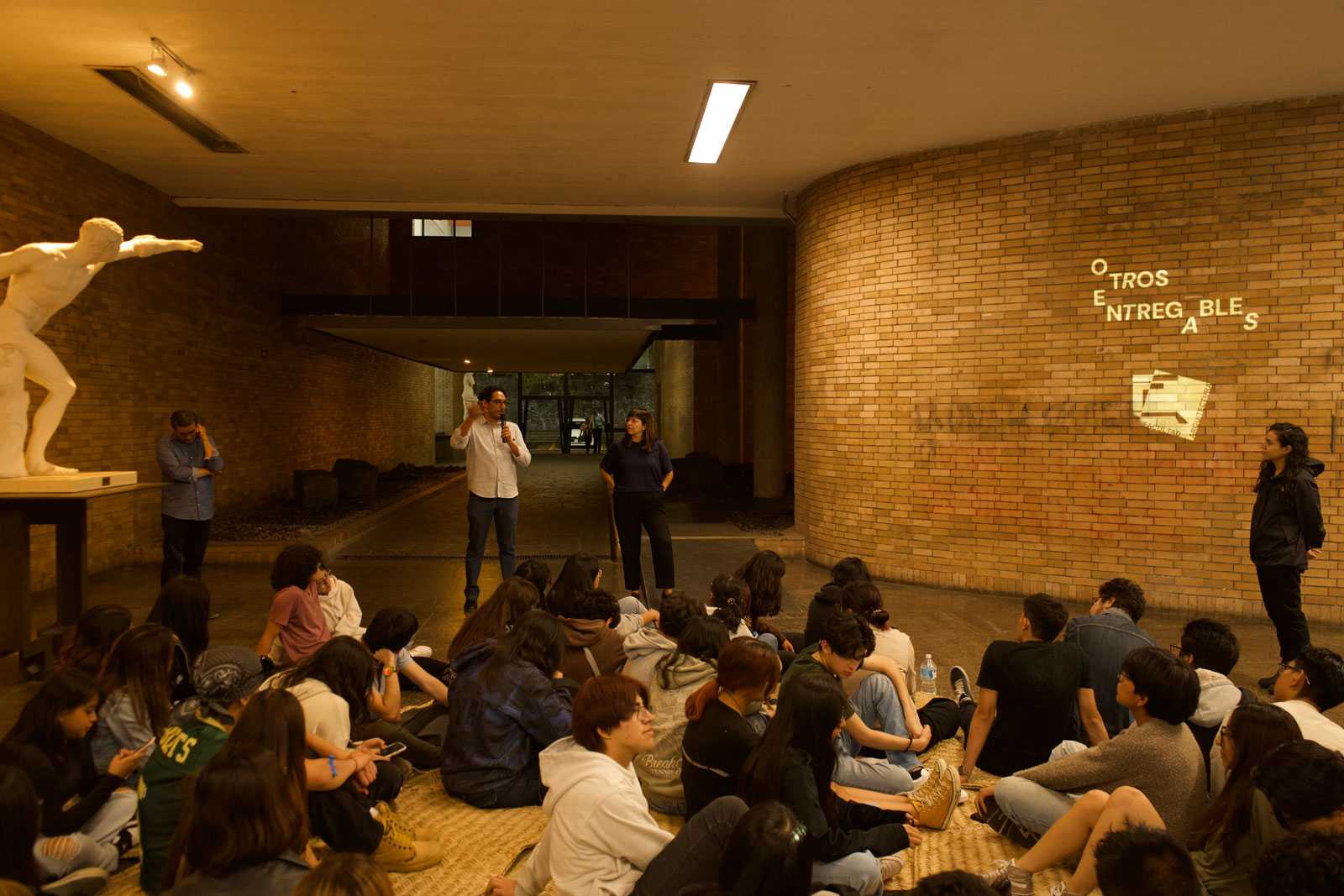
Otros Entregables | Students at the Universidad Nacional Autónoma de México UNAM gather for a conversation, Mexico City, Mexico, 2025. Image credit: Fernando Álvarez
Combs: I’m curious if any of the students’ answers particularly surprised you.
Ulloa Vásquez: I think we saw topics around ego in architecture and lack of social commitment coming, but the answers that surprised me were the ones related to sustainability and materials. That was the second most repeated topic.
Caballero: Another curious thing for me was reading about exploitation during architecture school and in studios. [Students] are more concerned now about their wellness and relationships with others instead of trying to be the best architect ever. There were a lot of reflections about putting ourselves first instead of architecture. I think that’s a shift in [the] architectural plot, because other generations said, “No, for me, my passion is first. I need to accomplish this or that, and I forget about my family or maybe even my body.” So that was a shift that I was very relieved to hear and something that needed to be said.
Combs: Speaking of intergenerational issues, I know you convened a conversation with past winners of the League Prize and Emerging Voices awards to reflect on the responses you gathered from the students. What themes emerged from those conversations?
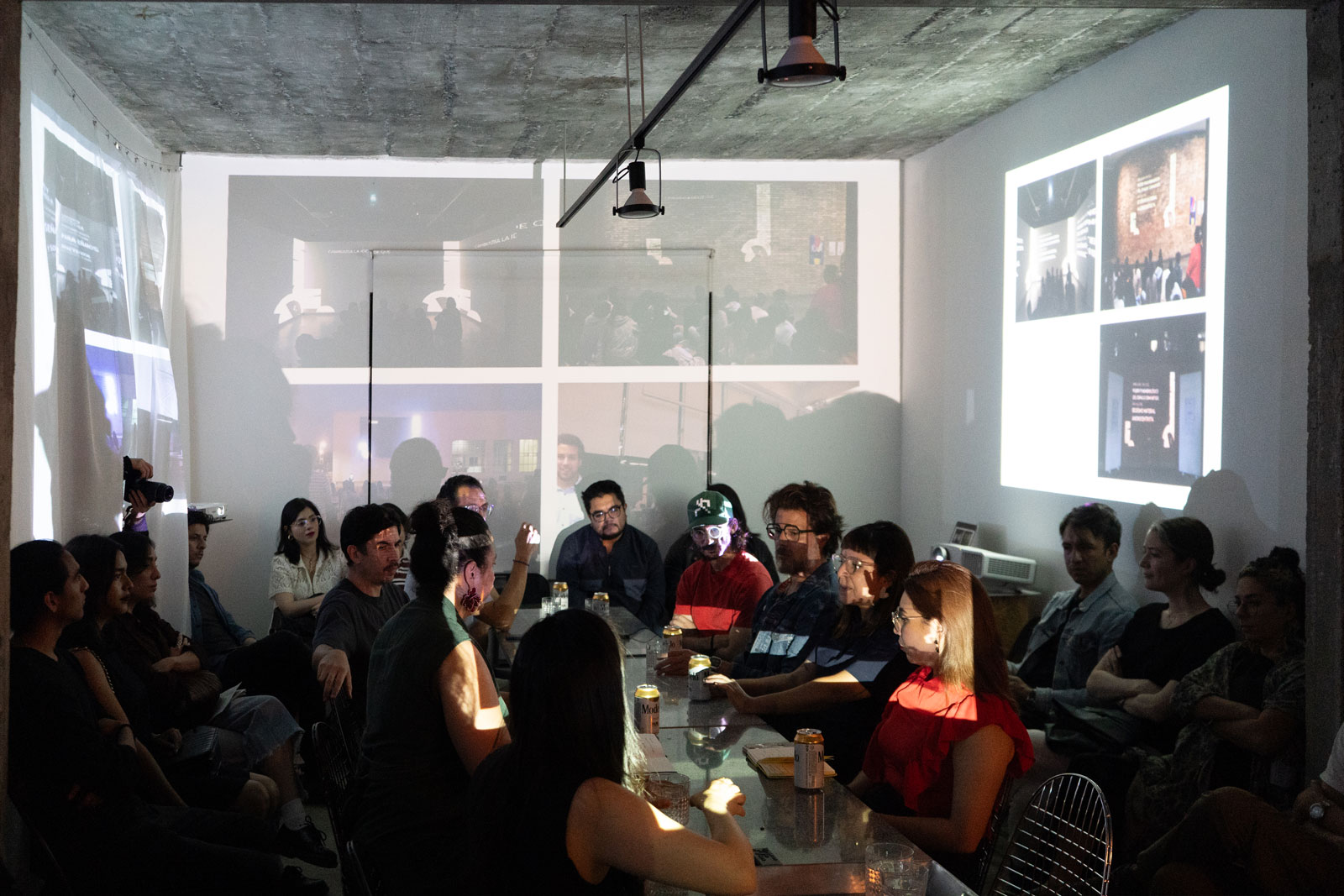
Otros Entregables | Encounter with Emerging Voices and League Prize alumni at Proyector cultural center, Mexico City, Mexico, 2025. Image credit: Fernando Álvarez
Ulloa Vásquez: One was about [the difference between] how we were taught architecture and how new generations are learning architecture. There was this discussion about strictness. The new generations are more open about talking about the strictness that comes from studying and practicing architecture. Other generations see that severity as something that positions us as architects as very responsible, very serious, and the confidence that others have in us is related to that rigor of our own process. But the new generation sees that strictness as something that is affecting our mental health, our lives, and connections with other people.
The other thing was how, when [previous generations] were studying or after they graduated, they didn’t think there was a possibility of doing something other than designing and building. Now there are more possibilities because we’re talking about other ways of practicing architecture. Not just Karina and me, but “we,” this new generation.
Caballero: I think that older generations are struggling with the fact that maybe not all architects have the desire to build the biggest house, or whatever. We are more concerned with other things. So they say, okay, but we don’t know how it will look in the future. And the younger generation doesn’t either. What will happen if most of the students from architectural school don’t build? Let’s see what that looks like. A big question was, how is architecture changing? Even the name: will it still be called architecture, or it will be another thing, like a “spatial practice?”
Combs: Considering the future of the field, I was wondering how the institutions you partnered with have engaged with their students’ responses. What will become of this project?
Caballero: Most of the institutions are listening to these answers, and they are planning to make some changes in their curriculum, especially for example, UNAM [Universidad Nacional Autónoma de México], which is a public school in Mexico. They were rethinking their curriculum, so this event was a way to listen to what students were thinking. Maybe the events helped [the school directors] to think about how we learn, how they teach, and if there are other ways of learning how to make architecture. It was a moment to be critical in the schools.
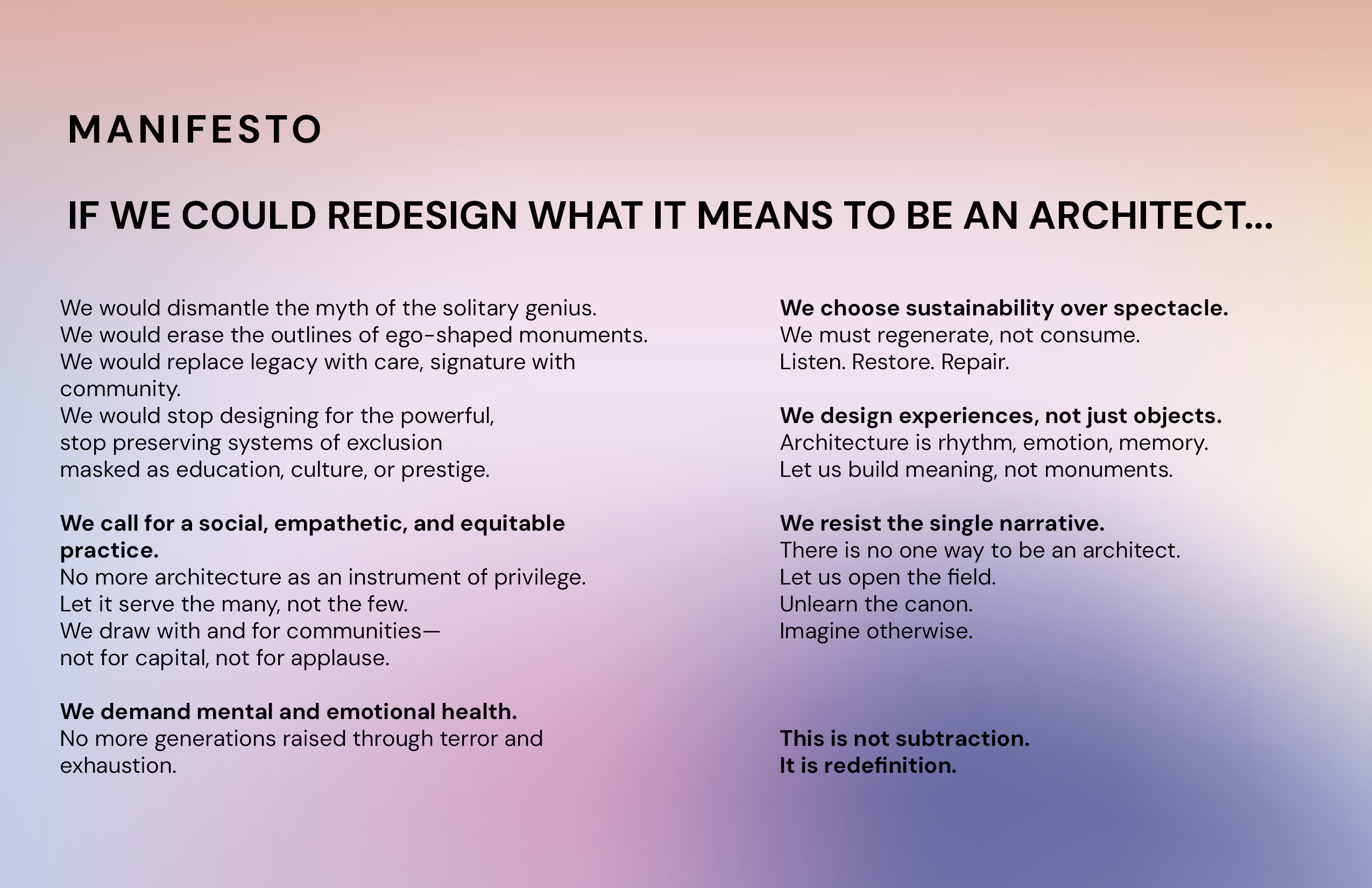
A manifesto built from collective responses to the question: “What would you change about being an architect?” Image credit: Otros Entregables
Combs: You created a manifesto at the end of the project. Why was that important to you and will it live on beyond this project?
Caballero: For us, the way to conclude this project was to manifest. We like the format of a manifesto because it is a way to state something. We tried to summarize all of the ideas and make those ideas strong. [The manifesto] is a wake up call to say we need to see architecture differently—to practice differently. I think that for us, it is also a way to guide our practice: to take some of the points into consideration, talk about them on our podcast, and do something with what [the students] are saying.
Ulloa Vásquez: The manifesto is a closure of one process and the starting point of future activities.
Combs: What was the feedback from the students about this project?
Ulloa Vásquez: At the final encounter, we had a few students participate as audience members. They reflected that they weren’t sure of the future, or of what they’re going to do after they finish studying. So even though we were discussing other ways [of practicing architecture], they still had this anxiety about what comes next. But also, there were some student reflections that [said] it is important to have a pause in thinking about what’s coming next, because when we are studying, we don’t have that moment to think and then continue. Architecture is very fast; we need to do things every week, to deliver something every week. They appreciated the pause to think about the future and think about the discipline.
Caballero: Something beautiful about the students who we had the opportunity to talk to was that they are very conscious of the ways we relate to our friends, family, and bodies. That was the point: to be you first, and then [ask] what you can do for others through architecture. We felt very happy with the events, because [the gatherings] were a way to express things that in architecture school, if you talk about, others might think that you are weak. And it’s like, no, this is another way.
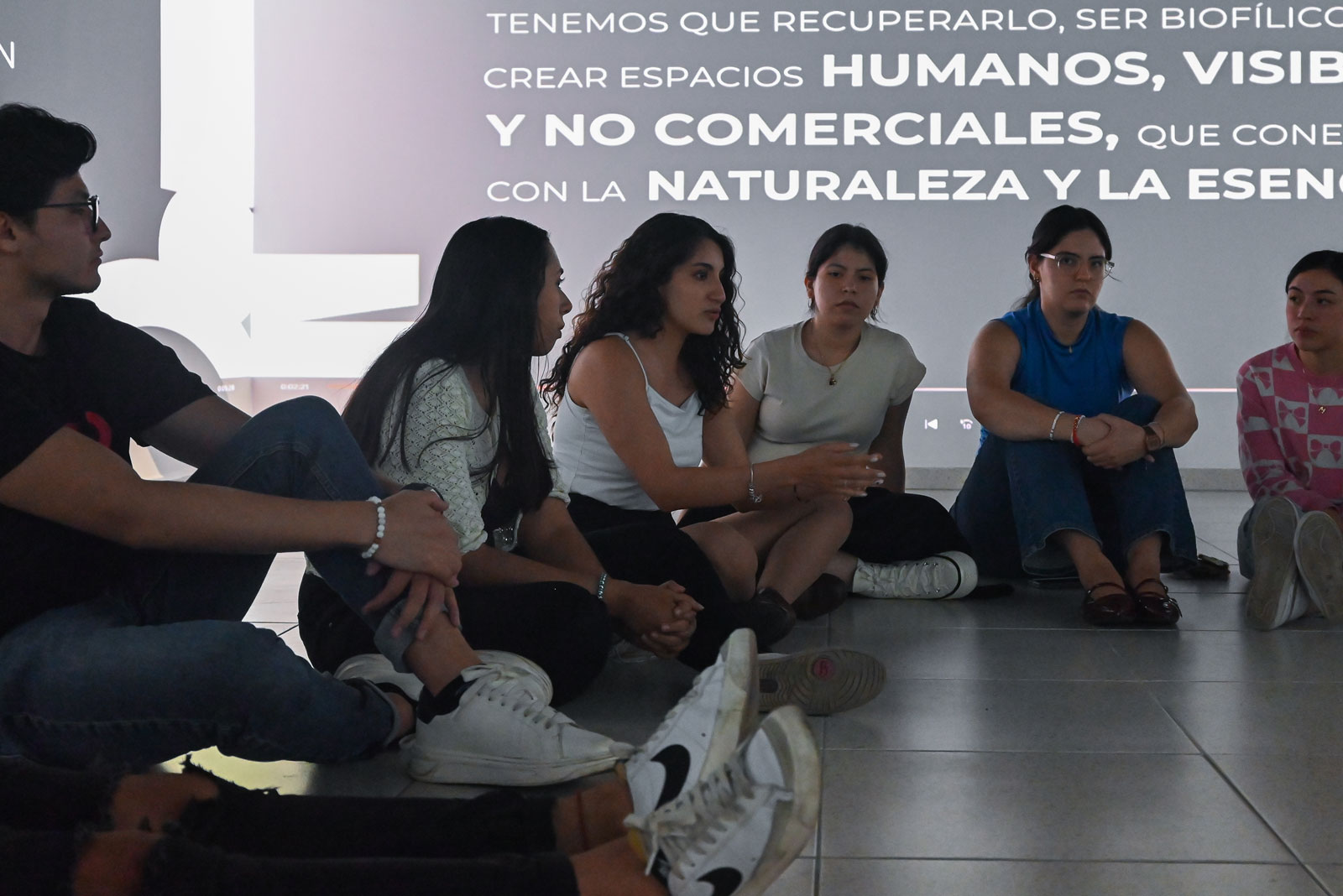
Otros Entregables | Universidad La Salle Mexico installation and student gathering, Mexico City, Mexico, 2025. Image credit: Elías Ramses Salomon
Interview has been edited and condensed.