The Architectural League History Project
We are working to document and analyze the League’s nearly-150 years of history, and we need your help to do it.
The Project
In order to preserve, contextualize, and interrogate its past (for a fuller history, see our history page here), The Architectural League has embarked on a multi-year, three-part history project that will result in the publication of a critical scholarly history of the institution on the occasion of the League’s 150th anniversary in 2031.
At a time when formal architectural education in the United States was still rare, the 1881 establishment of The Architectural League of New York—a voluntary association for “the purposes… of architectural study”—was an acknowledgement on the part of young architects that if they were to grow creatively and intellectually, they would need to build the environment in which to do so themselves.
Over the course of more than 140 years, that spirit of mutual education has remained constant. Indeed, it is what drives the League today in its mission to support critically transformative work in the allied fields that shape the built environment, stimulating the thinking, debate, and action necessary to confront today’s converging crises of racism, inequity, and climate change in service of a more livable and just world. The architects, artists, engineers, planners, landscape architects, designers, and others who currently define the League’s programs are as motivated by a desire to improve themselves and the practice of architecture as the 26 young architects who decided to organize themselves on that winter day in 1881.
Three-Phase Plan for the History Project
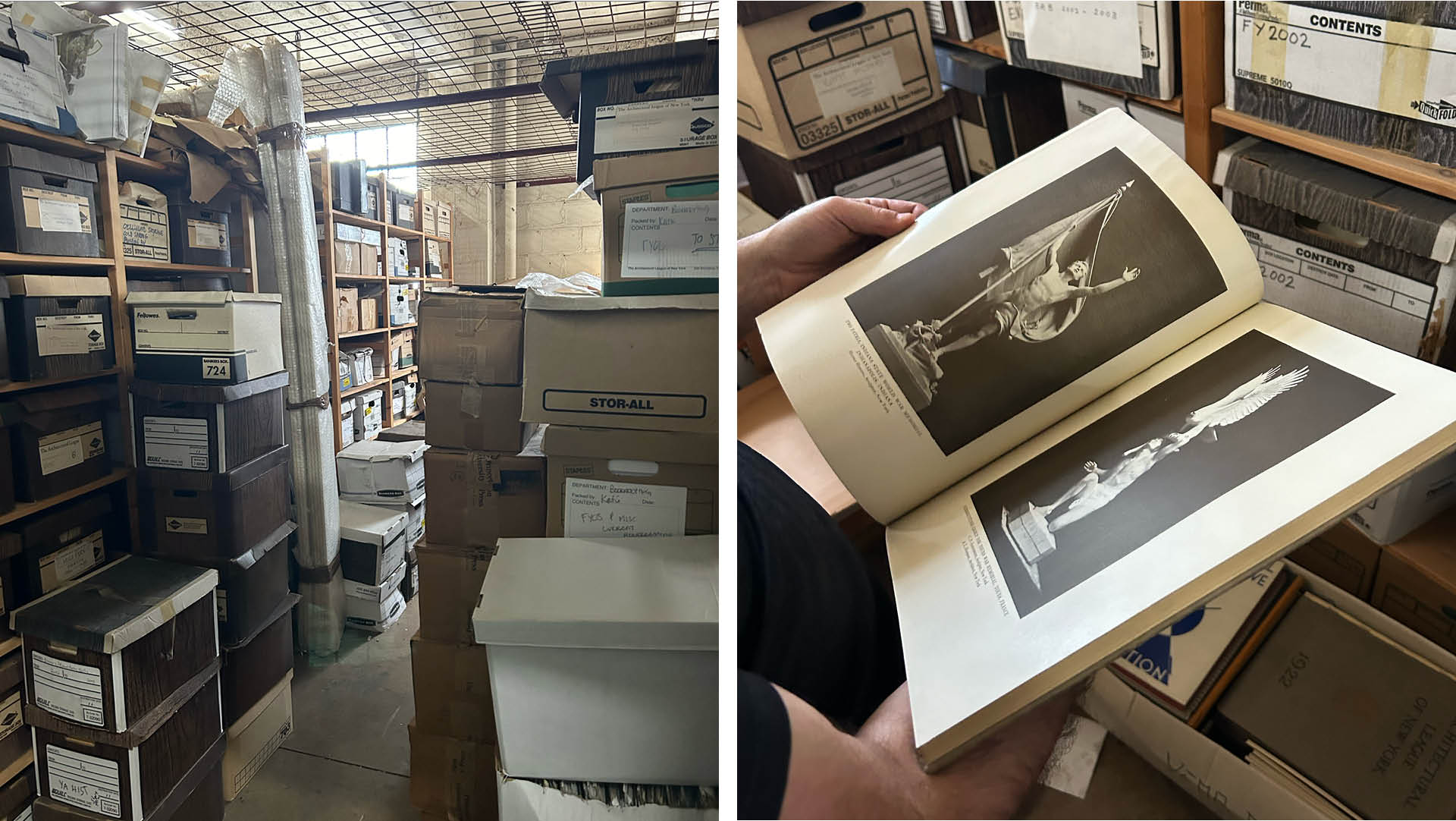
The first phase of the project is dedicated to the organization and permanent housing of the League’s post-1974 archive. (Much of the pre-1974 archive is held at the Archives of American Art.) Total holdings consist of roughly 250 boxes of physical documents and several thousand digital files. The League also plans to digitize our large collection of aging audio and video recordings of programs dating back to 1974.
We are simultaneously in the process of collecting and creating a repository of oral histories of individuals who have significantly contributed to the League’s work. Our goal is to create an archive of professionally recorded and edited video interviews, to be housed within the League’s archival collection. Initial interviewees include Emilio Ambasz, Jonathan Barnett, Barbaralee Diamonstein-Spielvogel, Barbara Jakobson, John Lobell, Deborah Nevins, Suzanne Stephens, Robert A.M. Stern, and Susana Torre. The project will conclude with a critical history published on the occasion of the League’s 150th anniversary, in 2031.
History Committee
The project is overseen by a committee of distinguished members of the New York architecture, design, and historic preservation communities: Teri Harris, Rosalie Genevro, Leslie Gill, Frances Halsband, Paul Lewis, Anne Rieselbach, Karen Stein, Suzanne Stephens, Robert A.M. Stern, and Gregory Wessner; and is managed by the League’s Director of Research and Operations, William Kelly, PhD.
Need
We expect expenses for this multi-part, multimedia project to total approximately $300,000.
To Give
To make a gift use our contribution form and select “History Project” in the “Area of Support” field. You may choose to make a one-time or recurring contribution to sustain our efforts to preserve the League’s rich legacy. Contributions will be processed by The Architectural League of New York, and are tax deductible to the full extent of the law (Federal Tax ID: 13-1671027).
If you prefer to donate by check or other means and for additional information about supporting this special project, please contact:
Cameron King
Director of Development and Communications
The Architectural League of New York
king@archleague.org
William Kelly
Director of Research and Operations
The Architectural League of New York
kelly@archleague.org
From the Archive: The Chair Fair
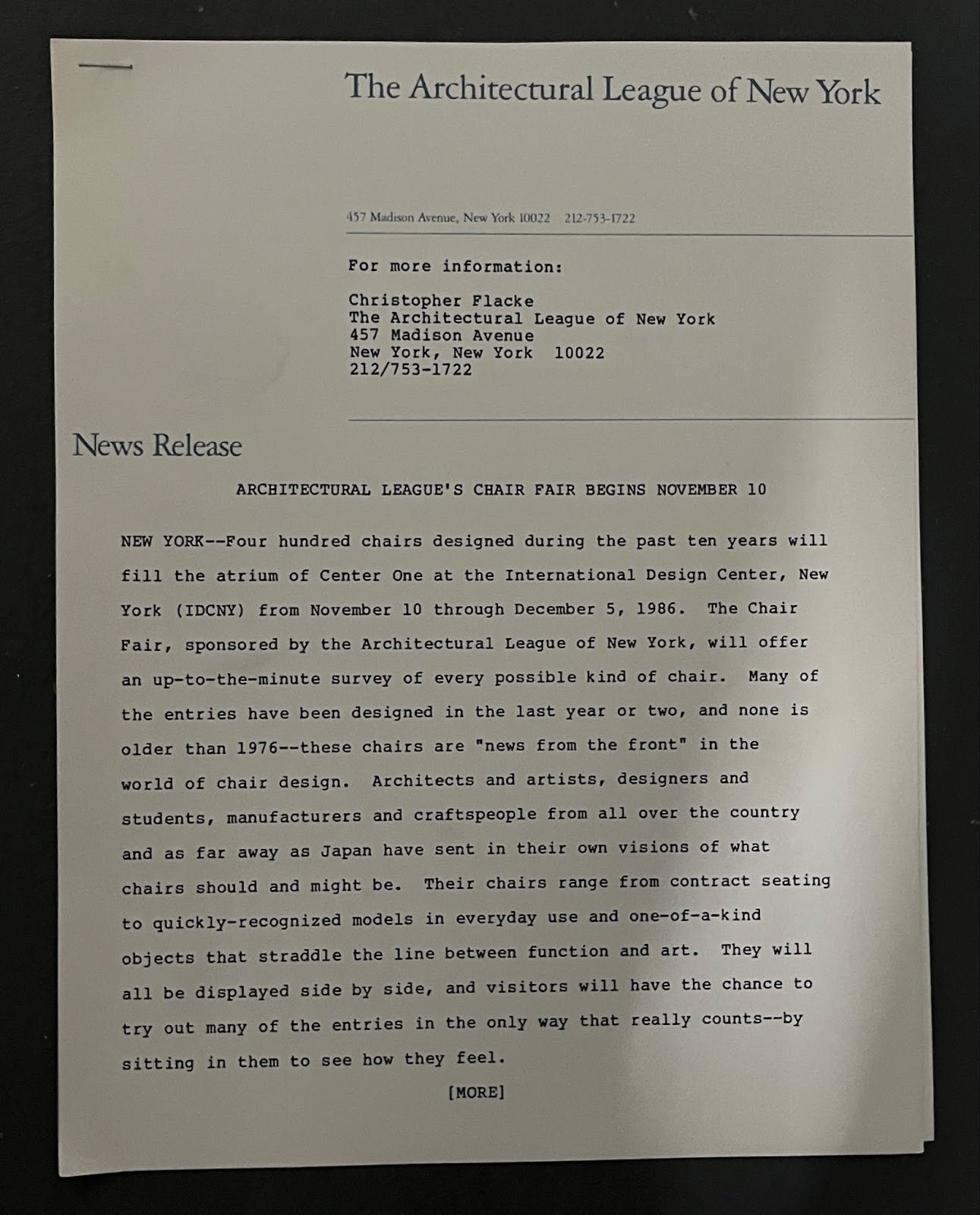
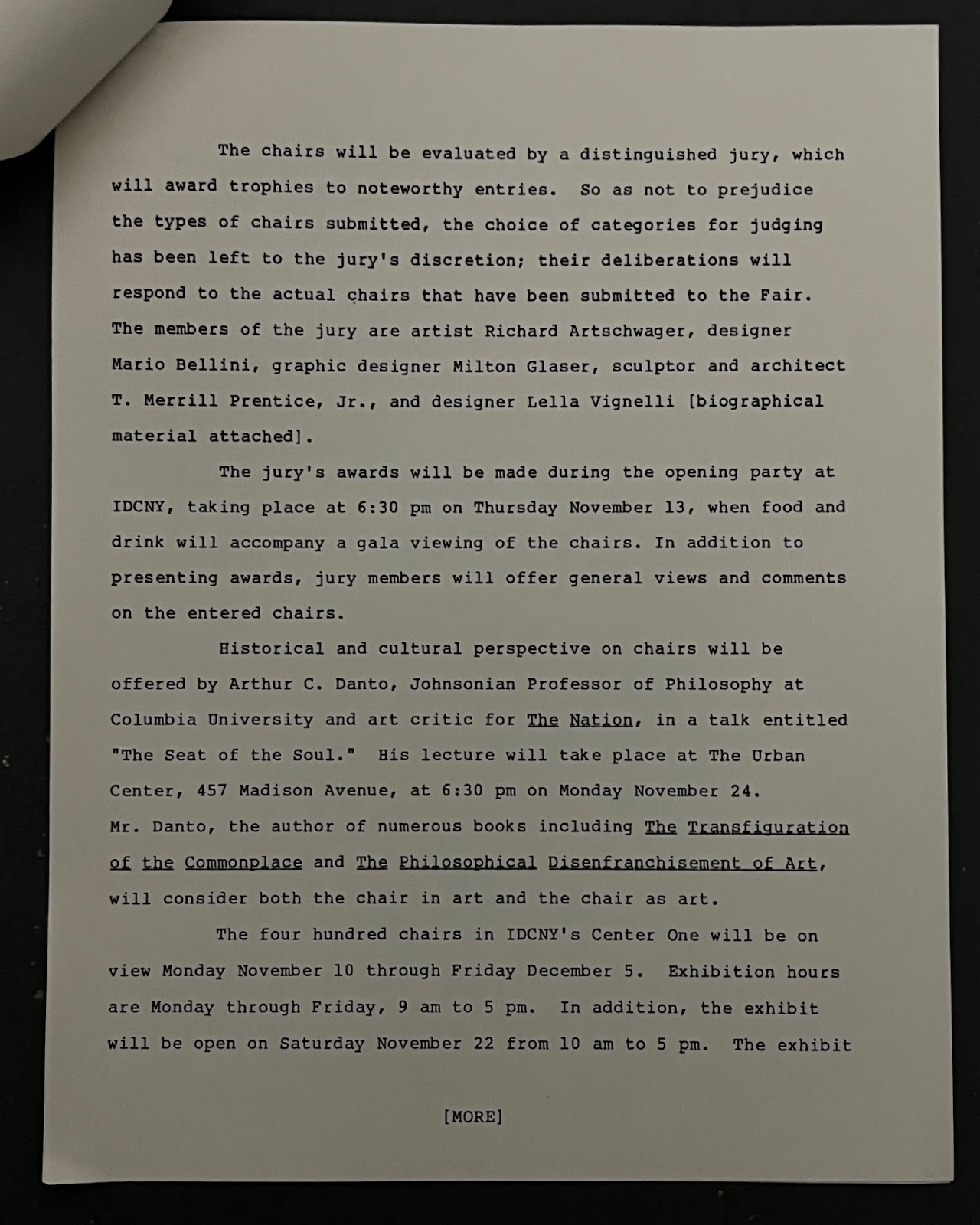
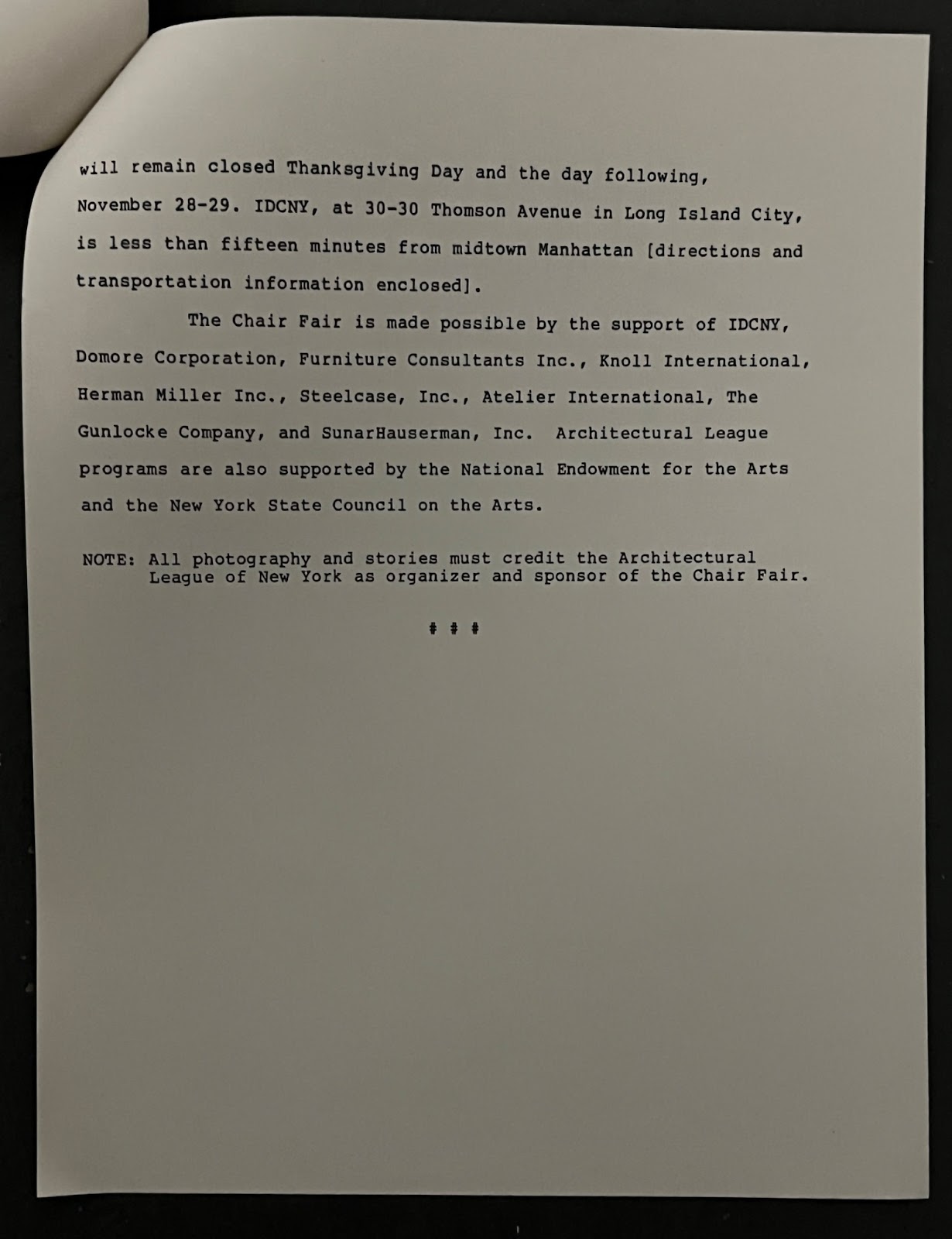
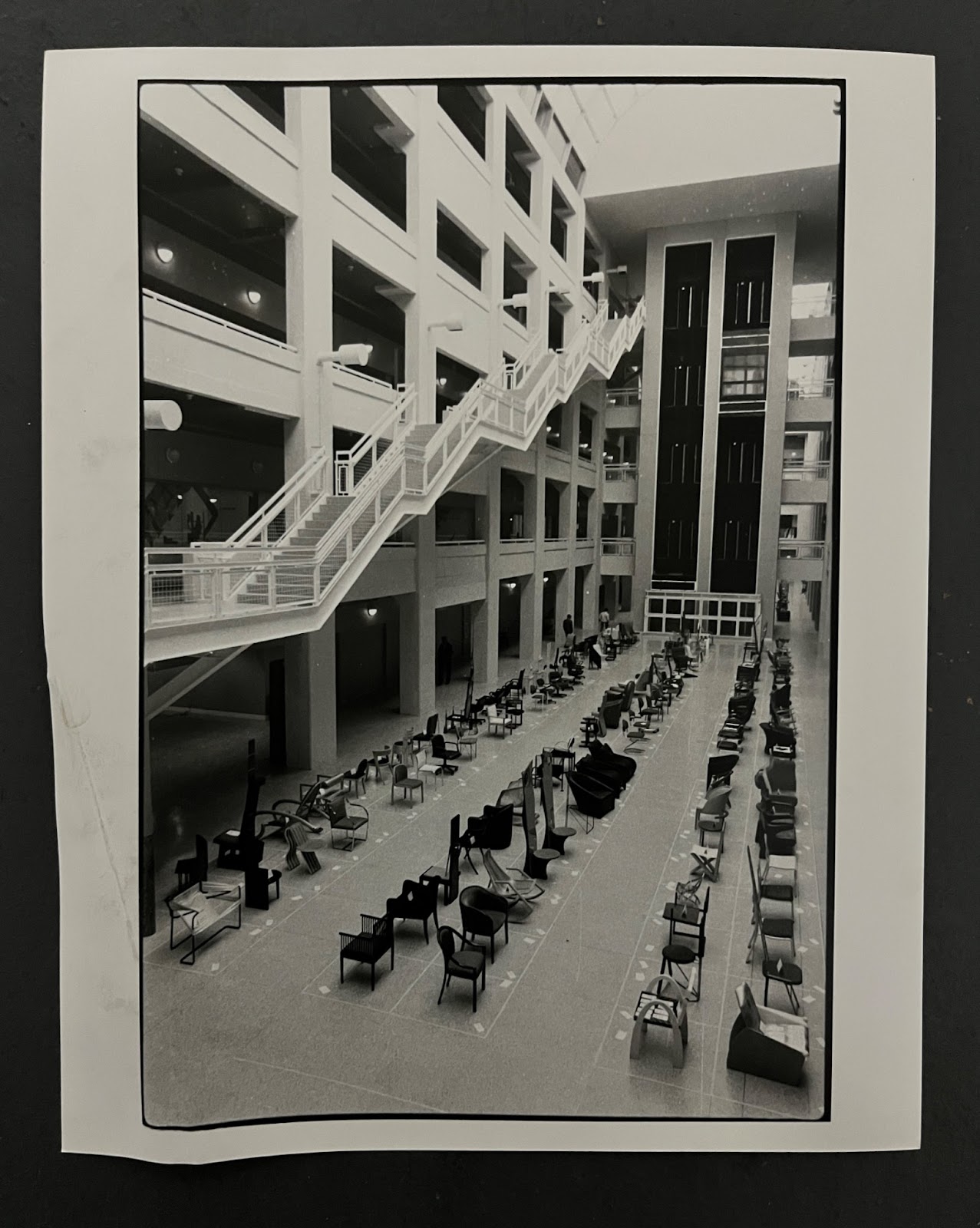
On the evening of November 13, 1986, in the recently renovated atrium of the International Design Center of New York, The Architectural League, led by its president Frances Halsband, its executive director Rosalie Genevro, and project director Christopher Flacke, held a competitive exhibition called The Chair Fair. Lining the main space of the atrium were 400 chairs, most of which were designed in the preceding few years and none of which predated 1976. The aim of the curation was to celebrate and survey the “world of chair design” and to select and formally recognize the five chairs that best embodied this moment. 1News release, pg 1.
The exhibition sought to probe the boundaries between functionality and artistic merit, featuring a layout that encouraged visitors to take a seat and experience the artwork for themselves. The exhibition also featured a lecture by Arthur C. Danto, who was the Johnsonian Professor of Philosophy at Columbia University and art critic for The Nation at the time. The lecture titled “The Seat of the Soul” was held on November 24, 1986, and offered historical and cultural perspectives on the topic of the chair.
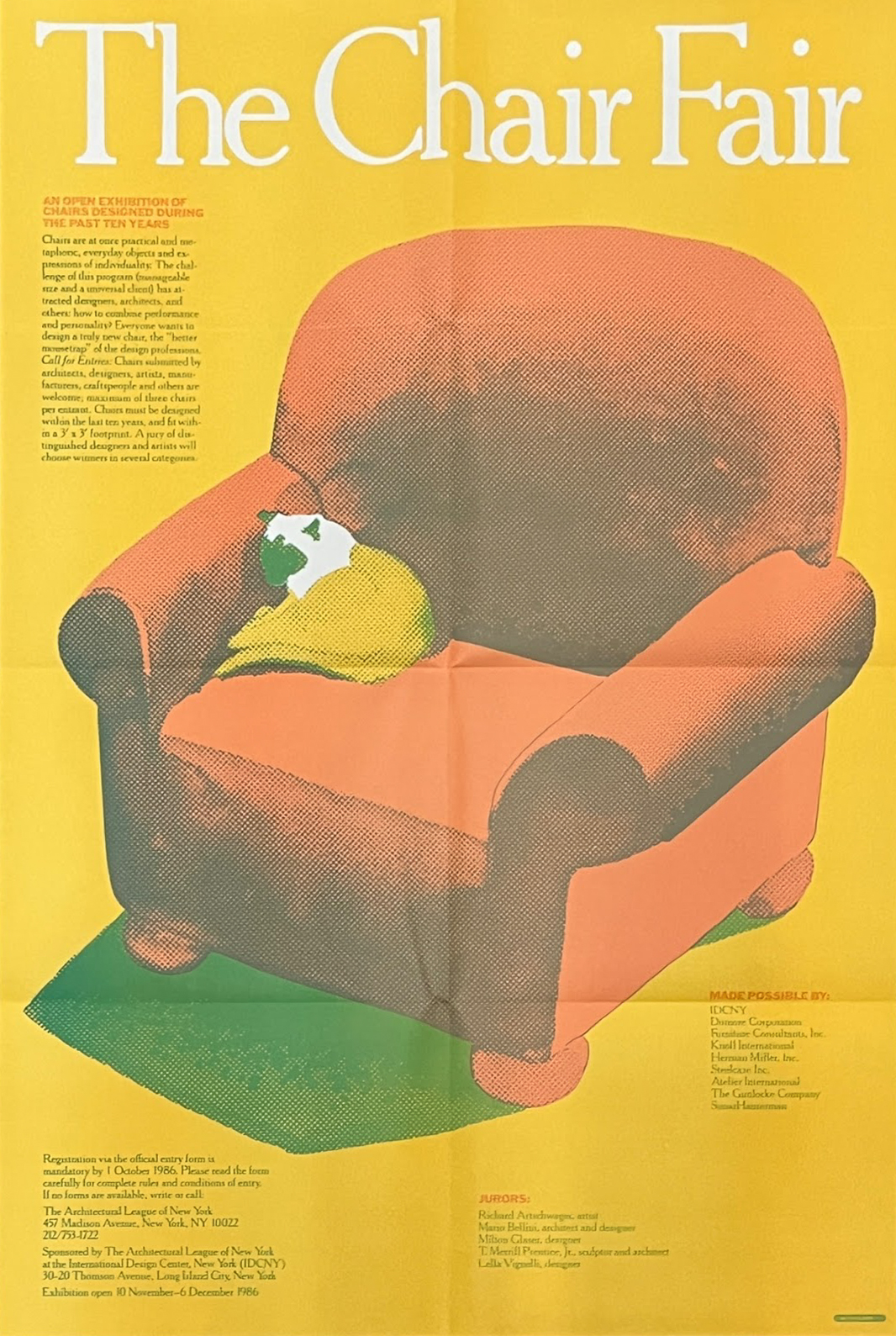
Ultimately, the final decision regarding which five chairs stood out from the rest was placed in the hands of an accomplished panel of judges, made up of designer Mario Bellini, designer Milton Glaser, sculptor and architect T. Merill Prentice, Jr., designer Lella Vignelli, and artist Richard Artschwager. Halsband recalls sitting with the jury while they tried to define “what is a chair?,” with Artschwager finally settling the discussion by saying: “If it looks like a chair, it might be one. If you can sit in it, it is one.”
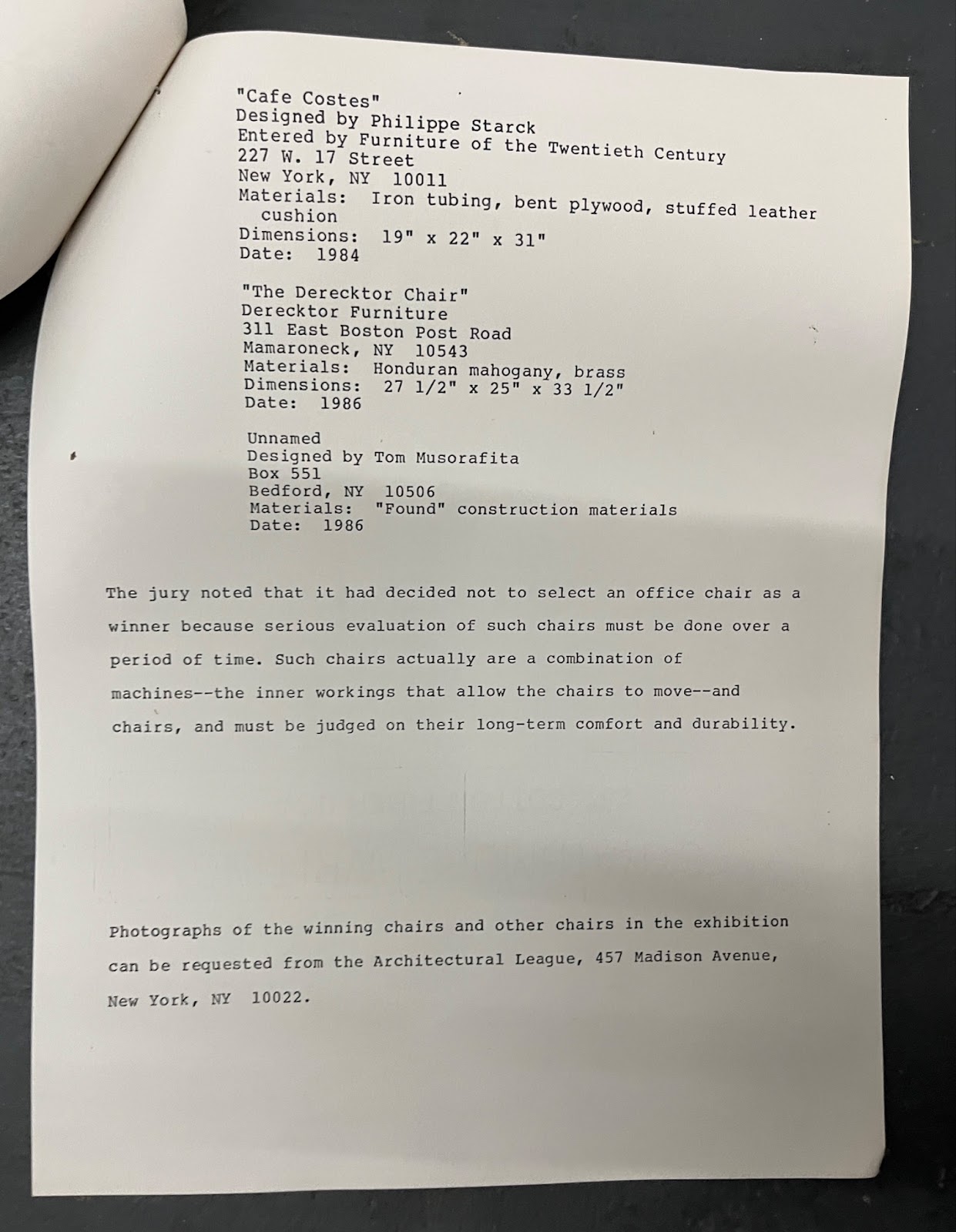
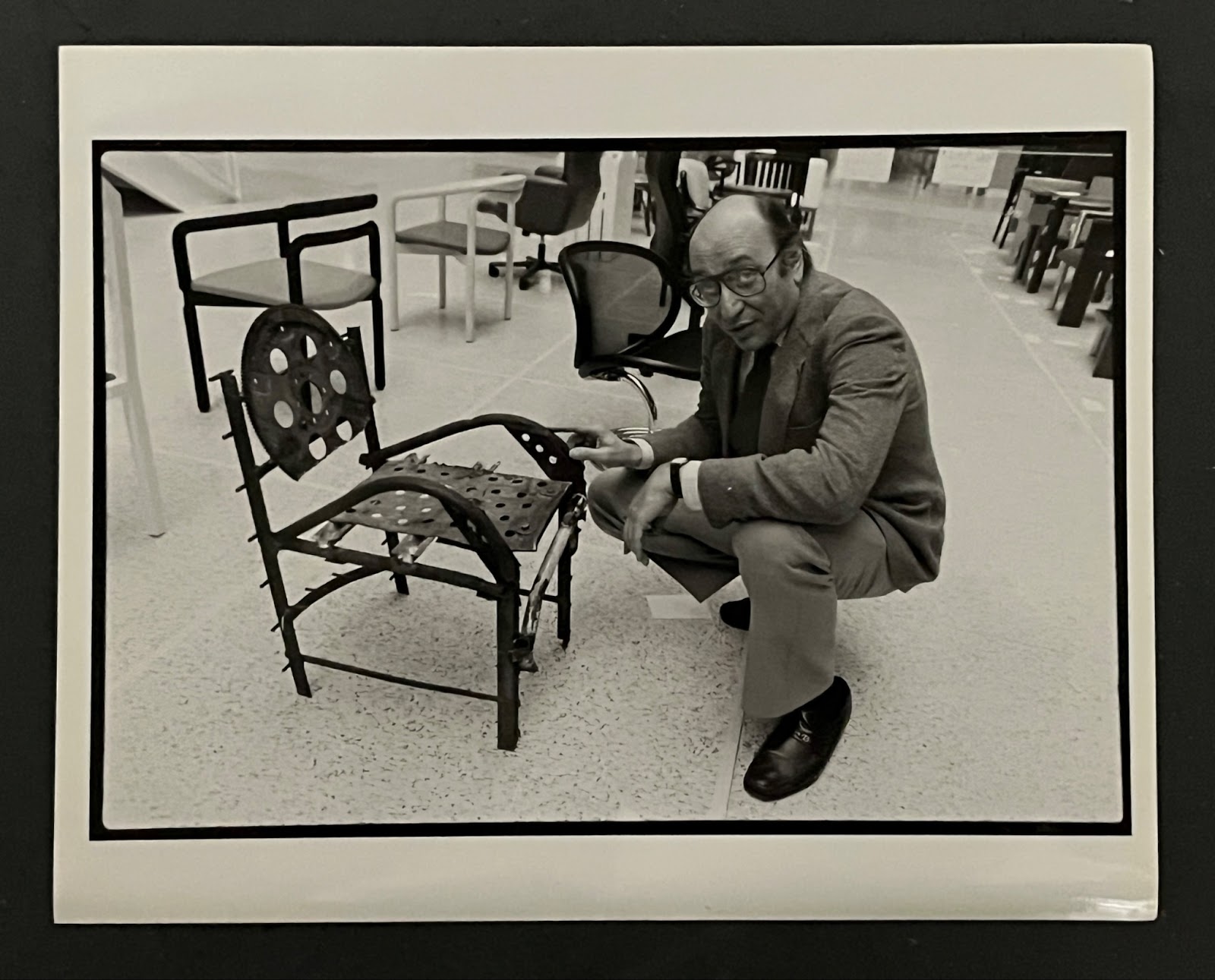
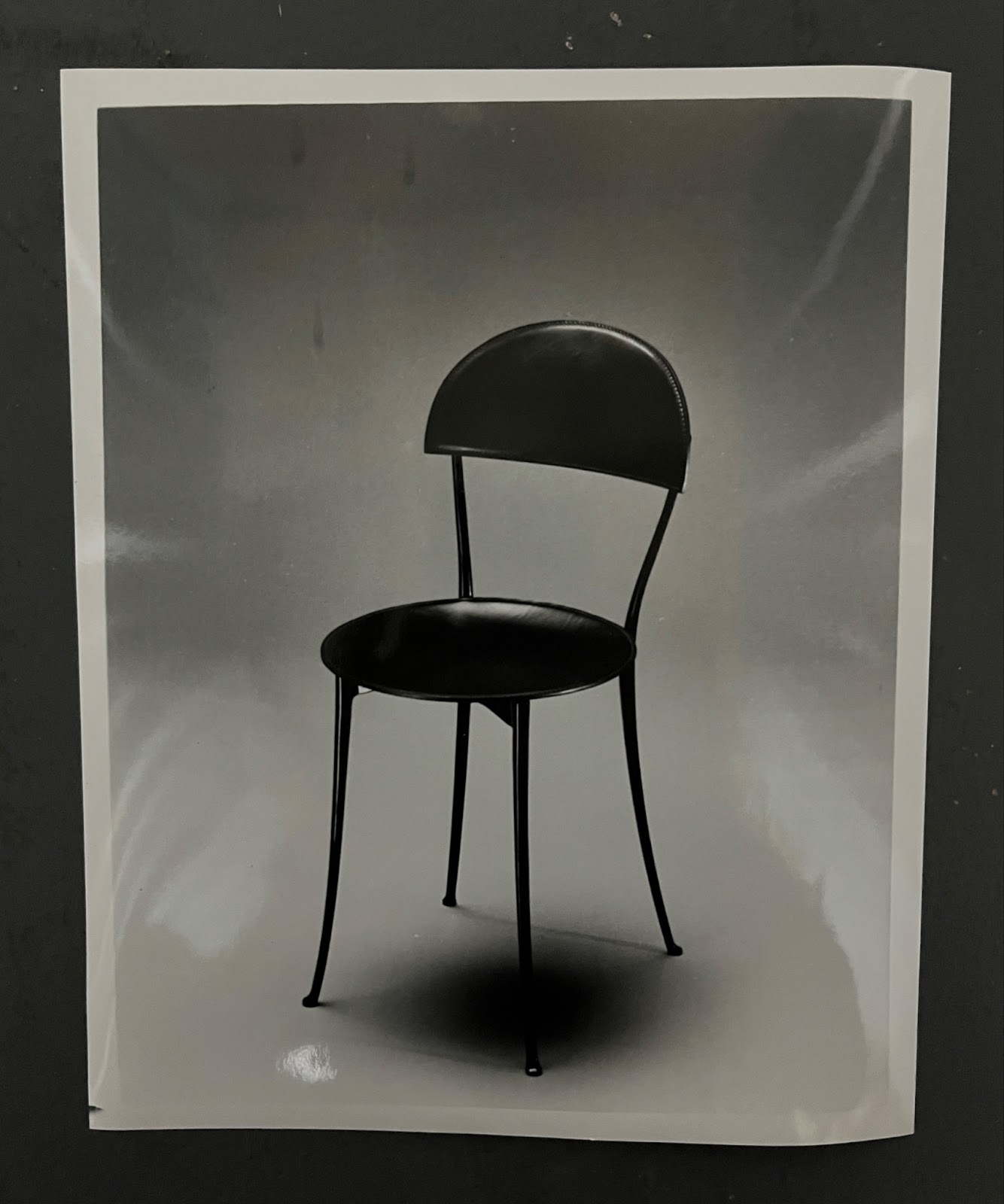
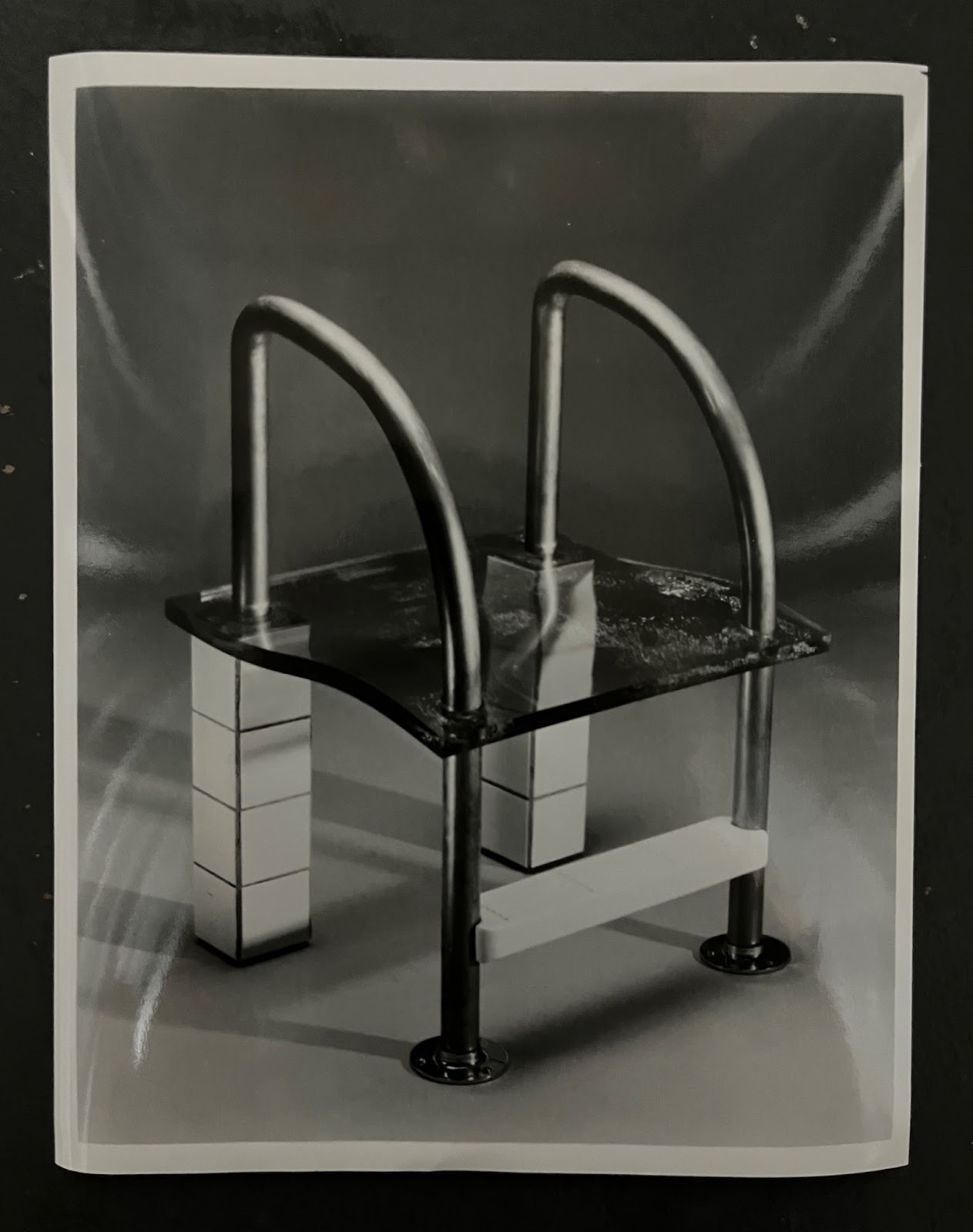
The winners ranged from a chair whose form imitated the steps of a pool to an Enzo Mari design that is still being sold today. Another winner was Tom Musorafita, a construction worker at the Design Center, who created his chair the day of the exhibition and paid the entry fee with an anonymous donation. In a New York Times article that characterizes him as the “dark horse” of the winners, Musorafita is quoted as describing his winning chair as, “my first attempt at chair design. It took five minutes, and I used all I had to work with. That one is an original. But now I may be inspired to go on.”
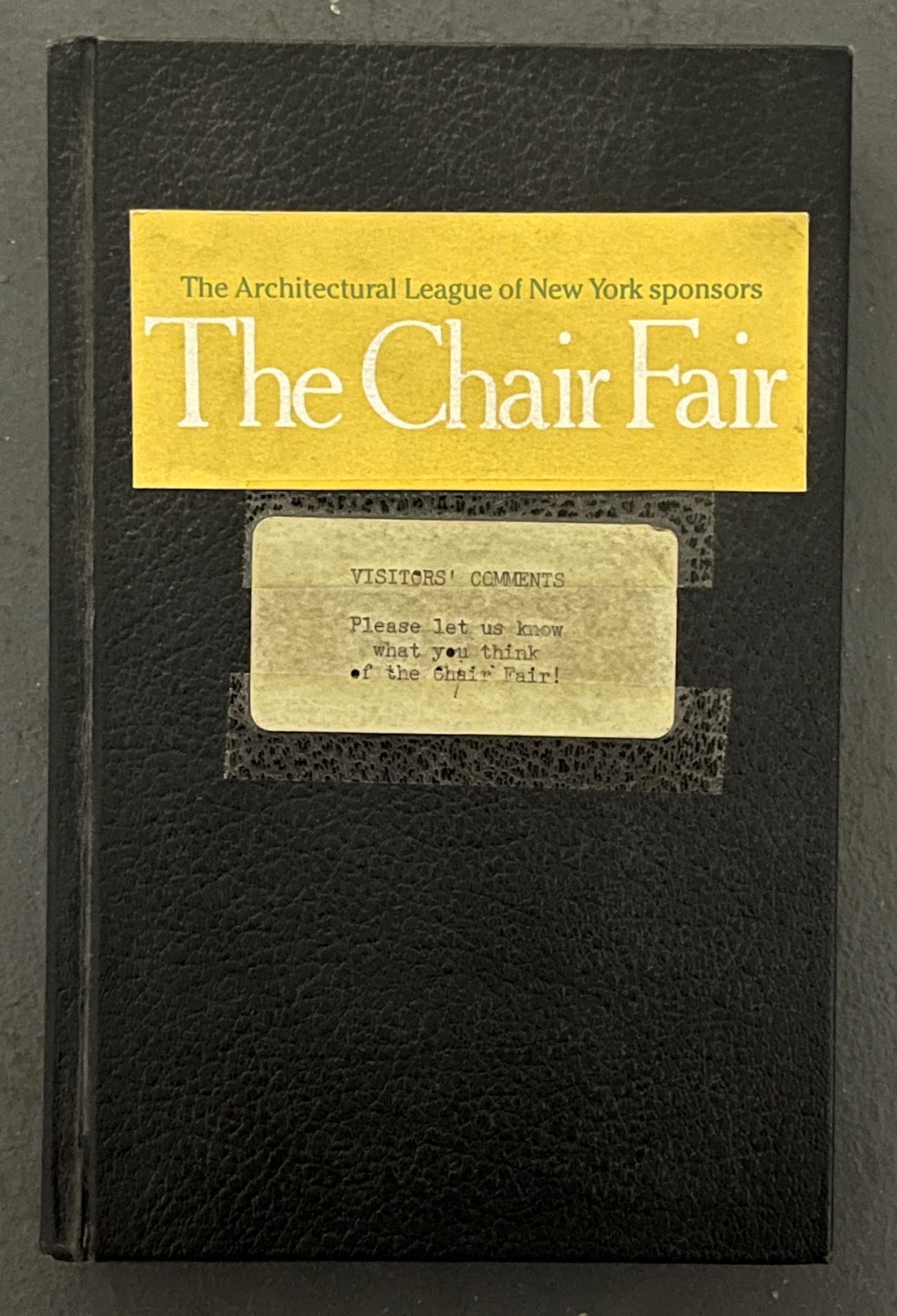
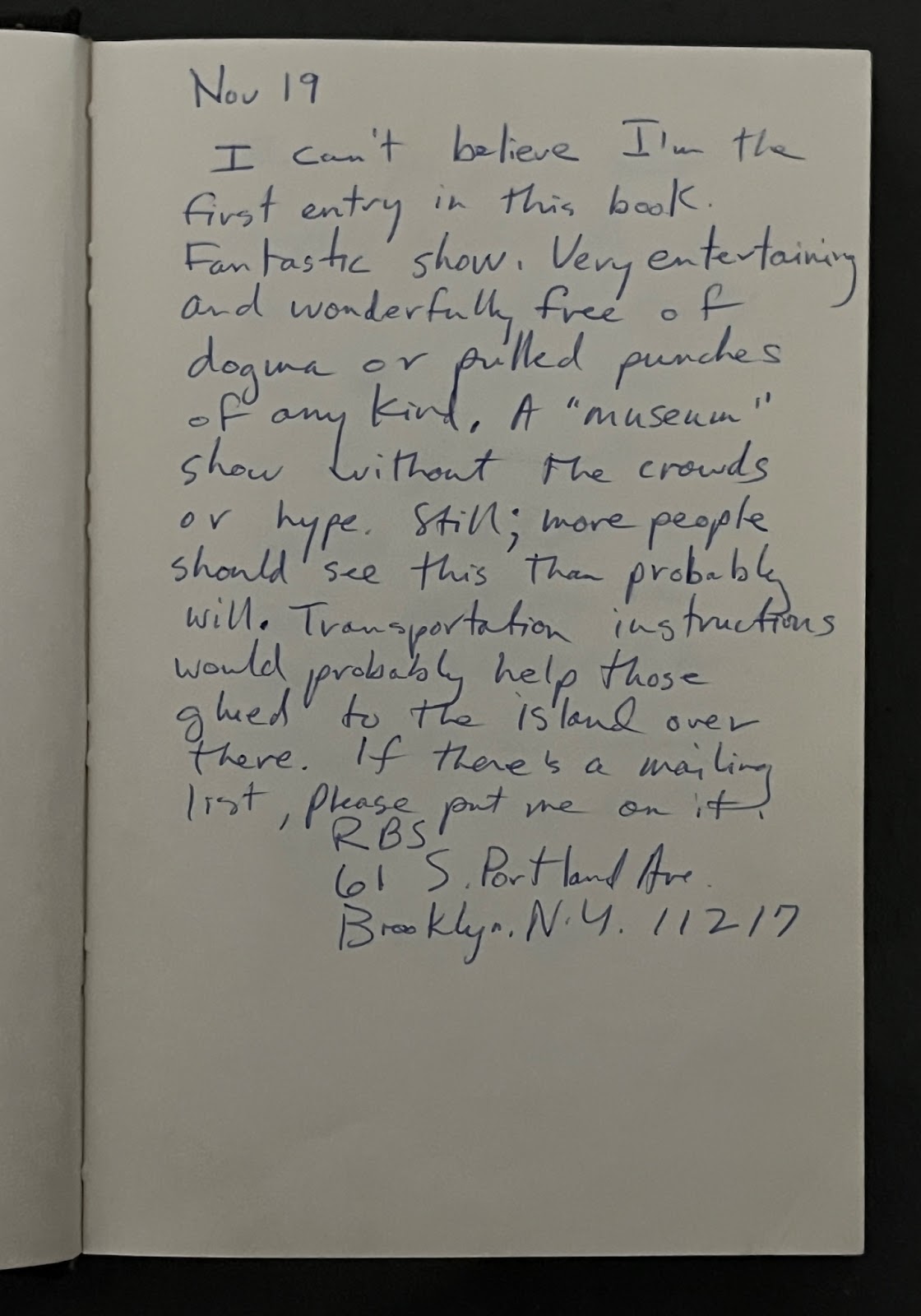
The exhibition was an undeniable success, garnering glowing reviews in publications such as the New York Times, Village Voice, and People. Within these articles, The Chair Fair was characterized as “educational without being didactic, entertaining without being silly, interesting without being obscure, and serious without being heavy-handed. Most of all, The Chair Fair is fun.” In fact, within the pages of its own guest book, The Chair Fair received similar praise, with one guest characterizing the exhibition as “very entertaining and wonderfully free of dogma or pulled punches of any kind. A ‘museum’ show without the crowds.” Due to its popularity, the exhibition was extended through January 2, 1987, nearly a month later than originally planned.
This selection of documents spotlighted here includes two press releases regarding The Chair Fair, one of which explained the intentions of the exhibit as well as the timing and location, with the other announcing the winning chairs. The final document is an entry from The Chair Fair’s guest book. The attached images include The Chair Fair poster designed by judge Milton Glaser, an image of the entire exhibition within the atrium, and photographs of three of the winning chairs: Holt, Viemiester, and Krohn’s “The Pool Chair,” Mari’s “Tonietta,” and Musorafita’s “Unnamed.”