
Working Hours of The Architectural League
In January 2025, The Architectural League shifted its targeted total weekly working hours from 40 to 32.
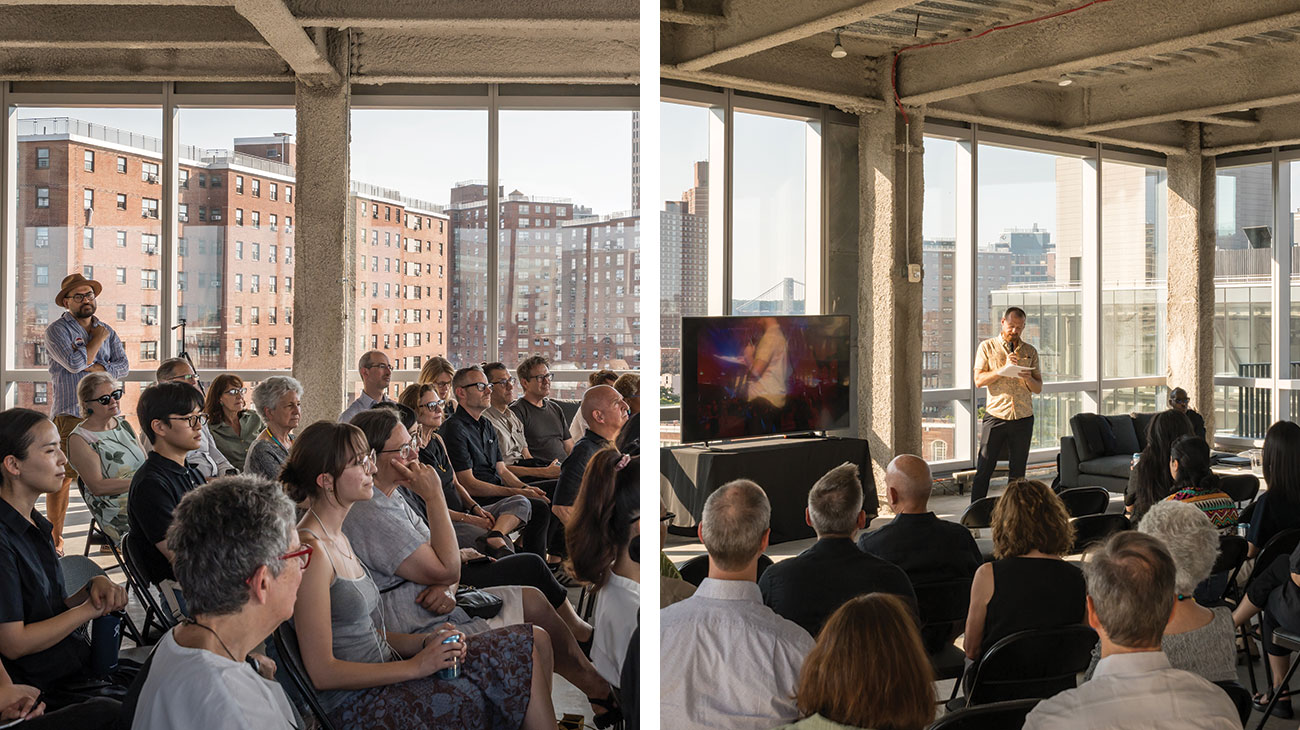
Images from the 143rd Annual Meeting.
Core contact hours are Monday through Thursday, 10:00 a.m. to 4:00 p.m., and teams plan their remaining hours flexibly. The full staff is in-office on Tuesday and Wednesday.
Answers to Common Questions
- Why do this?
- The League shifted to a 32-hour work week to improve work-life balance, recognizing the importance of time for personal needs and long histories of advocacy by labor and social justice organizers for shorter work weeks. As a nonprofit, the League has the flexibility to experiment with productivity-enhancing practices that benefit employees, acknowledging that nonprofit salaries tend to be lower than those in the private sector. This initiative also serves as a hiring and retention strategy while contributing to broader conversations about labor practices in architecture. By leading with action, the League aims to support its team and to encourage others who are able to consider similar approaches.
- Will the League get less done?
- No! According to many studies (some linked below), productivity often rises when organizations reduce their work weeks, as that shift is accompanied by careful assessments and adjustments to working procedures, habits, and priorities.
- As challenges have come up for individuals and teams, they have worked to assess and address them. Thus far, teams have been able to maintain the same level of high quality, mission-aligned work that they always have.
- Other organizations that have done something similar have set limits on the length of meetings, and encouraged teams to avoid setting meetings if their goals can be accomplished by other means. League staff are working on similar adjustments.
- How might this affect revenue?
- It shouldn’t! Not only is the League as committed as ever to fulfilling our mission with the same range and quality of work, we expect that our development strategies and successes will remain consistent or even improve as we improve our efficiency and focus.
- How will the League measure success?
- Staff are carefully monitoring working hours over the course of the calendar year to ensure reductions in the direction of the new standard. A key measure of success will be whether all team members are achieving a 32-hour average work week consistently, as partial compliance would indicate the need for adjustments in implementation or support.
- A regular staff survey gathers direct feedback on how the schedule is impacting work-life balance, job satisfaction, and overall productivity. These data help identify areas for improvement and measure qualitative success based on employee experiences.
- Success will also be measured by the League’s ability to maintain or improve critical organizational benchmarks, including membership engagement, total revenue, and cost management. These indicators will demonstrate whether the reduced work schedule is sustainable without compromising the League’s core mission or financial health.
- While measuring hiring and retention precisely over a given time period is complex, the League is monitoring patterns to determine if the new schedule is enhancing its ability to attract and retain top talent. The League aims to track turnover rates, compare performance to industry peers, and assess how this policy influences its position as an employer choice in the nonprofit and architectural fields.
Resource Collection
-
- WorkFour: The National Campaign for the 4-Day Workweek
- The 4 Day Week Campaign (UK)
- 4 Day Week Global
- “Moving to a four-day week,” Common Knowledge
- “Why We’re Fully Adopting a Four-Day Work Week,” Steph Hsu and Joann Lee Wagner, Common Future
- Microsoft Japan’s four-day week is new evidence that working less is good for productivity