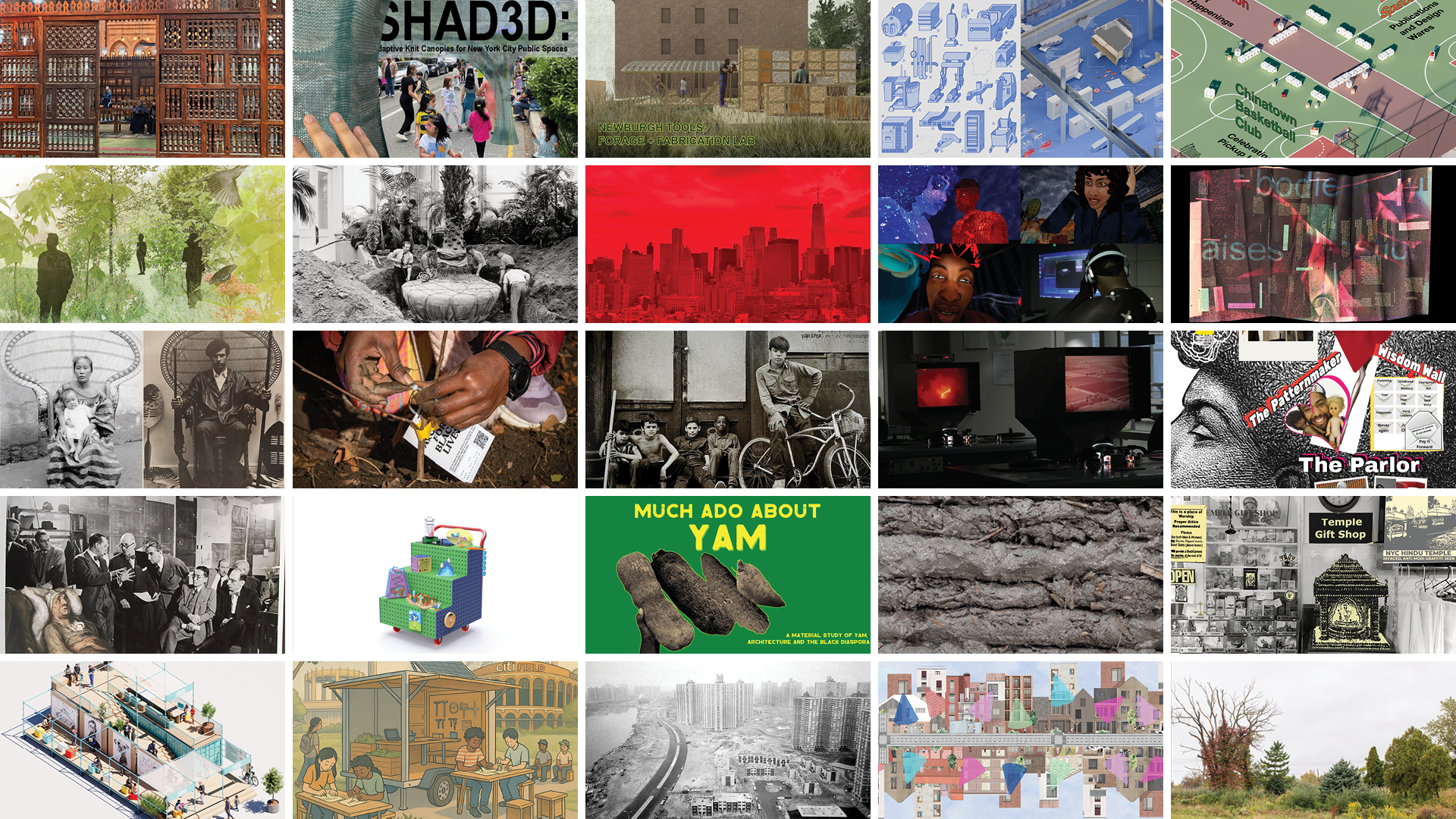

2024 Independent Projects Grant Recipients
In the 2024 cycle, 25 creative and research proposals from throughout New York State have been selected to receive grants of $10,000 each.

The Architectural League of New York and the New York State Council on the Arts (NYSCA) are pleased to announce the 25 New York State-based recipients of Independent Projects grants in 2025. Encompassing a range of design disciplines and locales throughout New York State, these 25 proposals have been selected by a panel of design experts to receive grants of $10,000 each for creative and research projects taking place now through September 2026.
Independent Projects is a competitive grant program open to New Yorkers who work in any of the design fields. Jointly administered by the League and NYSCA, Independent Projects supports self-generated work in design practice and research that seeks to answer the question: Where can design go next?
In the 2025 cycle, 176 applications were submitted for year-long creative and research projects. An interdisciplinary panel of 12 designers, educators, and advocates, who are active in the fields of architecture, landscape architecture, industrial design, fashion, biodesign, materials research and fabrication, history and preservation, urban design, and community-centered design, evaluated the proposals to select 25 projects for funding. Representing an array of places, disciplines, formats, and modes of practice, the selected projects demonstrate the potential for creative innovation and exemplify the program’s goal of making design accessible to the communities of New York State.
The Independent Projects grant program will be offered in 2026. Please sign up for The Architectural League’s newsletter and follow us on social media for future announcements and details about the next application cycle.
Visible/Invisible: Women’s Constant Negotiation of Space in Mosques
Aya Abdallah
New York, NY and Statewide
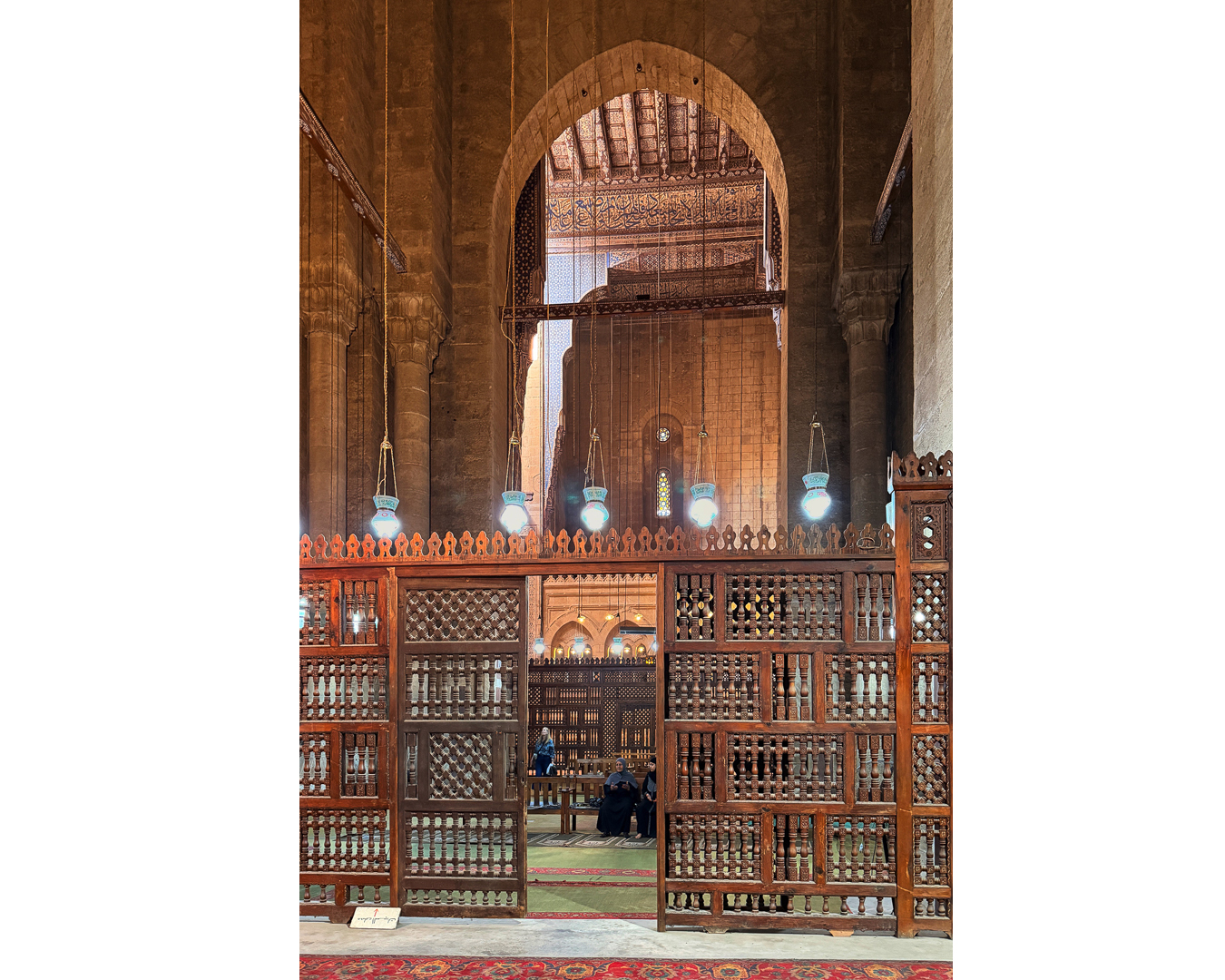
Visible/Invisible documents and examines the architectural evolution of women’s prayer spaces in mosques across New York State. The project will culminate in a public experiential exhibition in New York City in September 2026.
Women’s prayer space separated from the main hall by an ornate wooden mashrabiya screen inside a historic Cairo mosque. Image credit: Aya Abdallah
Shad3d
Hannah Berkin-Harper and Tracey Weisman
New York, NY
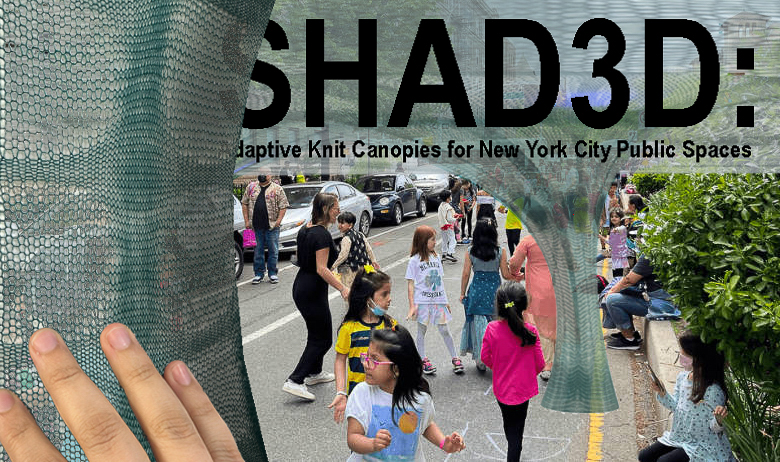
Shad3d is a research and design project that applies 3D knitting at an architectural scale to create a rapidly expandable, occupiable shade structure that can be easily deployed during public outdoor events. The structure is being developed with two community partners at pilot sites in New York City, with the potential to be adapted to various locations. It aims to provide cooling on hot summer days, making outdoor activities in public spaces more enjoyable.
Concept image of Shad3d knit canopies in use. Image credit: Tracey Weisman; Source photo by Clarence Eckerson Jr., Streetfilms, with permission from Open Plans
Newburgh Tools: Forage & Fabrication Lab
Zach Blaue and Anoushae Eirabie
Newburgh, NY
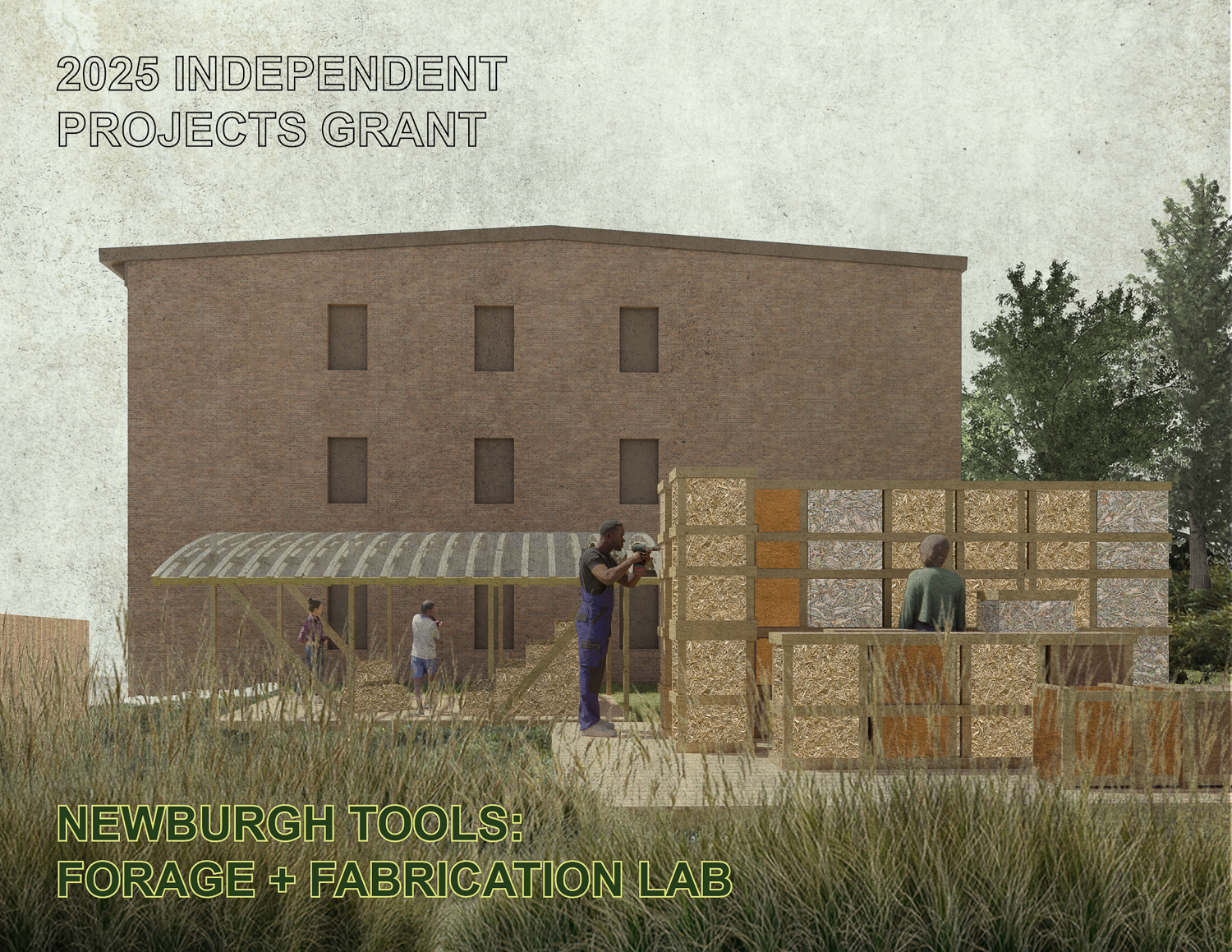
Newburgh Tools: Forage & Fabrication Lab identifies and activates high-impact, low-cost sustainable material strategies in the context of urban placemaking through the design and construction of a community tool library. During this phase of work, the project team will remediate soil, sow and harvest materials on the project’s neglected site, forage waste and surplus substances from the surrounding environment, and implement community workshops to prototype these resources for use in the walls of the building and beyond.
Site harvest and tool library construction in Summer 2026. Image Credit: Newburgh Tools and Anoushae Eirabie
Overlooked Objects and Projects
Celia Chaussabel and Ekin Bilal
Buffalo and New York, NY
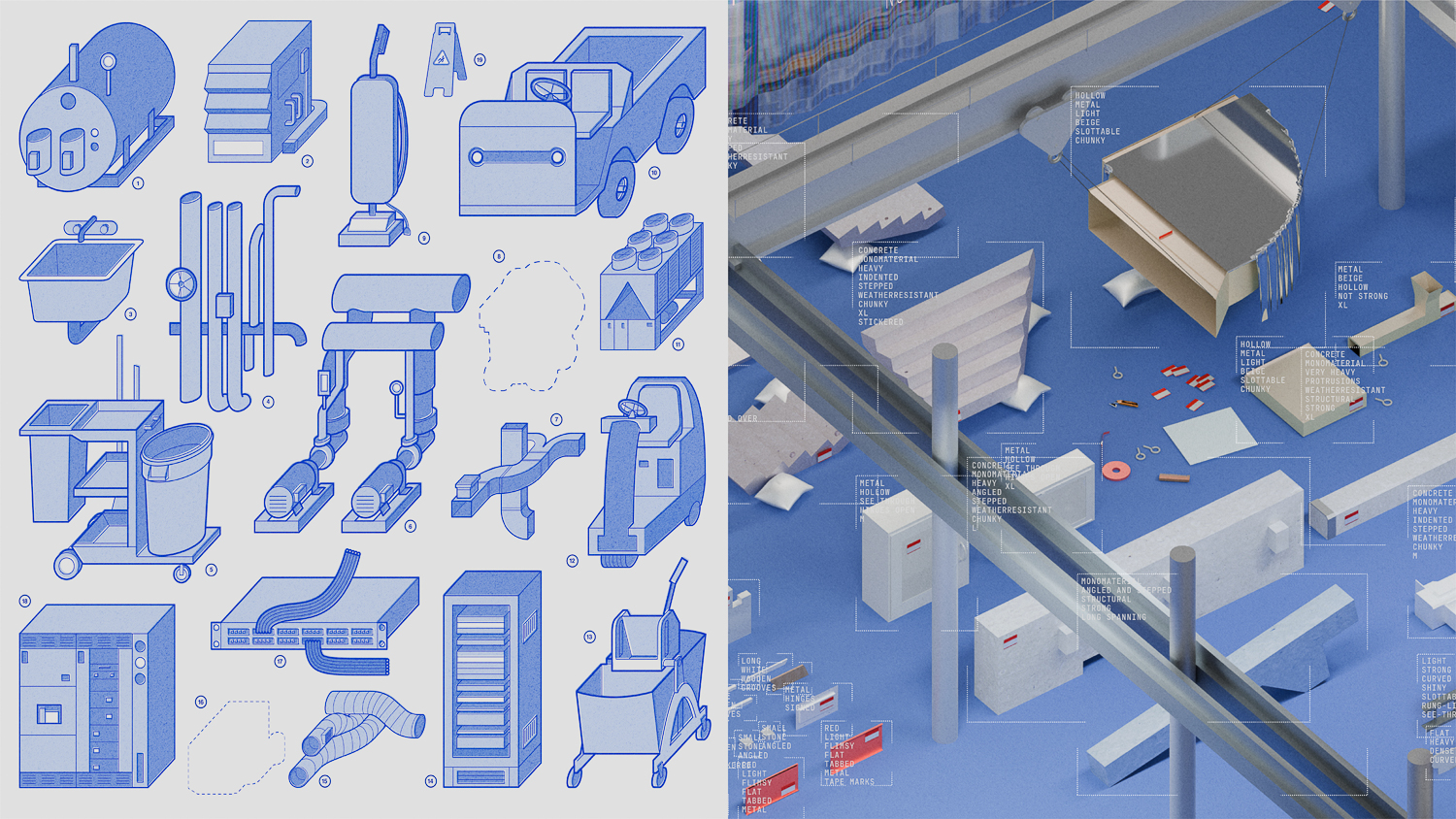
Overlooked Objects and Projects is a planned collaborative exhibition that brings together two parallel design processes engaged in reimagining the political, spatial, and material margins of architecture. The exhibition will highlight how designing for reuse, maintenance, and bureaucratic navigation can become a site of political and creative design inquiry. It will explore what is overlooked in conventional architectural design, from zoning loopholes to salvaged construction debris.
Left: Partial inventory poster, Office of Back of House. Image credit: Ekin Bilal; Right: Still from video game, The Objectiles Guide To Time Travel. Image credit: Celia Chaussabel
Adopt, Foster, Share: Furniture as Social Practice
Tien Chen, Siyang Dai, Shisi Huang, Lu Zhang, and Zijun Zhao
New York, NY
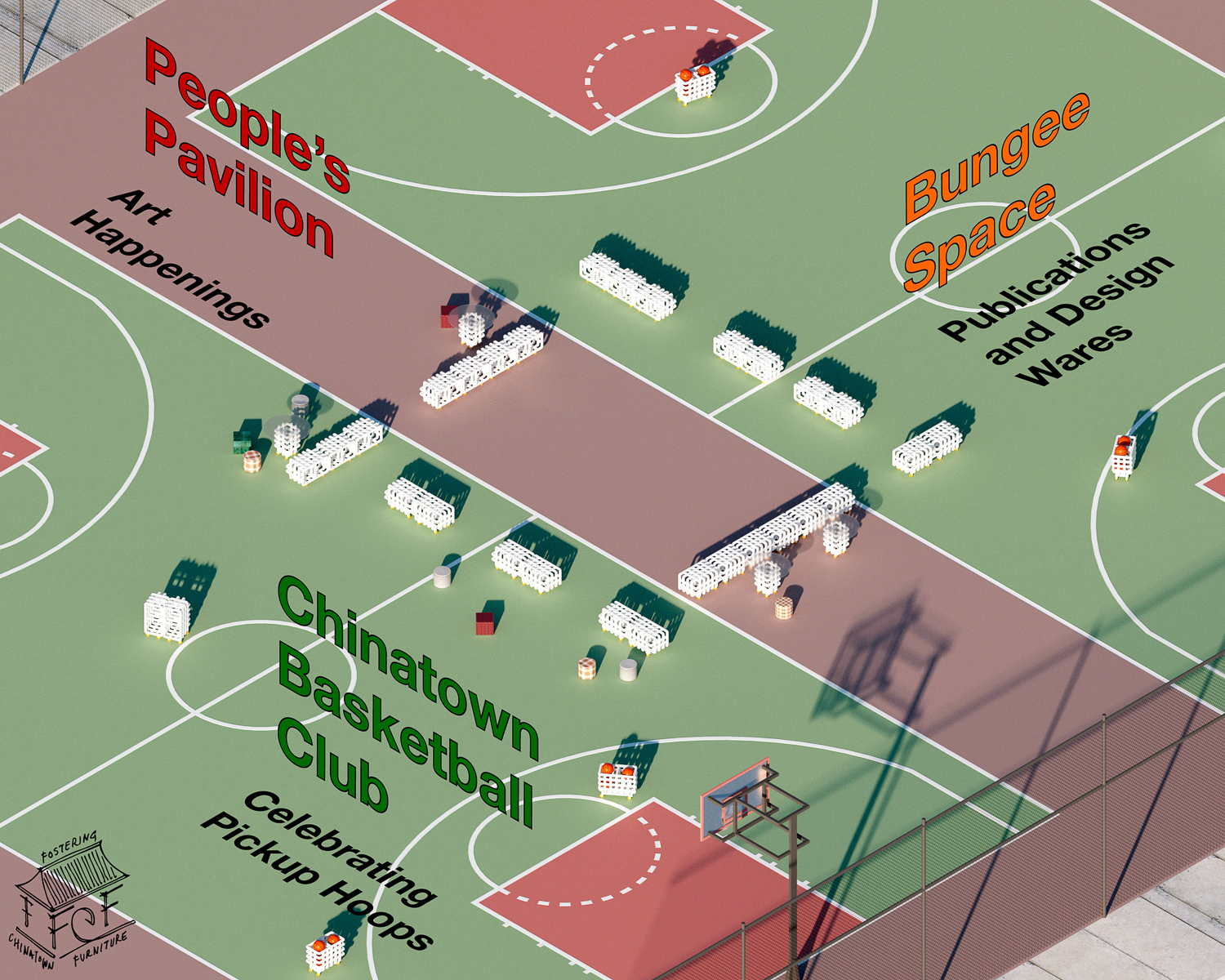
Adopt, Foster, Share is a community collaboration between partners People’s Pavilion, Bungee Space, and Chinatown Basketball Club to support temporary installation projects at Columbus Park, Chinatown. This project will develop a modular furniture system for public events, including festivals and sports tournaments, in Fall 2026. After de-installation, units will circulate via a foster program for use at home and on the street until the following year’s park events. Adopt, Foster, Share aims to sustain a culture of temporary installation design at Columbus Park while connecting neighbors through the shared stewardship of street furniture.
A map reflecting preliminary research on Columbus Park and its everyday use, intending to activate this central Chinatown space through a shared street furniture system during People’s Pavilion 2026. Image credit: Zijun Zhao
Hedge, Thicket, Snag: Designing Ecological Planting Typologies for Climate Resilient Public Parks in Upstate New York
Matt Dallos
Ithaca, NY
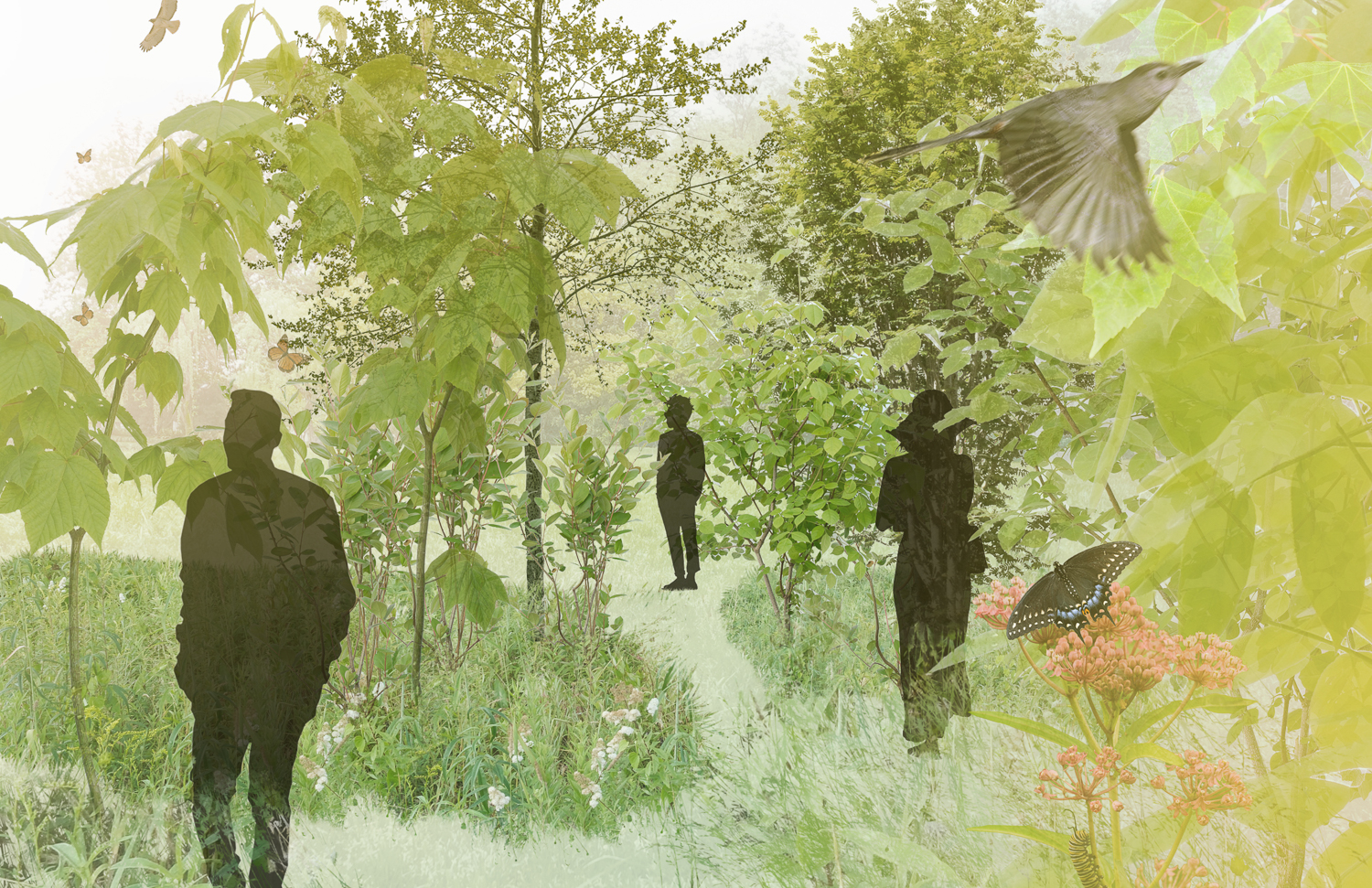
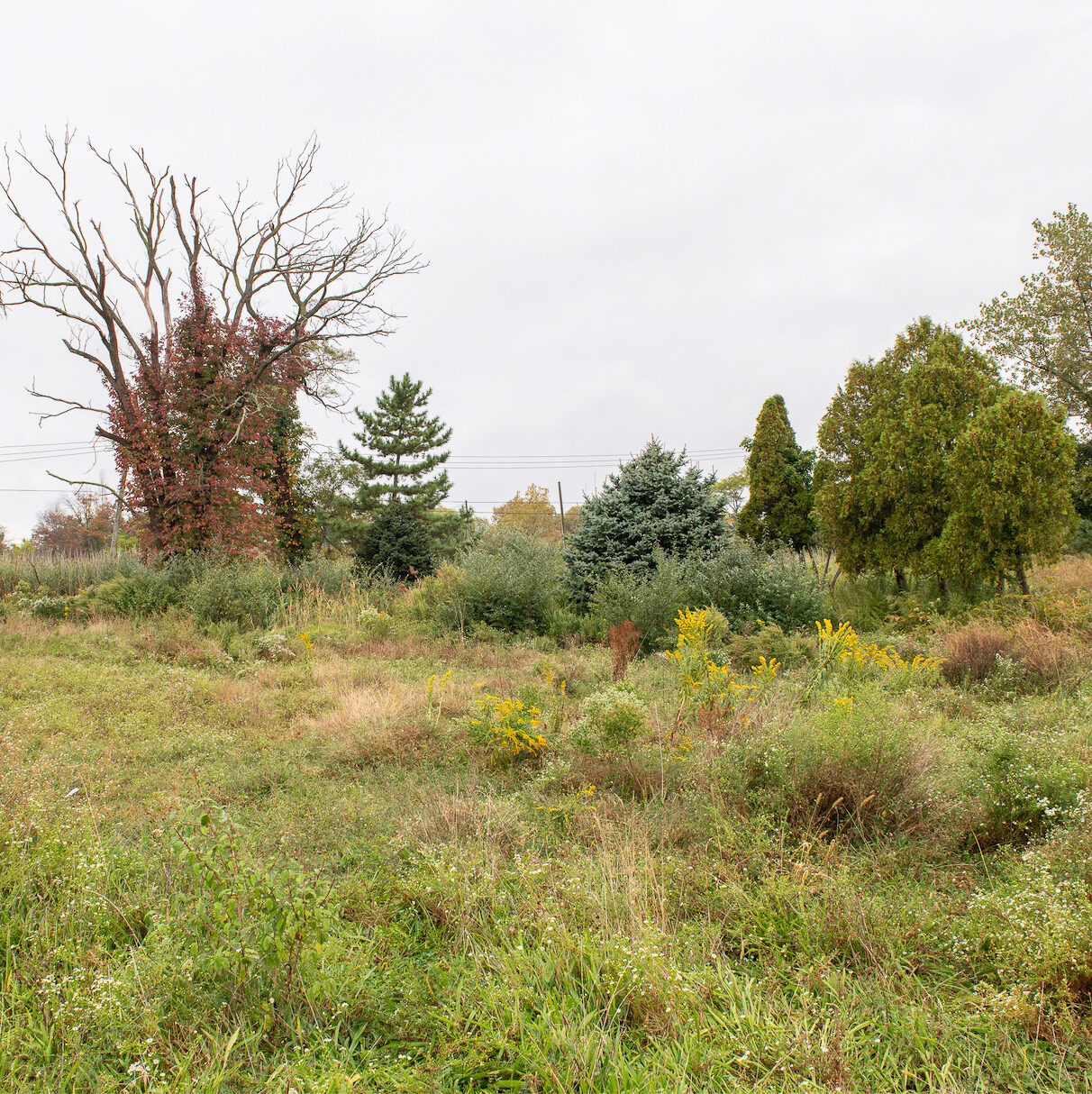
Hedge, Thicket, Snag develops design and management practices to inform ecological tree plantings in small-town public parks across the state. The goal is to give park managers and residents tools, design knowledge, and evidence to fund and plant climate-resilient futures for their parks. A series of test plots will be designed and then planted by community members. Following the evaluation, the results of these test plots will be shared with public park managers across the state.
A collage highlighting the multi-species, immersive experience of small-town public park visitors spending time within the social spaces of a biodiverse ecological tree planting. Image credit: Matt Dallos
Evolving with Plants
Hermine Demael, Stephen Zimmerer, and Evelyn Beaury
New York and Syracuse, NY
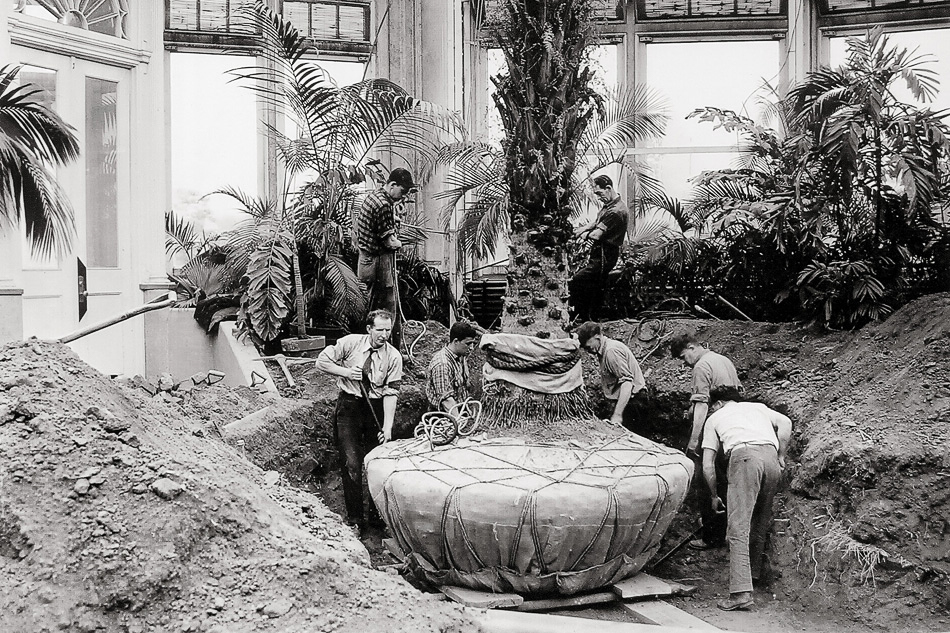
Evolving with Plants seeks to design new botanical practices calibrated to contemporary ecological knowledge through an interdisciplinary exploration of the botanical conservatory. Using the conservatory at New York Botanical Garden as a study site, the project will speculate about how botanical conservatories can be reconfigured to reflect contemporary insights in ecology, horticulture, and postcolonial studies.
Arborists move a palm tree at the New York Botanical Garden, 1942. Image credit: New York Botanical Garden.
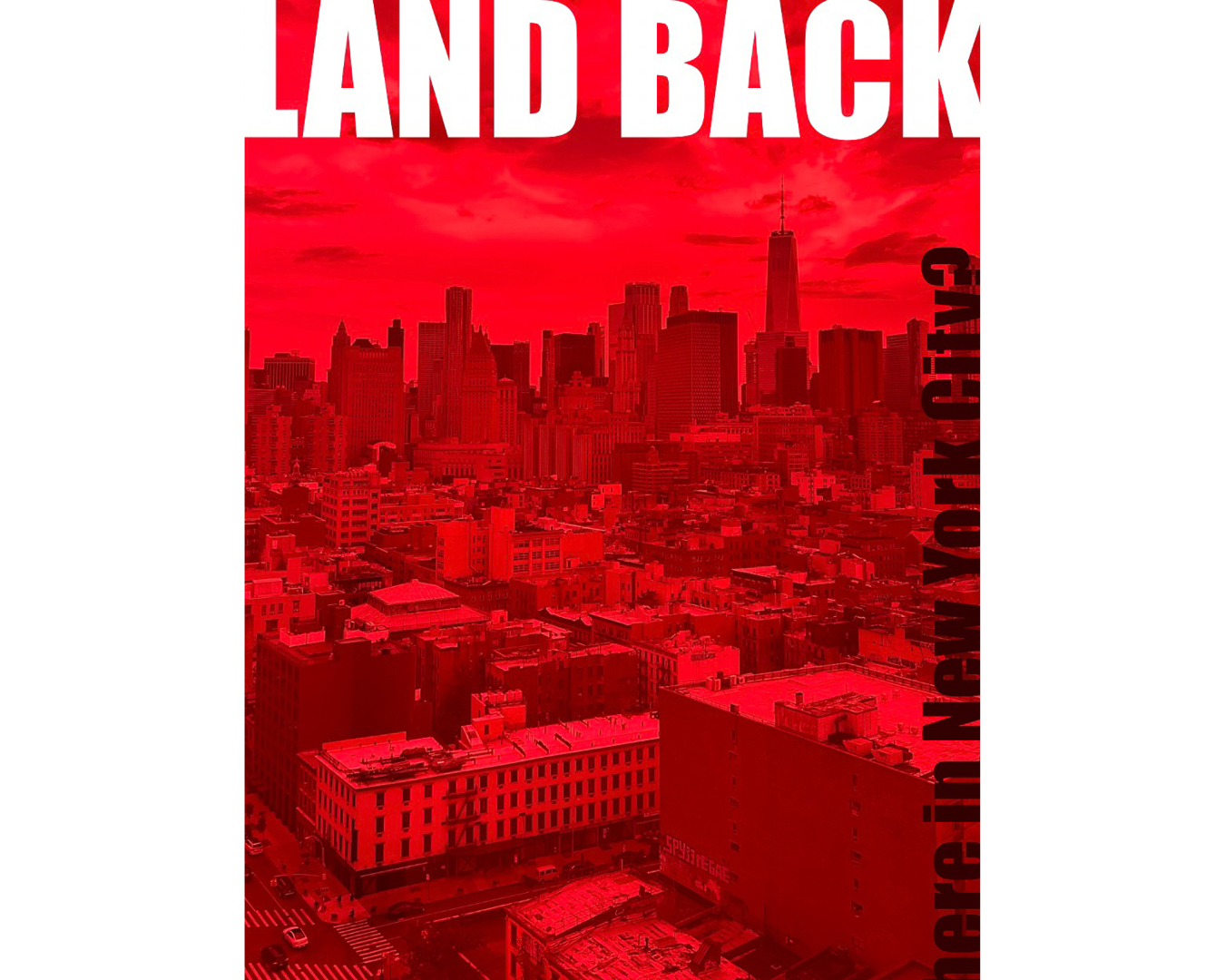
What Does LAND BACK Really Mean in New York City?
Kholisile Dhliwayo
New York, NY
Movement and access to resources in the Americas, Australasia, and the African continent are framed by legacies of European colonial expansionist policies. This planned exhibition forefronts practical ways architects can contribute and are contributing to restitution and equity in the face of the challenges of the 21st century, particularly in New York City.
Image credit: Kholisile Dhliwayo
“Biometrics & Cartoons”: Prioritizing Justice-Impacted Women and Gender Minorities
Ar Ducao
New York, NY
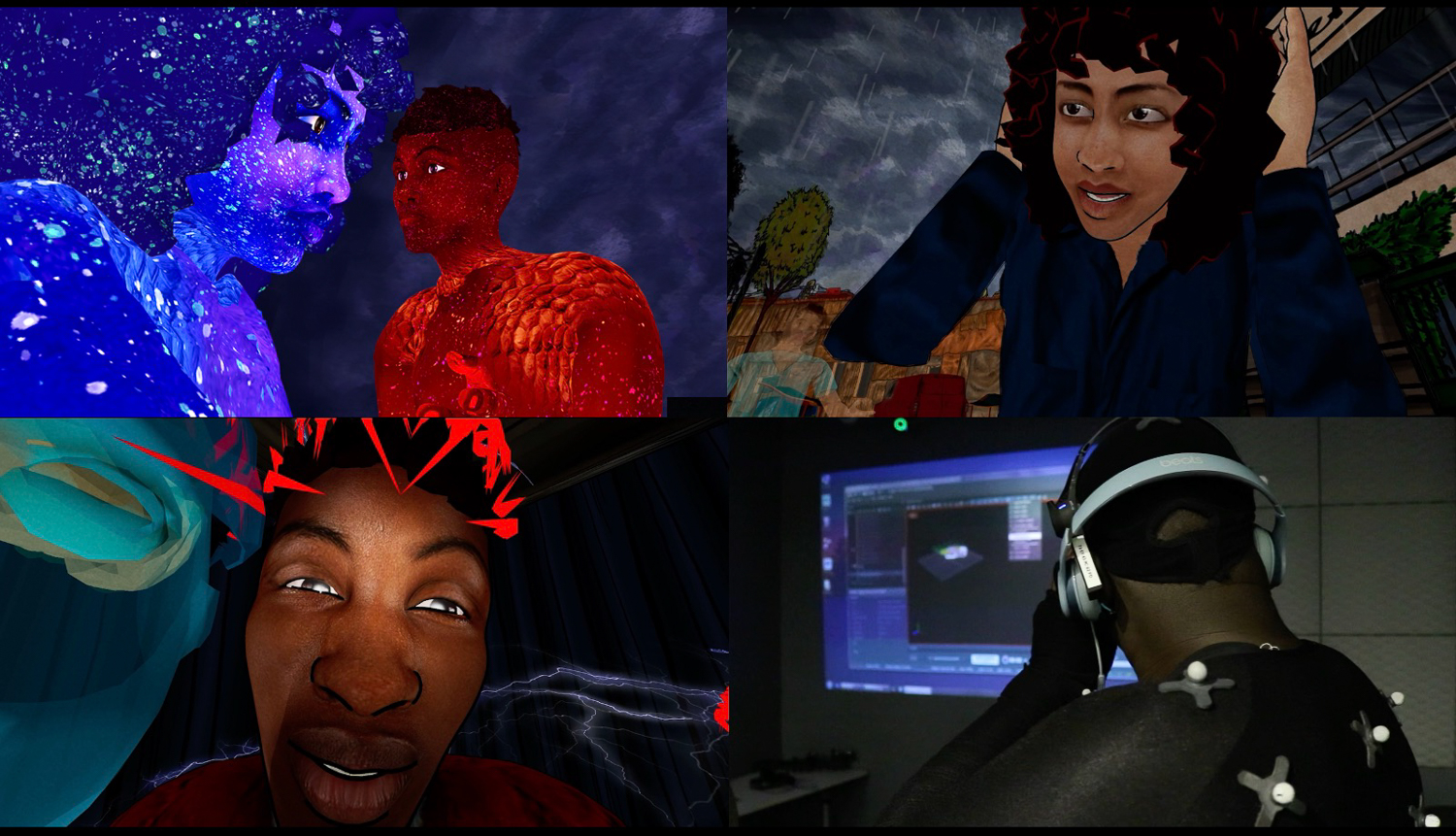
“Biometrics & Cartoons” is a workshop series developed with and for justice-impacted women and gender expansive folks who are interested in both understanding and critiquing the design of biometric surveillance systems, and in creatively repurposing such systems to build new design and technology skills.
Images from previous editions of “Biometrics & Cartoons” projects and workshops, developed by and with Black and Brown women and gender expansive folks. Image Credit: Dukode Studio
Exit Strategies: Rehearsing the Future Through Design
Sara Duell
New York, NY
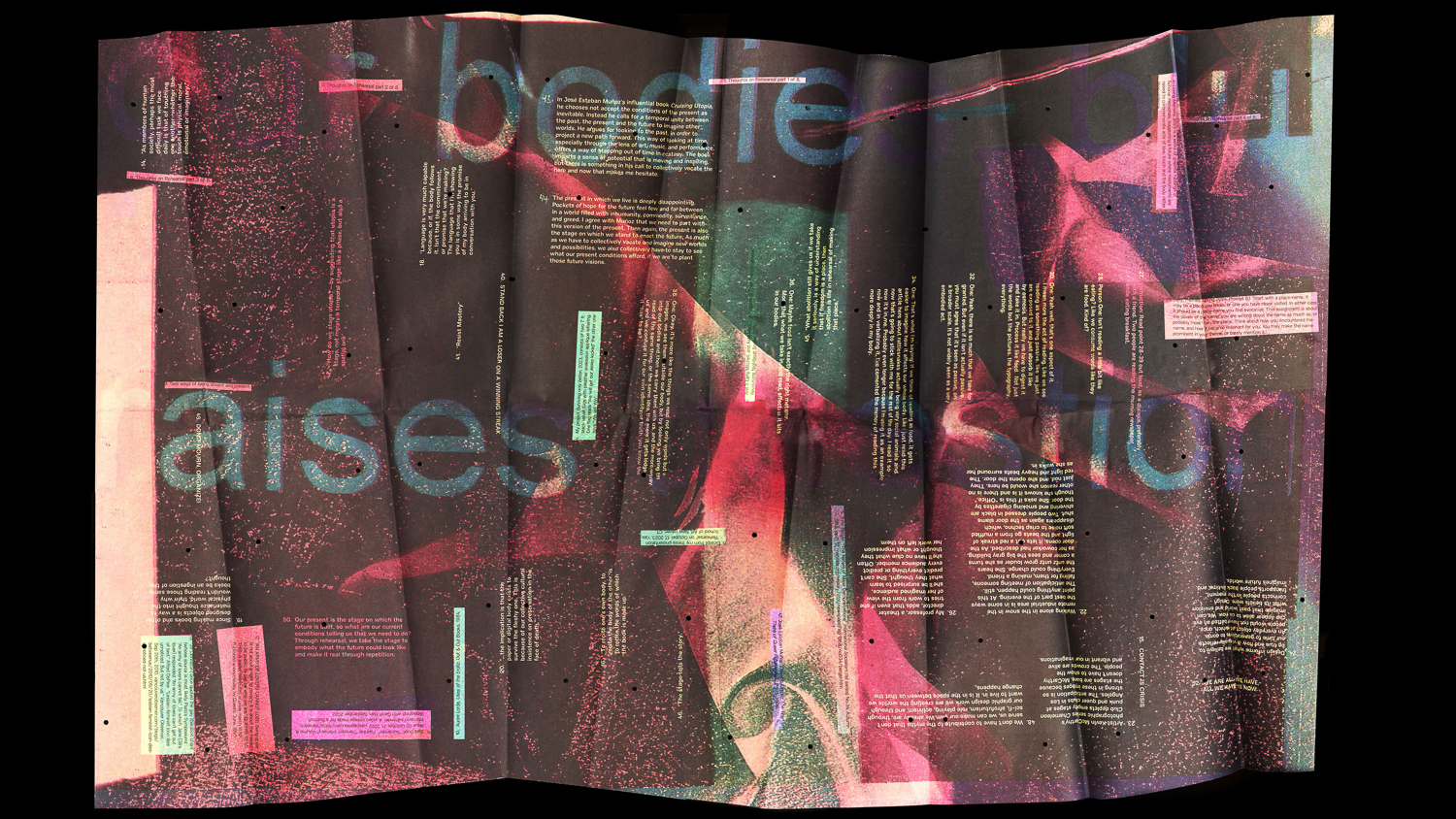
Exit Strategies: Rehearsing the Future Through Design is a publication documenting a six-month workshop that explores the intersection of choreography and graphic design. The project culminates in a designed pamphlet that will be shared at a public reading and performance on the theme of “Rehearsal” at Marsha P. Johnson State Park in Brooklyn, NY, in June 2026. It examines how design, viewed through queer temporality, can challenge linear narratives of progress by framing the present as a site of rehearsal for equitable futures.
Exit Strategies is a tool for imagining futures that fits in a reader’s pocket. Folded like an invitation, it opens to a metaphorical stage, guiding readers through steps showing how repeated practices in the present can stage future possibilities. Image credit: Sara Duell
The Peacock Chair: From Bilibid to Black Power
Adaiya Granberry
New York, NY
This project traces the history of the peacock chair from its origins in Manila’s Bilibid Prison under U.S. colonial rule to its reimagining as a symbol of Black Power in 1960s and ’70s visual culture. Through an online visual archive, a newly designed prototype, and public programming, The Peacock Chair explores how furniture can embody layered histories and reconsiders the role of design as a site for resistance, memory, and collective imagination.
Left: Woman and child inside Bilibid Prison, ca. 1896-1912. Image credit: Charles E. Doty, National Anthropological Archives, Smithsonian Institution; Right: Huey Newton, Black Panther Minister of Defense, 1968. Image credit: Blair Stapp, Smithsonian National Museum of African American History and Culture.
Hattie: A Social Infrastructure for Urban Tree Care
Ekene Ijeoma
New York, NY
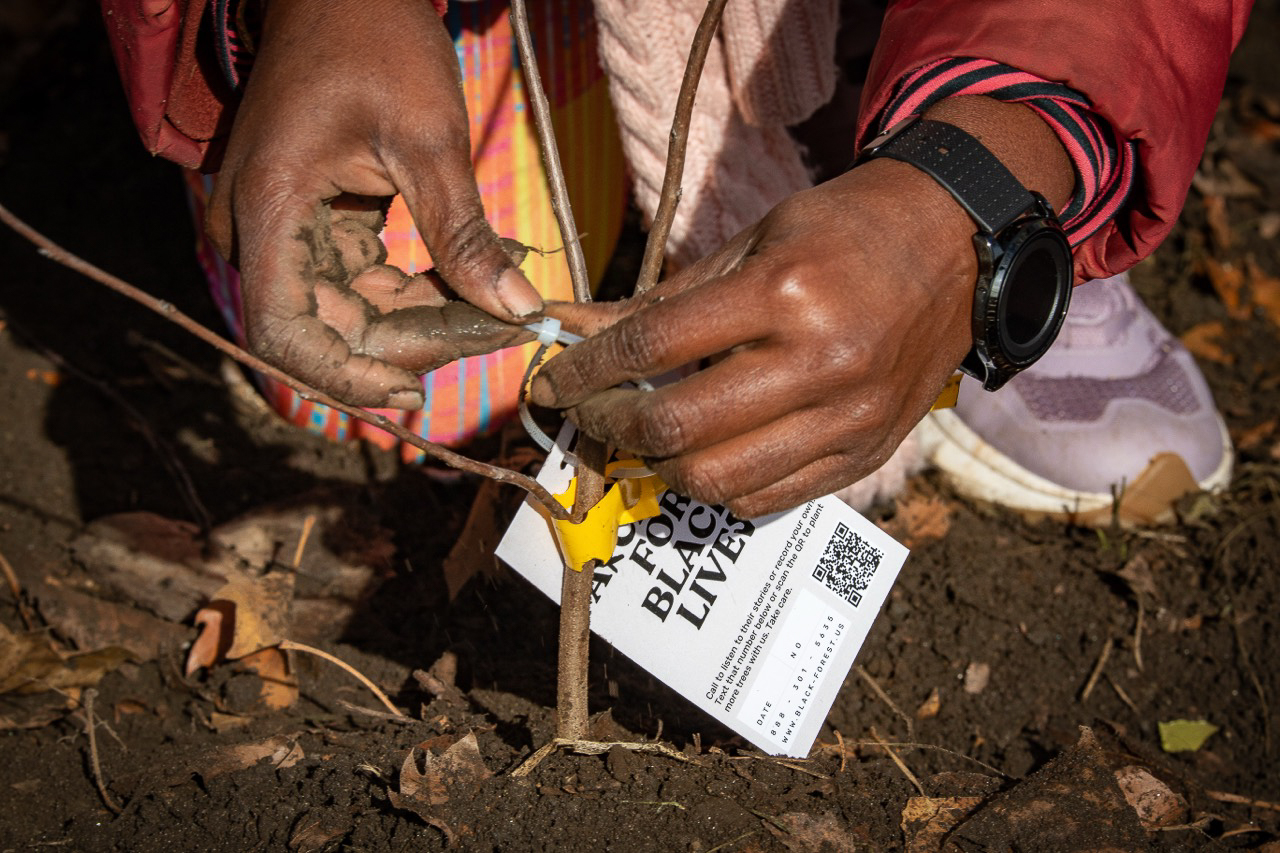
Named for Hattie Carthan—the “Tree Lady of Brooklyn” who, in the 1970s, organized block associations to plant 1,500 trees—this project reimagines her Neighborhood Tree Corps through the lens of mutual aid strategies and mobile technologies. It builds on a process that, since 2022, has organized communities to plant 200 trees in the South Bronx and 400 across eight cities for Black Forest, serving as a living monument and archive for Black lives. This project designs a system for crowdsourcing tree care, transforming urban forestry into a community effort.
Local volunteer tagging a tree planted for Black Forest in the South Bronx. The QR code links to the community tree care system. Image credit: Tony Eggert and Black Forest
Lower Manhattan Prelude: Portrait of a Vanished Neighborhood
Mary Kay Judy
New York, NY
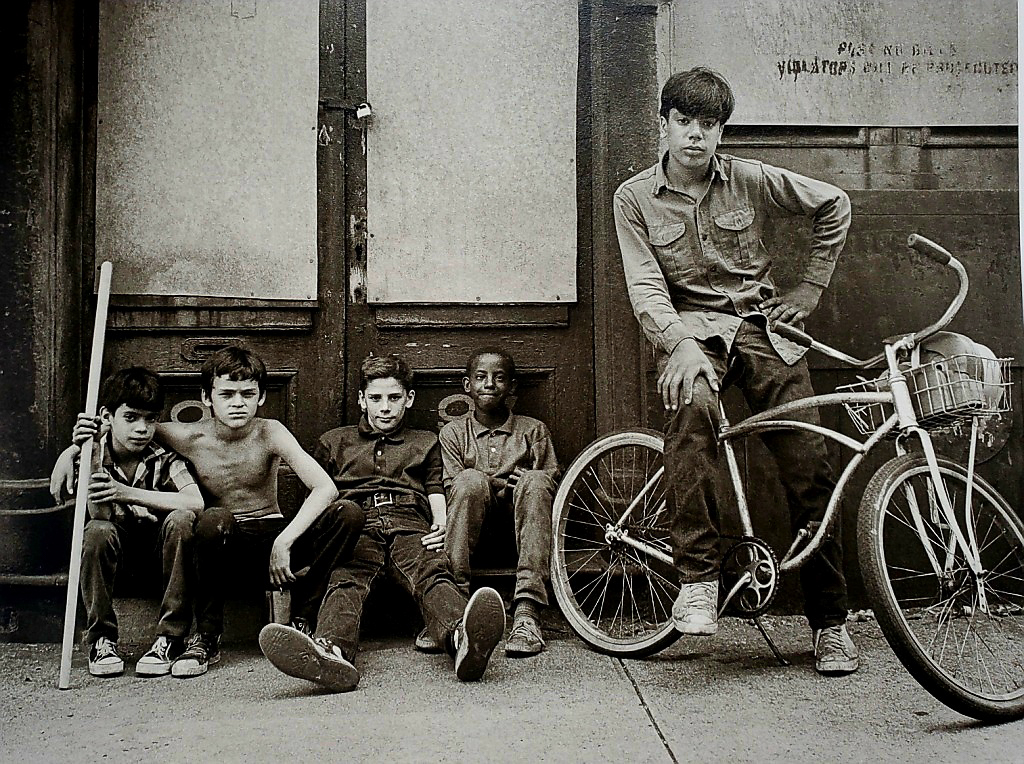
The Destruction of Lower Manhattan by photographer Danny Lyon, published in 1969 with funding from NYSCA, documented the last images of a vanishing neighborhood that would become the World Trade Center as a means of early preservation advocacy and social justice. Lower Manhattan Prelude will place Lyon’s social documentary work against the larger historic context of the Lower Manhattan neighborhood before it was lost to time, and to the emerging historic preservation movement of the 1960s in New York City.
"Beekman Street, Sunday Morning. Ginco, Tonto, Frankie, John Jr. and Nelson, after exploring the buildings." Image credit: Danny Lyon
American Remediation
Andy Lee and Matthew Hixon
New York, NY and Statewide
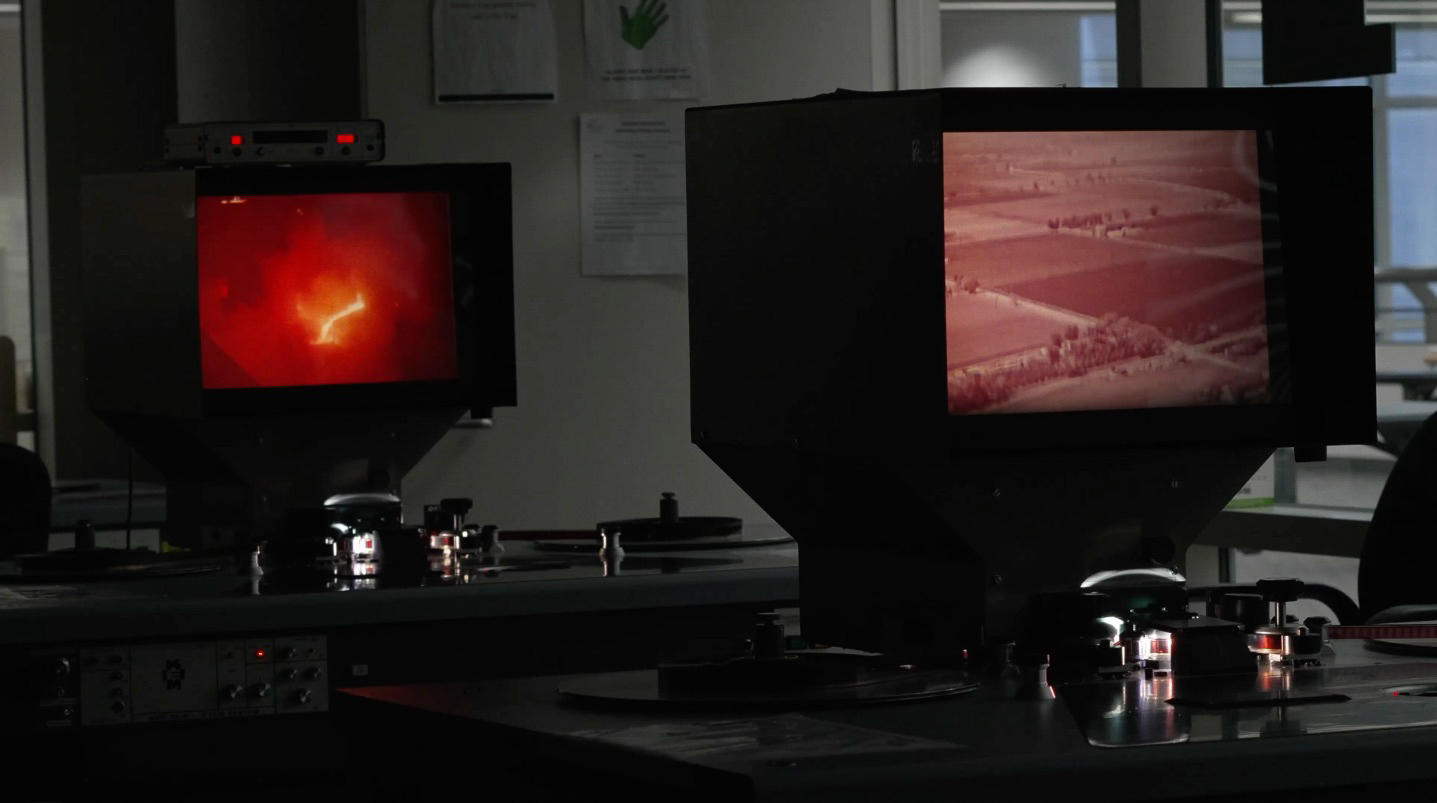
American Remediation is a forthcoming film installation that portrays a destabilizing American landscape reshaped by large-scale infrastructure transformations and the displacement of indigenous populations. This sequence of the installation focuses on and collaborates with communities descended from indigenous Mexican displaced populations in New York State, documenting the legacy of environmental and demographic changes within the agricultural sector. Through screenings and workshops, it partners with indigenous Mexican activists to construct a new environmental imaginary—an “American re-mediation.”
Documentary films of the American landscape screened at the United States National Archives and Records Administration Motion Pictures Room in College Park, Maryland. Image credit: Andy Lee and Matthew Hixon
Her Interior World
Melissa Molinar
New York, NY
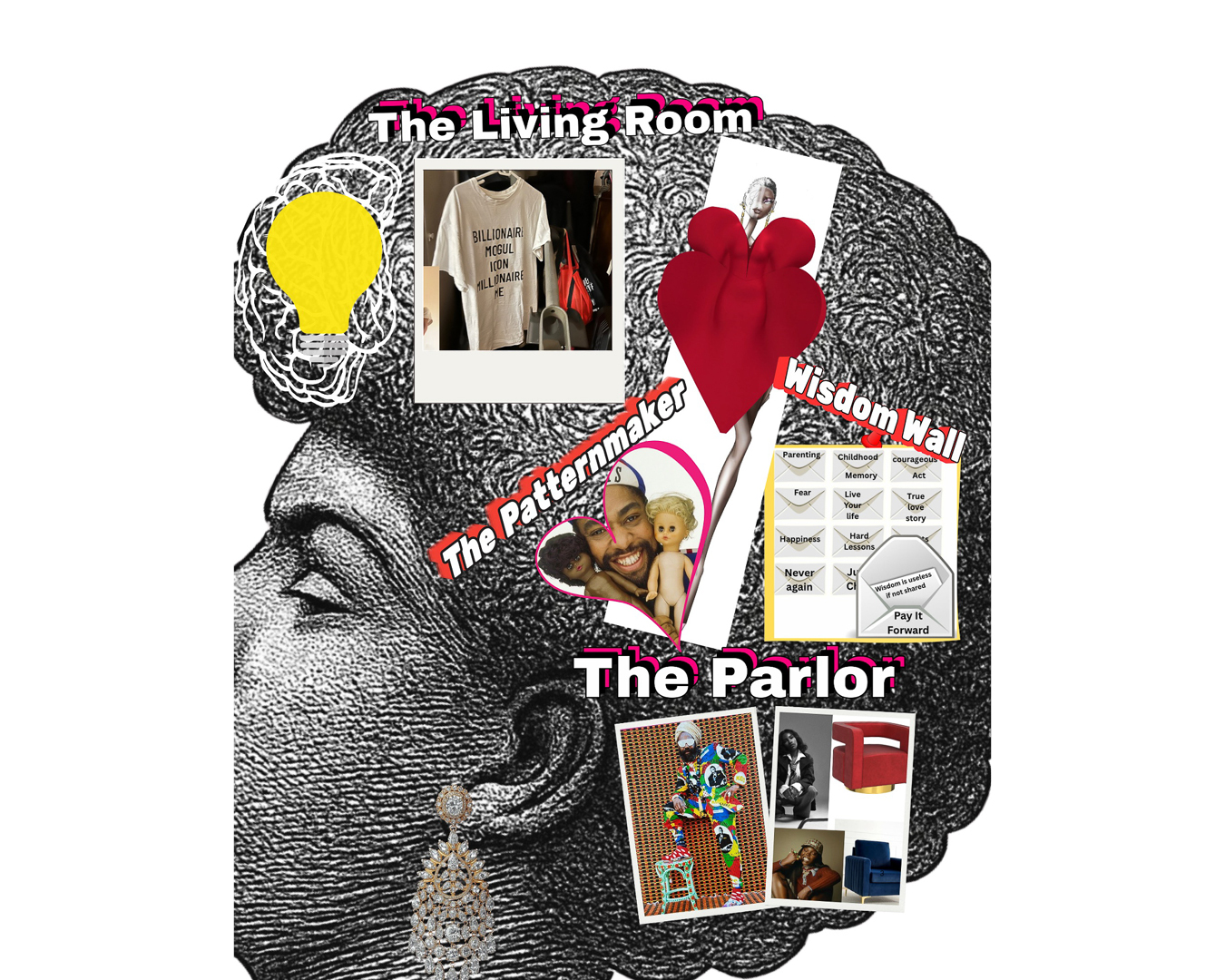
Her Interior World is a four-room installation exploring the inner emotional spaces of fashion, memory, and survival. From a stairmaster-as-closet, to a portrait lounge draped in diasporic prints, to tributes to influential designers including Patrick Kelly styled by rising Black designers, each space celebrates how we create with what we’ve got. Reimagining the block as a blueprint, the installation will invite visitors to contribute letters and be photographed as a way to step into history.
Image credit: Melissa Molinar
The Valid Imaginary
Chloe Munkenbeck
New York, NY
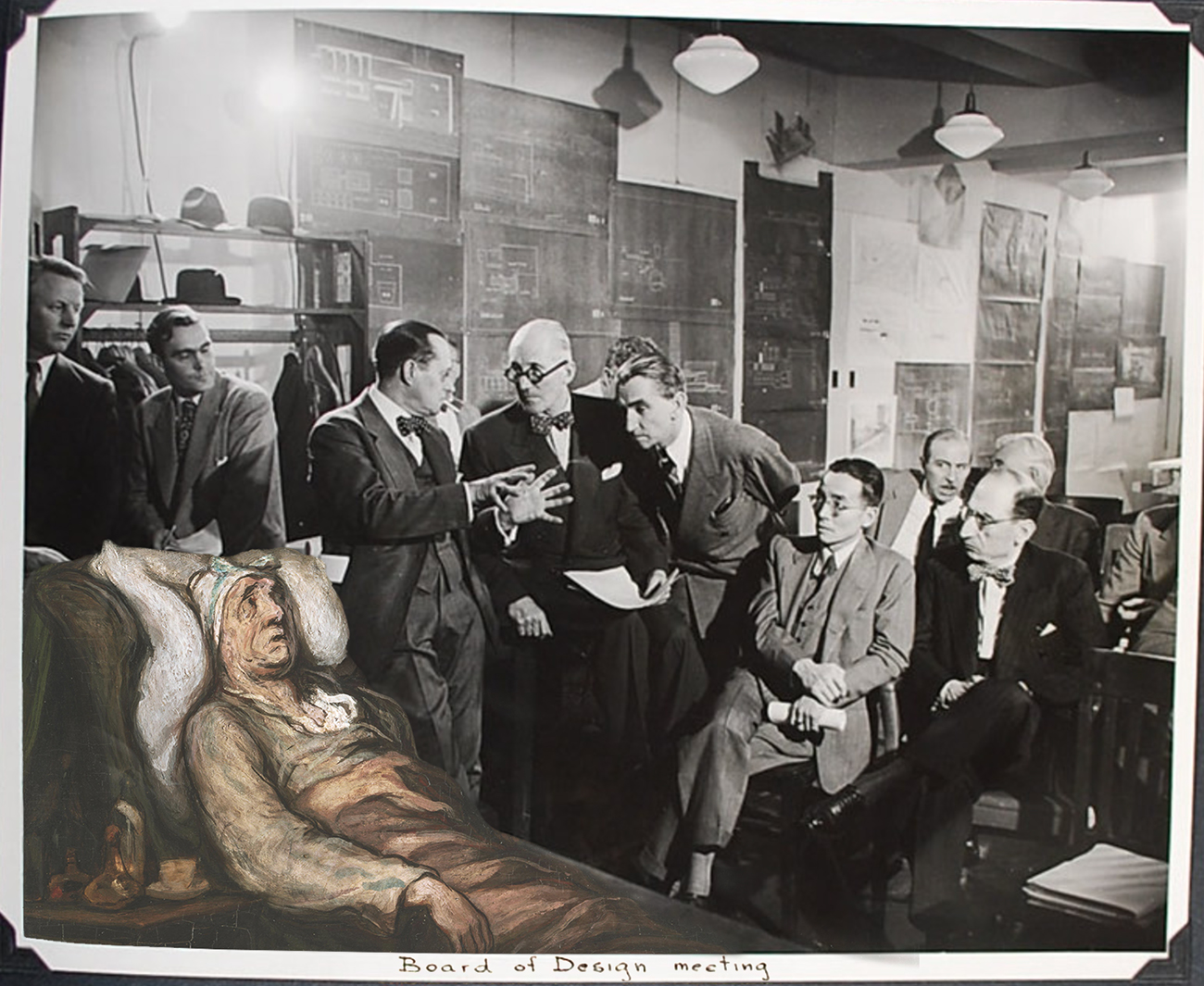
The Valid Imaginary surveys Modernist architecture’s focus on health and workplace productivity through a reimagining of Moliere’s 1673 play The Imaginary Invalid about an obsessive hypochondriac, Argan. In the reimagining, Argan is at the office and has collapsed from Sick Building Syndrome, a nebulous diagnosis for the ailments that afflict a building’s occupants but have no known cause. The project asks, did Argan succumb to the stress of finding design solutions to his ailments, or can the cause be identified?
Collage depicting Argan, The Imaginary Invalid, being diagnosed by a team of architects. Image Credit: Chloe Munkenbeck; Source images from United Nations Archives, Le Corbusier, the Board of Design, and Wellcome Collection
Climate Stories
Swati Piparsania
New York, NY
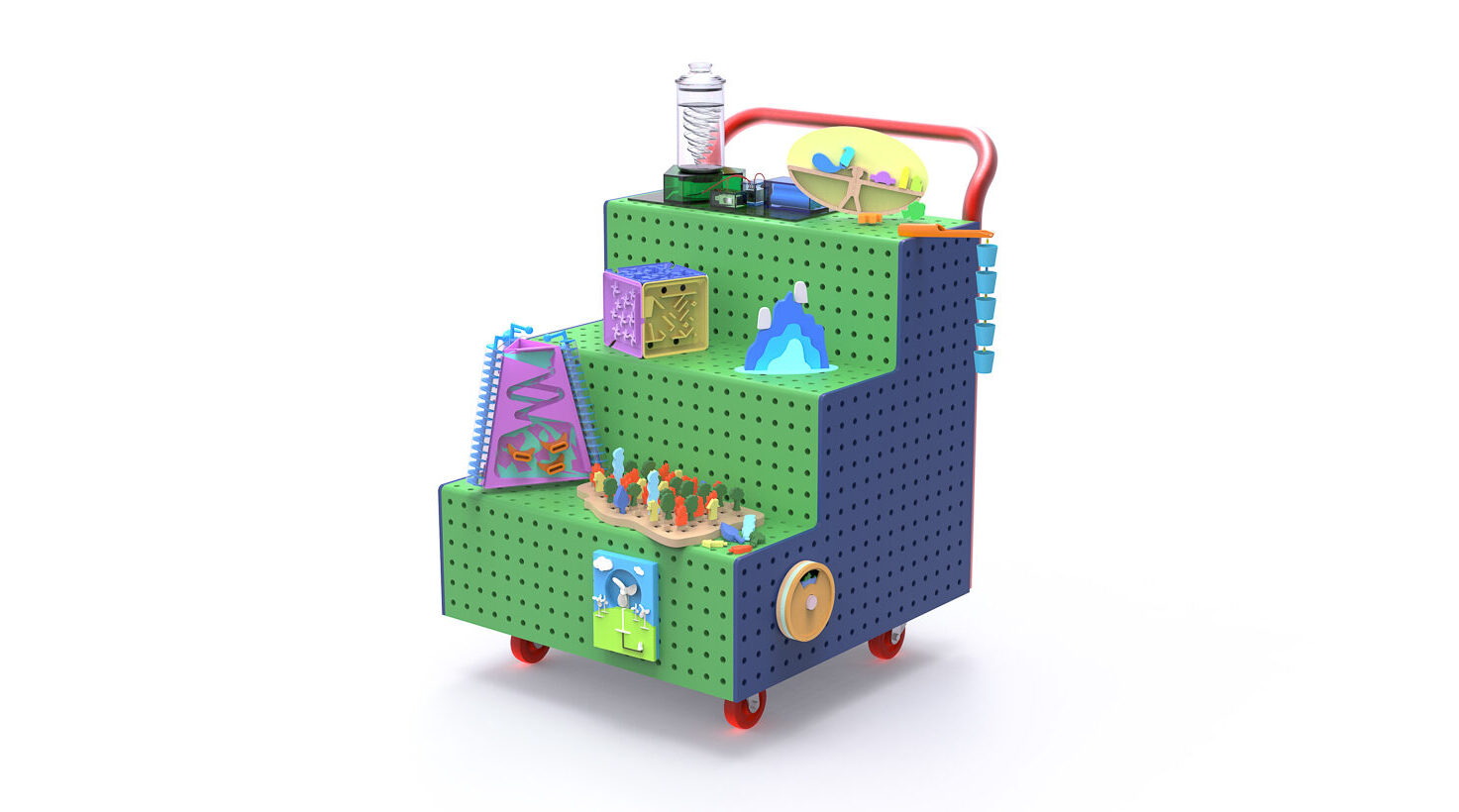
Climate Stories is a mobile educational platform teaching climate literacy to children aged six to ten through storytelling and play. Co-designed with local climate experts, the mobile toolkit includes toys that showcase niche, local sustainability solutions. The project translates expert knowledge into tangible, play-based tools, filling a gap in environmental education. It aims to foster interdisciplinary learning and build on familiar climate vocabulary through hands-on experiences designed to integrate into the classroom environment.
Climate Stories mobile educational cart with toys including: wildfire, tornado, material cube, impact wheel, rain chain, compost, flow maze, and wind gush. Image credit: Yiyuan Li and Junming Pu
Much Ado About Yam
Sumayyah Raji
New York, NY
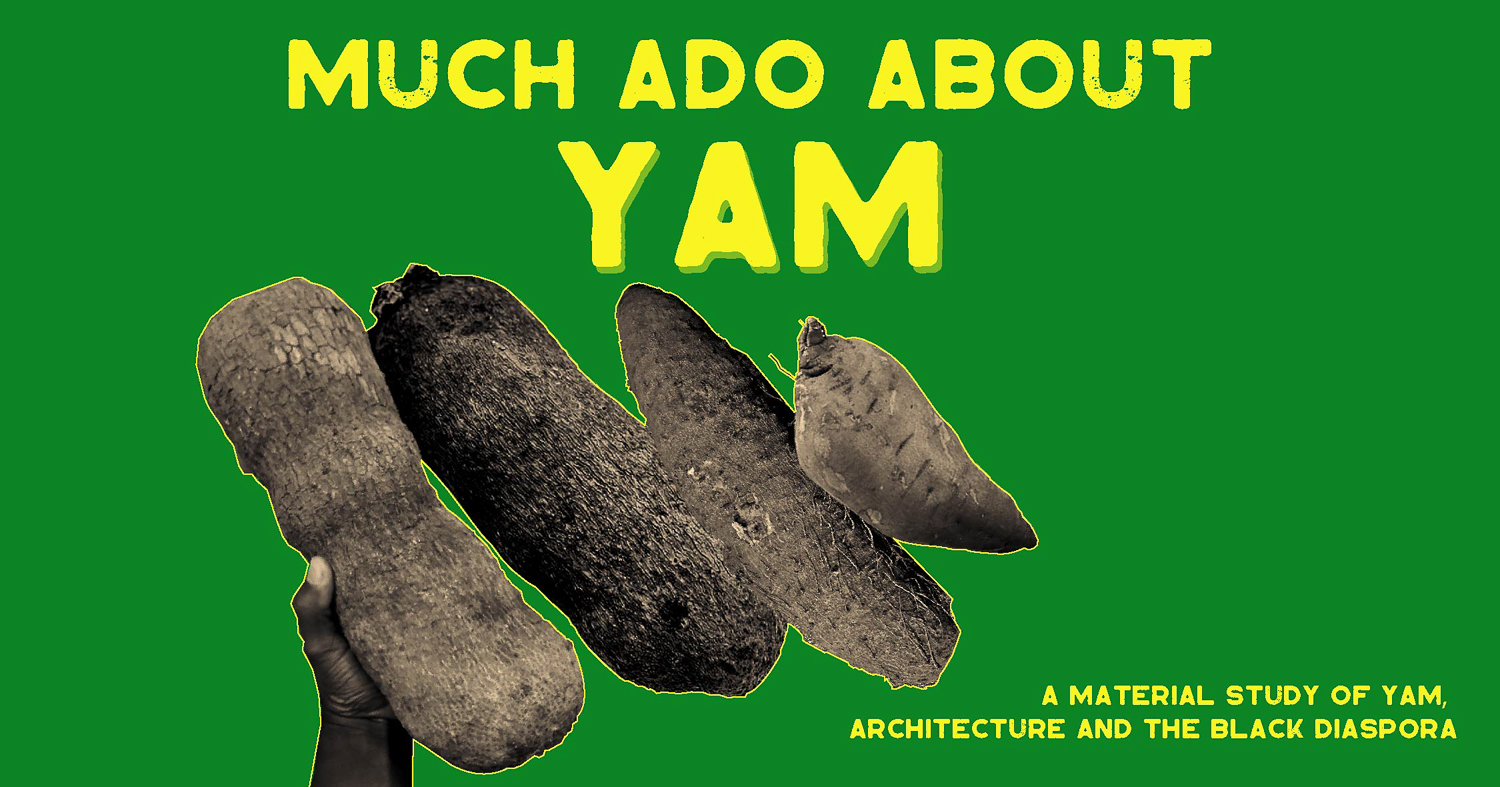
Much Ado About Yam is a digital zine that traces the yam’s history across the Black diaspora and its relevance to architecture and building materials. The project highlights the yam as more than an ingredient for a meal—it spurred communal social gatherings, held significance in traditional rites, was stacked as a fundamental structural component in yam barns, and provided enslaved people with the means to earn income for self-emancipation. Unlike the colonial framework of separating plant from man and object from context, this zine seeks to create an honest archive of yam histories from a social, cultural, spatial, and material perspective.
Image credit: Sumayyah Súnmádé Raji
Hyper Local Robotic Entanglements
Dierdre Shea, Julian Goldman, Claire Moriarty, and Riley Studebaker
Troy, NY
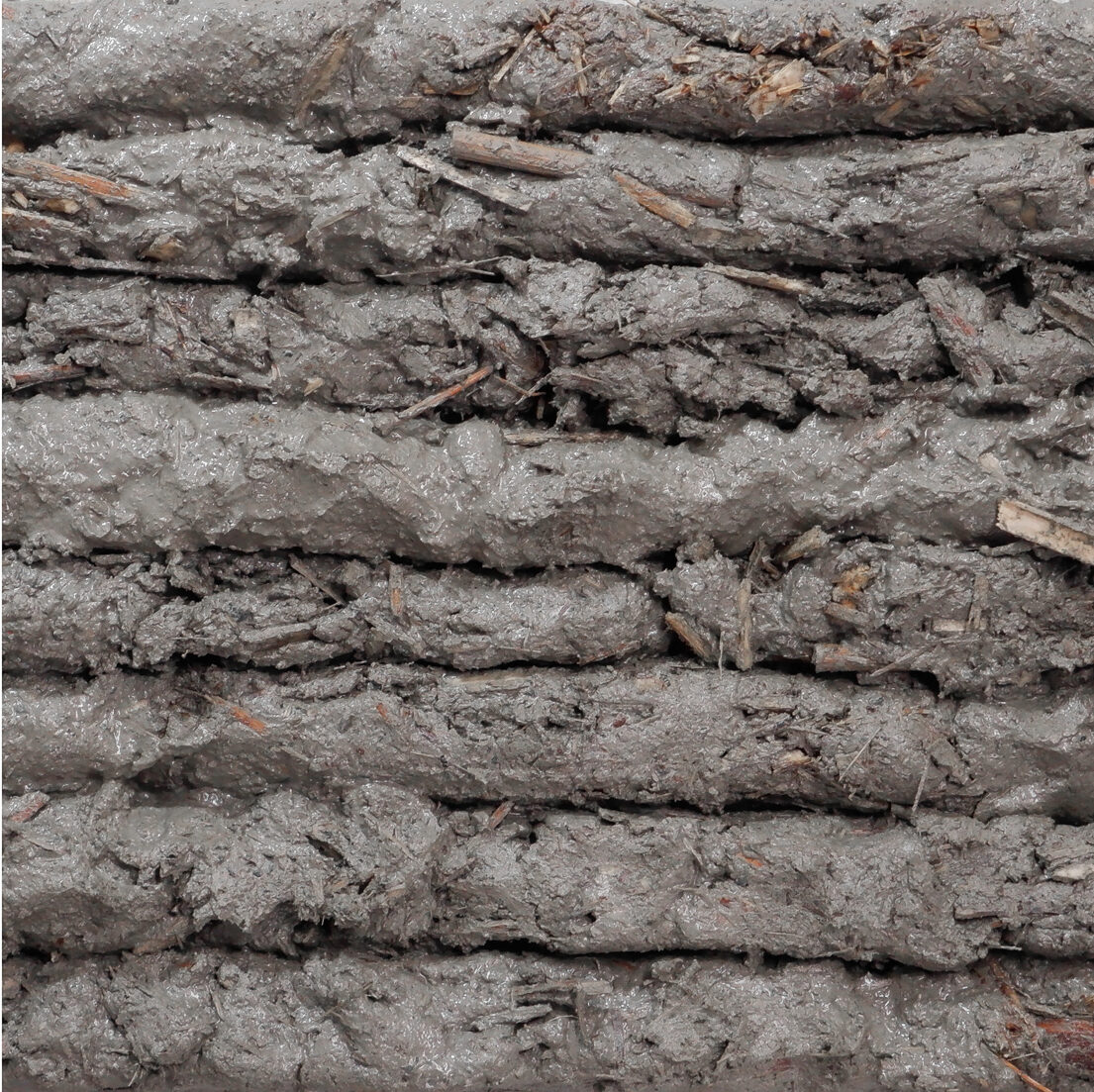
Hyper Local Robotic Entanglements (HLRE) is a research project that merges modern, emerging technologies with ancient earthen building materials. The project will develop an accessible, site-specific 3D printer system that utilizes locally-sourced materials and site conditions and can be operated by the local community. It responds to and collaborates with the existing environment, enabling a site-responsive building process that intends to be more cost-effective than that previously explored in construction-scale 3D printing, advancing a community-accessible manufacturing technology with hyper-local materials.
Construction-scale 3D printed clay mix based on traditional earth building materials: locally mined clay, sand aggregate, and fiber reinforcement processed from Phragmites and Japanese Knotweed. Image credit: Riley Studebaker
Constructing the Other: A Meditation on Diaspora, Reparations, and Fractured Belonging
Kriti Shivagunde and Niriksha Shetty
New York, NY and Statewide
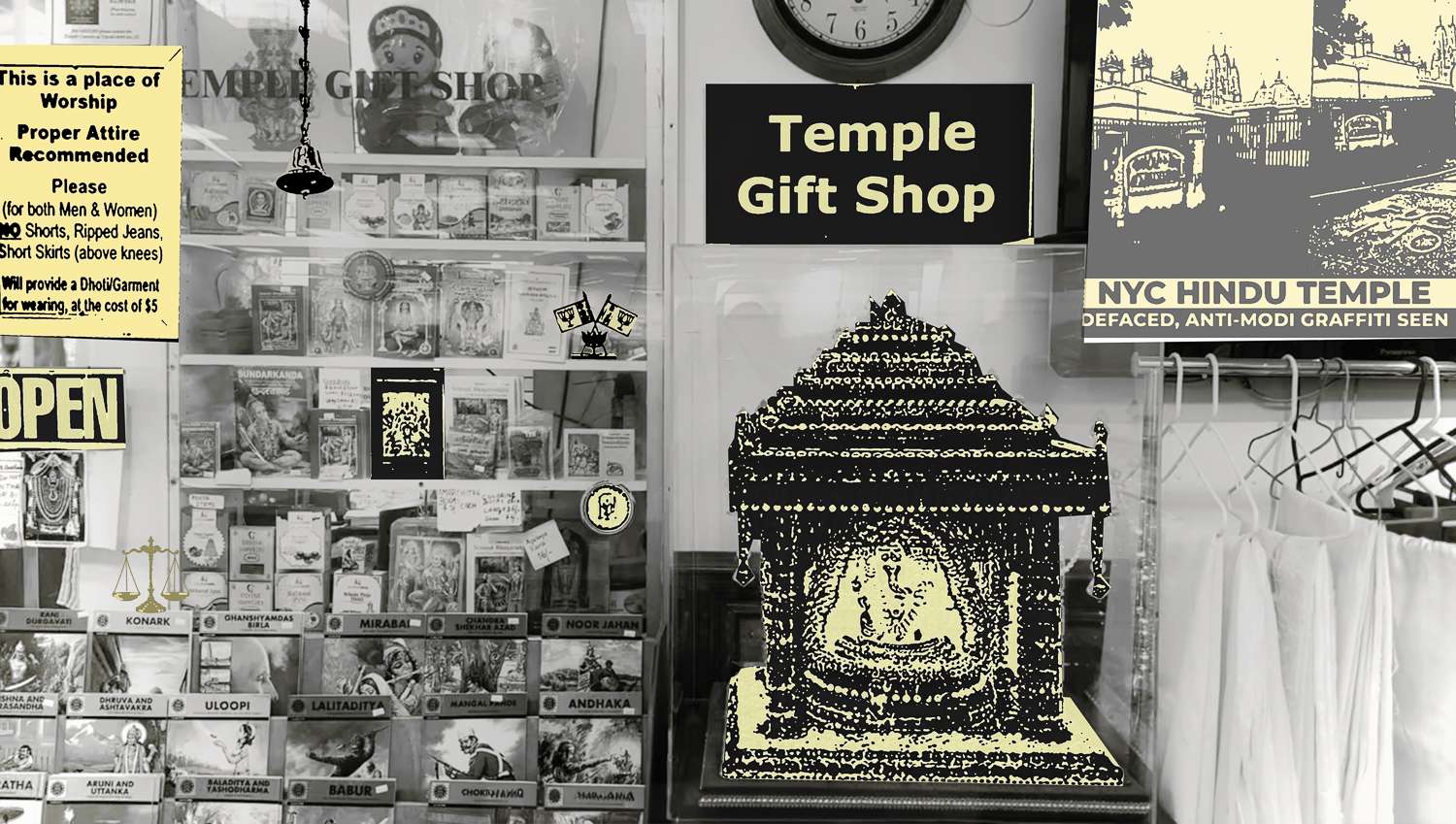
Constructing the Other grapples with the material experience of one’s identity in the South Asian diaspora and the seclusion it generates, seeking to unravel how the power of institutions constructs and propagates identity. Situating itself within the AksharDham, the project explores how the design of religious spaces can exacerbate tensions within the process of place-making, creating otherness in the forms of casteism, social hierarchies, and the rejection of queer identities and ecosystems. Collecting and documenting oral histories and visual evidence, the project will culminate in an installation and digital archive.
Mundane commodities as tenets of Hinduism and belonging in the diaspora. Ganesh Temple Canteen, Flushing, Queens. Image Credit: Kriti Shivagunde and Niriksha Shetty
Lingering Listening Pavilion: A System for Evolving Community Spaces
Jin Young Song, Joyce Hwang, and Stephanie Cramer
Buffalo, NY
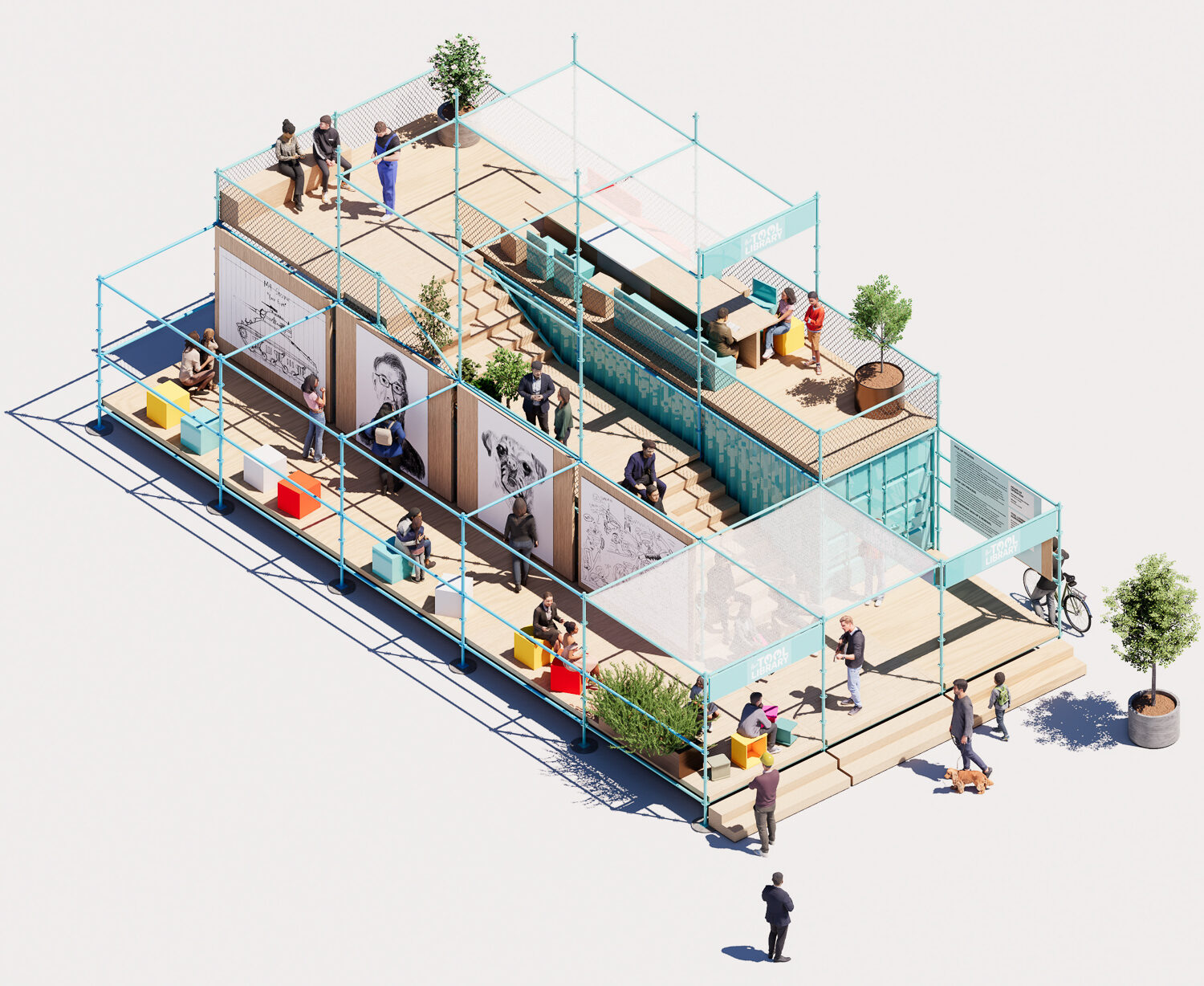
Lingering Listening Pavilion explores a participatory design-build process using a reconfigurable modular construction system. In partnership with the Tool Library, a nonprofit organization in Buffalo, NY, this project proposes a communal space that evolves with community needs and invites people to participate and linger. Its incremental, adaptable design embodies the practice of “listening through design,” reshaping how the space fosters engagement over time.
Concept image of Lingering Listening Pavilion. Image Credit: Jin Young Song
You(th) Fab: A Mobile Community Design & Fabrication Lab for Youth in Flushing, Queens
Hung Fai Tang and Vincent Wu
Nassau County and New York, NY
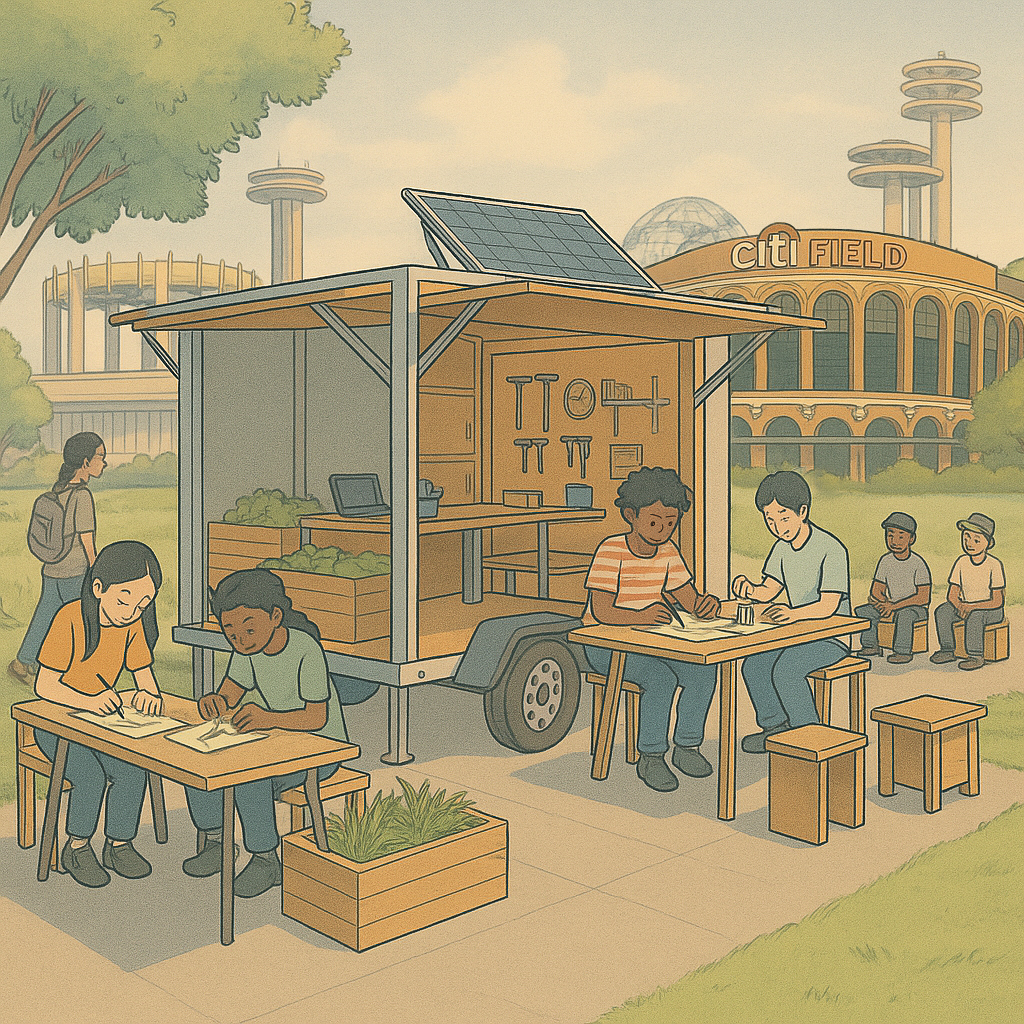
You(th) Fab is a mobile design lab for youth aged 12 through 18 that brings hands-on workshops and mentorship into public spaces. Launching in Flushing, Queens, it will offer underserved communities access to design tools and civic engagement. Youth will work with mentors to build public projects, including urban benches, neighborhood kiosks, community displays, and cultural signage, gaining skills and cultivating ownership of their neighborhood spaces. The project aims to empower youth to design, build, and belong, creating stronger, more inclusive communities.
Image credit: Hung Fai Tang, assisted by AI
A New Residential Grammar: Herman Jessor and Abraham Kazan’s Housing Cooperatives and Shared Living Elements
Mersiha Veledar and Kayla Montes de Oca
New York, NY
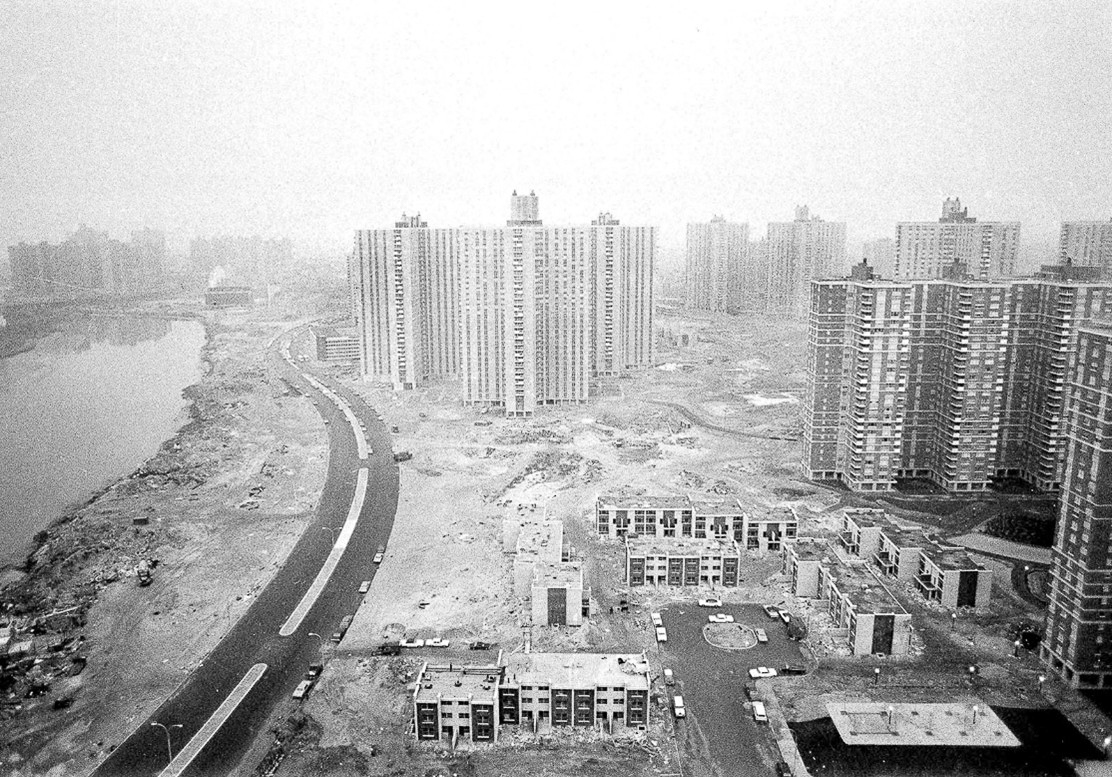
This planned exhibition studies Herman Jessor and Abraham Kazan’s housing developments, focusing on their community-engaged affordability and innovative shared spaces, including communal kitchens and gardens. Situating New York City’s housing crisis in historical exclusion, the project will respond by creating a “residential grammar of elements”: a visual catalog of collective spaces and their supporting policies.
Co-op City construction. Image credit: Architectural Record
The Design Turn: Unpacking Incentives, Values, and Impacts in New York City’s Affordable Housing Architecture
Laura Wainer
New York and Westchester County, NY
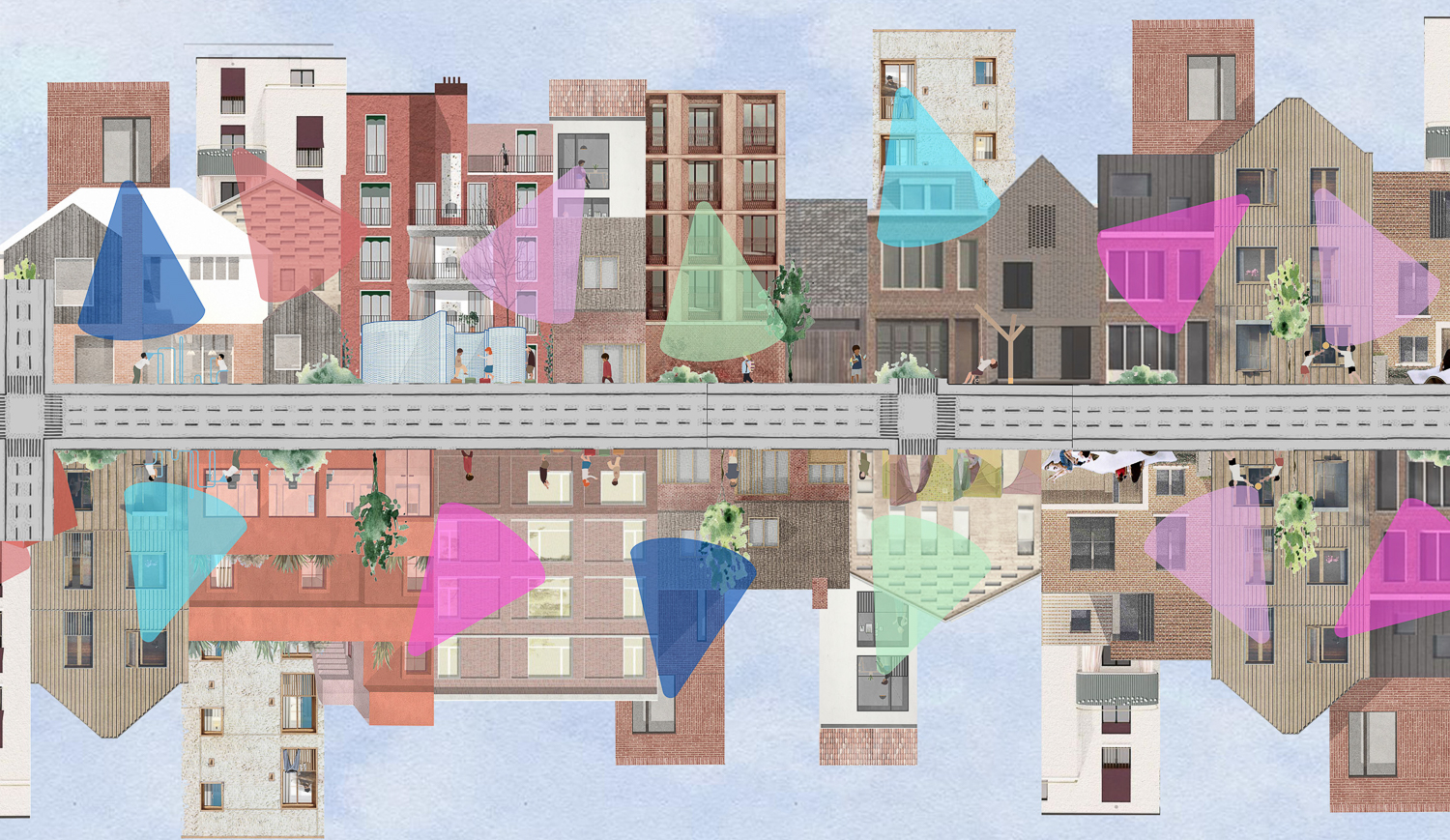
This project investigates the “design turn” in New York City’s affordable housing, where rising design ambitions meet deepening scarcity. It examines how architects, policymakers, developers, and residents define and negotiate “good” design, and whether these aspirations expand access to quality housing or reproduce new forms of exclusion. The project aims to identify design strategies that align aesthetic ambitions with housing justice.
"CHILDHOOD NODES," from “PATHWAYS TO HOME: Design Solutions for Immigrant-Centered Housing,” published by The Bernard and Anne Spitzer School of Architecture. Image credit: Mauricio Guidos and Genesis Soto
Seeds of Diaspora: Plants, Migrations, Settlements, Cities
Lynnette Widder, Wendy S. Walters, and Sam Van Aken
New York, Syracuse, and Westchester County, NY
Seeds of Diaspora traces the interactions of humans and plants as they manifest amid radical climate change across settlements and infrastructures, enlisting literary, historical, filmic, landscape, ecological, agricultural, anthropological, and architectural approaches. Realized in print as well as in mutable digital forms, the project will bring together essays, stories, reports, field work, photographs, and new artwork to inspire unanticipated connections and creative questioning in plant-human relations.
Oakwood Beach, Staten Island, September 2024. Ornamental conifers and spontaneous vegetation at the site of a house ceded to storm surge flooding. Image credit: Thad Russell
Christianna Bennett
Landscape designer, researcher, Assistant Professor for Architecture Science and Ecology, and Director of Geofutures, Rensselaer Polytechnic Institute
Troy, NY
Yvette Chaparro
Assistant Professor of Product and Industrial Design, School of Constructed Environments, Parsons School of Design
New York, NY
David Costanza
Principal, David Costanza Studio, and Assistant Professor of Architecture, Cornell University College of Architecture, Art, and Planning
Ithaca, NY
Azra Dawood
Andrew W. Mellon Curator of Academic Programs, Vassar College
Poughkeepsie, NY
Ivi Diamantopoulou
Principal, New Affiliates, and Professor of Practice and New York City Architecture Program Director, Syracuse University School of Architecture
New York, NY
Anna Dietzsch
Partner, Arquitetura da Convivencia (ArC), and Visiting Associate Professor, Cornell University College of Architecture, Art, and Planning
New York, NY
Cara Eckholm
Urban policy advisor and Director, Pilot Pitchfest
New York, NY
Farzana Gandhi
Founder, Farzana Gandhi Design Studio, and Associate Professor of Architecture and Interior Design, New York Institute of Technology School of Architecture & Design
New York, NY
Ruth Mandl
Principal, CO Adaptive, and Adjunct Associate Professor, Columbia University Graduate School of Architecture, Planning and Preservation
New York, NY
Jae Shin
Partner, HECTOR
New York, NY, Newark, NJ, and Philadelphia, PA
Amy Sperber
Assistant Professor of Fashion Design, Fashion Institute of Technology
New York, NY
Meredith TenHoor
Architectural and urban historian, and Professor and Coordinator of Undergraduate Architectural History and Theory, Pratt Institute School of Architecture
New York, NY
The 2025 Independent Projects grant program is made possible by the New York State Council on the Arts with the support of the Office of the Governor and the New York State Legislature.

In the 2024 cycle, 25 creative and research proposals from throughout New York State have been selected to receive grants of $10,000 each.
In the second year of the League’s Independent Projects partnership with NYSCA, 25 design proposals were selected for grants of $10,000 each.
In the first year of the League’s Independent Projects partnership with NYSCA, 18 design proposals were selected for grants of $10,000 each.