
Playfully Sincere
For Nick Hopson and Klara Rodstrom, a "scrappy" ethos allows Hopson Rodstrom Design Co. to thrive on a residential and socially oriented portfolio.
The Architectural League’s biennial Emerging Voices award spotlights North American individuals and firms with distinct design voices that have the potential to influence the disciplines of architecture, landscape architecture, and urban design. This year, the League posed a series of questions to the eight practices that received a 2026 award, prompting each firm or individual to reflect on their working theories and methods, the opportunities and challenges of contemporary practice, and what’s next.
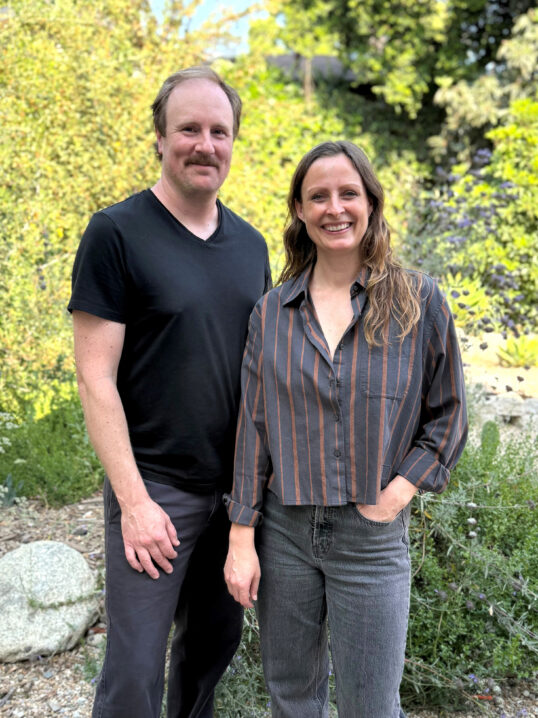
Image courtesy Hopson Rodstrom Design Co.
Hopson Rodstrom Design Co. is a 2026 Emerging Voice.
Los Angeles-based firm Hopson Rodstrom Design Co.’s design approach balances playfulness with sincerity across a portfolio of residential and socially oriented projects in Southern California. Partners Nick Hopson and Klara Rodstrom discuss how they make good work and find joy within the constraints of a small, “scrappy” practice: from the innovation a lean budget requires to close relationships with clients.
***
As an emerging firm, where do you locate your practice, environmentally, socially, and within the design field?
We see ourselves as scrappy underdogs and problem-solvers who focus on making each project that comes across our desks great. We value radically simple solutions, choosing to do the best we can with the work we get.
Environmentally, we believe that sustainability begins with appropriateness. Rather than pursuing trends or prescribed aesthetics, our goal is to create work that lasts—physically, emotionally, and culturally.
Socially, we strive to create spaces that are comforting and responsive to the diverse needs of the people who use them. We believe design should support equity, well-being, and community connection. Our work begins by listening and seeking to understand the cultural and human dimensions of each project.
Within the design field, we are advocates for thoughtful simplicity. We value efficiency and clarity. We strive to find a balance between architecture that has a light touch and serves as a calm backdrop for its inhabitants, while also feeling grounded in materiality and unafraid to make its mark on its place and time.
What is the main challenge for your practice in today’s economic, environmental, and political climate?
The challenges for our firm are tied into the broader challenges facing our society and profession. The cultural value of architecture does not fit neatly into the economic systems we all live within. Value is measured primarily through efficiency, growth, and return on investment, yet the most meaningful contributions of architecture often resist those metrics.
Within this landscape, we see a fundamental misunderstanding of design as a commodity. While architectural services are necessarily billed and quantified, the value of experience, judgement, and design thinking cannot be reduced to units of production. Design requires sustained engagement and depends on trust in an iterative process that does not always resolve immediately or neatly. There is a constant tension between running a practice and protecting the time and attention that good design requires.
Environmental concerns further expose this tension. Many of the most sustainable approaches to building—adaptation, reuse, durability, and stewardship—require patience and long-term thinking. Yet contemporary development models often reward replacement over repair and immediate returns over enduring value. We see architecture’s role as resisting that impulse and advocating for a more lasting relationship between people, buildings, and place.
We also believe the profession must confront its own exclusivity. Access to architectural services remains limited to a relatively small and privileged segment of society. It is therefore unsurprising that architecture can feel distant or irrelevant to the broader public. One of the profession’s greatest challenges is demonstrating that design excellence is not a luxury good but something that should have relevance and impact beyond the clients who can afford it. Expanding that relevance is essential to architecture’s future.
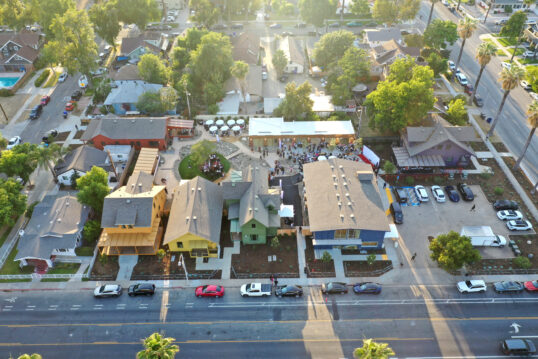
Hopson Rodstrom Design Co., GB Construction | Project Legacy, Riverside, CA, 2023. Image credit: GB Construction
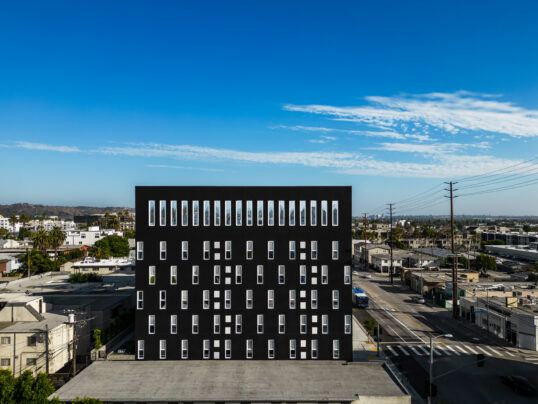
Hopson Rodstrom Design Co. | The Jagger, Los Angeles, CA, 2023. Image credit: Paul Vu, Here and Now Agency
When deciding whether to take on a project or collaboration, what questions do you ask yourselves? What do you ask clients or collaborators?
While we are not in a position to be selective about every opportunity, we’ve found that the success of a project depends far less on its type than on the quality of the collaboration. Our best work has consistently come from clients and collaborators who see architecture as a shared creative endeavor.
When evaluating a potential project, we ask ourselves whether there is room for meaningful design exploration and whether the project aligns with our values and interests. Just as importantly, we try to understand the people involved. Is there trust in the process? Is there a genuine curiosity about what architecture can contribute? Are expectations aligned regarding roles, responsibilities, and decision-making?
Over time, we’ve learned that chemistry and trust are difficult to predict. A project that appears straightforward can become extraordinarily rich, while a seemingly perfect fit can prove challenging. Every collaboration ultimately develops its own dynamic. What we’ve come to value most is a shared belief that thoughtful design has value and that the best results emerge through dialogue, mutual respect, and a willingness to be surprised by the process.
How would you define research in your practice?
For us, research is not a parallel activity that exists alongside design; it is one of the tools we use in pursuit of a particular architectural question, inseparable from the act of making.
The nature of that research changes from project to project. Sometimes it involves exploring the history of a site or building. Sometimes it means investigating material systems, structural possibilities, construction techniques, environmental performance, or regulatory constraints. Other times it may involve studying patterns of use, cultural narratives, or datasets that reveal something about a place and its inhabitants. The questions are different each time, but the goal is the same: to better understand the conditions of a project and uncover opportunities that might otherwise have remained hidden.
We are less interested in research as a means of producing expertise than in research as a means of producing insight. It helps us move beyond assumptions, test ideas, and engage more deeply with the specific circumstances of a project. In that sense, every project becomes its own form of inquiry.
Cover: Hopson Rodstrom Design Co. | The Jagger, Los Angeles, CA, 2023. Image credit: Paul Vu, Here and Now Agency. Video editor: Darlena Chiem
Do you teach? What is the interplay between your teaching and practice?
Nick has taught third-year undergraduate design studios at California State Polytechnic University, Pomona, for the past several years. For us, teaching is less about advancing a particular agenda and more about participating in a tradition of mentorship that has been fundamental to our own development. We were fortunate to learn from educators, employers, and mentors who invested an enormous amount of time and energy in us early in our careers. Teaching is, in many ways, an opportunity to contribute to that same cycle.
Ultimately, teaching and practice reinforce one another because both depend on a willingness to remain engaged in the process of learning. The more we teach, the more we are reminded that architecture is not simply a body of knowledge to be mastered, but an ongoing conversation that each generation inherits and reshapes.
Do you prefer to work in a certain scale or typology, or do your projects range in scope? Is there a project type you would like to design for but have not yet?
We have enjoyed working across a wide range of scales and typologies, and we don’t think of our practice as being defined by any single project type. Some of the most rewarding work we’ve done has been on relatively modest projects, while some of our most formative professional experiences prior to founding the firm involved projects of much greater scale. For us, the quality of the architectural question matters more than the size of the commission.
As for projects we hope to pursue in the future, we remain open. We are particularly interested in work that engages broader public and civic audiences, but more than any specific typology, we are excited by opportunities that challenge our assumptions and expand the boundaries of our practice. If we continue producing work that meets our standards and contributes positively to its context, we trust that new scales and typologies will follow.
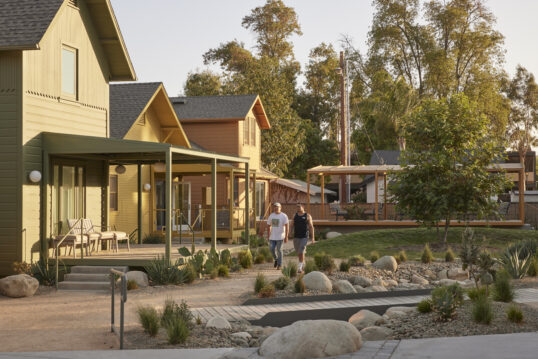
Hopson Rodstrom Design Co., Terremoto, GB Construction | Project Legacy, Riverside, CA, 2023. Image credit: Tim Hirschmann
When do you consider a project complete?
When it is inhabited by people. It becomes theirs, and it is out of our hands.
Are there any projects coming up that you’re excited about, and what’s next for your practice as a whole?
We’re squarely in the single-family residential phase of our career and are excited about several of the homes we’re starting, developing, and breaking ground on.
Within that, we are particularly engaged with fire-rebuild projects in Altadena and the Pacific Palisades, where the work is directly tied to questions of resiliency, recovery, memory, and the rebuilding of community fabric.
As a practice, we see this moment as an opportunity to deepen our understanding of how architecture operates at the scale of everyday life. We are interested in how the lessons from these highly personal commissions can inform future work across other typologies. What remains constant for us is a focus on attentive, context-driven design and the belief that even modest projects can carry cultural and environmental weight.
How did you meet your partner? How did you decide to practice together?
When we arrived in Los Angeles and started architecture school at the University of Southern California, we felt like we found our people and an urban playground to explore. We first caught sight of each other the week before school started, in the worst place to meet your partner—the student financial aid orientation. We officially met on the first day of school, having been placed in the same studio. The lens of architecture has been a part of our lives and relationship since the beginning, and we have grown within and navigated the profession together. We started talking about our own practice in grad school at Columbia University GSAPP, and eventually made the leap at the same time we started our family. Having kids gave us the shake-up we needed to take risks, ensure we could maintain a flexible schedule, and bring the whole endeavor under one roof.
What’s one piece of advice you would give a young architect who wants to start their own firm?
Build things first. Learn by being an apprentice and give yourself time. We think it is important to work for a range of practices and see the industry through multiple lenses before starting your own firm. That exposure helps you understand not only different design approaches, but also different ways of operating—how decisions are made, how projects are delivered, and how values translate into built work.
Without that breadth of experience, it is easy to inherit a way of working by default rather than by choice. Taking time early in your career allows you to develop a more grounded sense of your own voice.
Can you name a person, book, film, or other source of inspiration?
Our inspirations are less tied to a single discipline than to a shared sensibility across music, literature, film, and art—work that balances intelligence with humor, and seriousness with play.
Musically, we return often to Bob Dylan, The Beatles, Gillian Welch, I See Hawks in L.A., Hailu Mergia, Cat Power, Hope Sandoval, and Talking Heads, among many others. In literature, authors such as Haruki Murakami, Kurt Vonnegut, Neal Stephenson, and Christopher Moore reflect different registers of imagination, from the speculative to the surreal to the irreverent. In film, we are drawn to the Coen Brothers and Wes Anderson, particularly for their ability to construct worlds that are carefully composed but never devoid of irony or humanity. Art figures such as Cy Twombly, Willem de Kooning, Robert Rauschenberg, Adrian Villar Rojas, Madeline Donahue, Heather Chontos, and Andy Woll offer very different practices, but share a willingness to blur boundaries between rigor and intuition, seriousness and absurdity. We admire the work of women designers who never get enough credit, such as Lina Bo Bardi, Charlotte Perriand, Denise Scott Brown, and Marion Mahony, among many others.
We are drawn to artists and thinkers who take their work seriously without taking themselves too seriously, and who are able to see humor and beauty as part of the same condition of being alive.
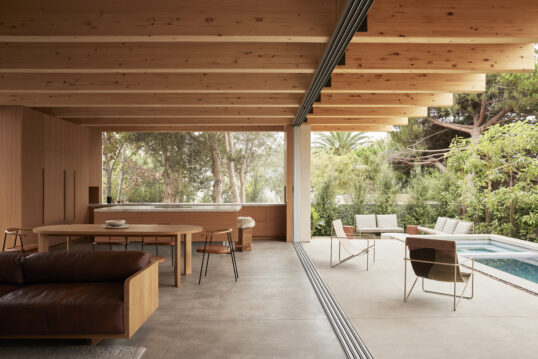
Hopson Rodstrom Design Co. | Mar Vista House No. 1, Los Angeles, CA, 2024. Image credit: Tim Hirschmann
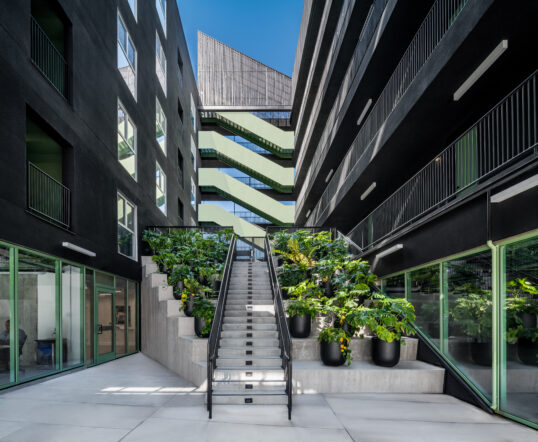
Hopson Rodstrom Design Co. | The Jagger, Los Angeles, CA, 2023. Image credit: Paul Vu, Here and Now Agency
What did you last draw?
Sketches of a house in Venice, alongside dragons drawn with our kids. Both are important to how we think and work, moving between the responsibilities of practice and parenthood, and the openness of drawing as something playful, immediate, and interactive.
What do you need to do your best work?
Long dog walks.