
On Making Good Architecture
D'Arcy Jones of Vancouver-based D'Arcy Jones Architects discusses craft, curiosity, and client relationships.
The Architectural League’s biennial Emerging Voices award spotlights North American individuals and firms with distinct design voices that have the potential to influence the disciplines of architecture, landscape architecture, and urban design. This year, the League posed a series of questions to the eight practices that received a 2026 award, prompting each firm or individual to reflect on their working theories and methods, the opportunities and challenges of contemporary practice, and what’s next.
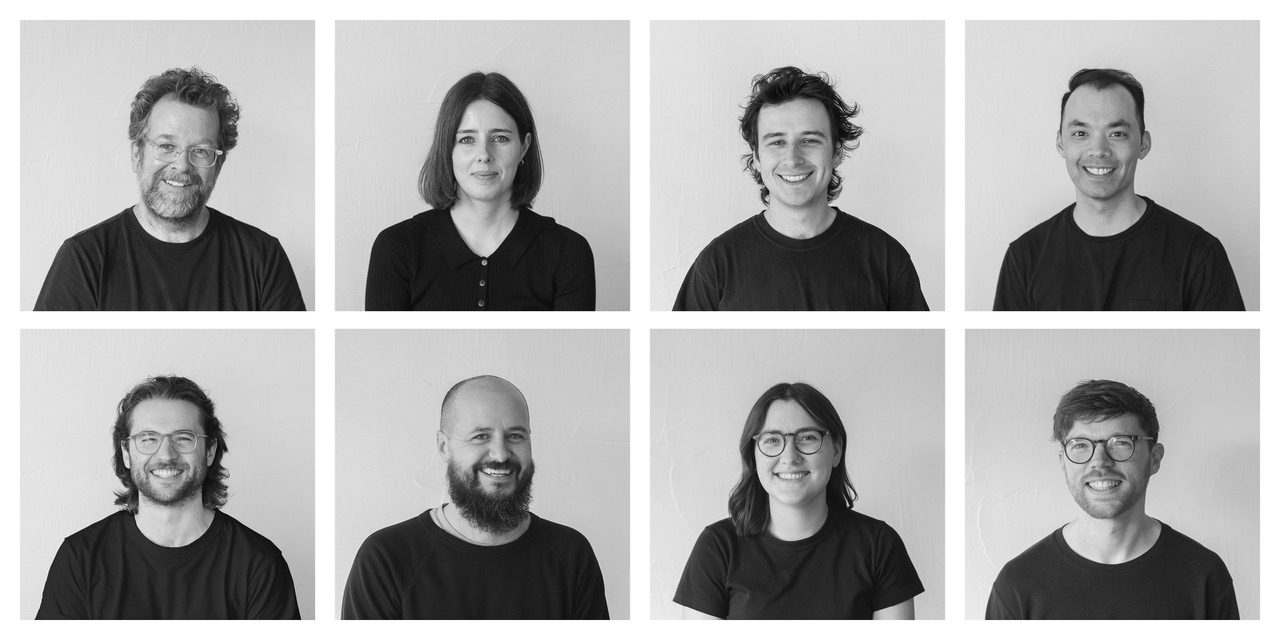
The D'Arcy Jones Architects team, with D'Arcy Jones at top left. Image courtesy D'Arcy Jones Architects
Since its founding in 1999 by D’Arcy Jones, the Vancouver-based D’Arcy Jones Architects has developed an expansive portfolio of residential, commercial, and cultural projects across urban and rural Canada, distinguished by formal invention and commitment to craft. Below, Jones reflects on finding common ground with clients and previews exciting upcoming projects for the practice.
***
As an emerging firm, where do you locate your practice, environmentally, socially, and within the design field?
Although we love new construction projects, we are particularly interested in the challenges of renovation and adaptive reuse. We agree with others who say the greenest buildings are the ones already built. We believe in beauty. It can take many forms and be created from a wide range of materials and parameters. We try to make our projects artful, especially through spatial and formal experiments.
What is the main challenge for your practice in today’s economic, environmental, and political climate?
Architecture is affected by politics, but I don’t think it is inherently political. We are more interested in the cultural significance of what people build and how they build it. The design professions should advocate for a return to low-tech building solutions and building codes because the explosion of well-intentioned technical complexities in the building process is driving up costs in an unsustainable way. The unnecessary busywork of construction bureaucracy can throttle innovation. Making good architecture under these constraints is harder than ever, but not impossible.
Cover: D’Arcy Jones Architects | Pearl Block, Victoria, BC, 2021. Image credit: Ema Peter. Video editor: Darlena Chiem
When deciding whether to take on a project or collaboration, what questions do you ask yourselves? What do you ask clients or collaborators?
I like to meet potential clients or collaborators for a good chat to see if we click and if they seem like people we want to get to know over a few years. The budget and scope are secondary. We have high- and low-budget projects, and both are equally fun. I ask questions to see where our interests and ambitions overlap, including topics beyond architecture. Common ground is important, and the more eclectic and human, the better.
How would you define research in your practice?
Being curious about the process, open to random inspiration, and doggedly trying to do something new each time. I think contemporary design has lost its way, and the contemporary interest in minimalism and perfection is starting to feel a bit inhuman. In reaction, we are trying to inspire change by subverting conventions.
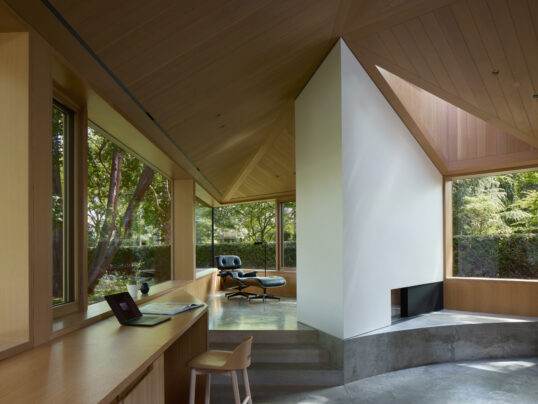
D’Arcy Jones Architects | Brick House, Vancouver, BC, 2025. Image credit: James Brittain
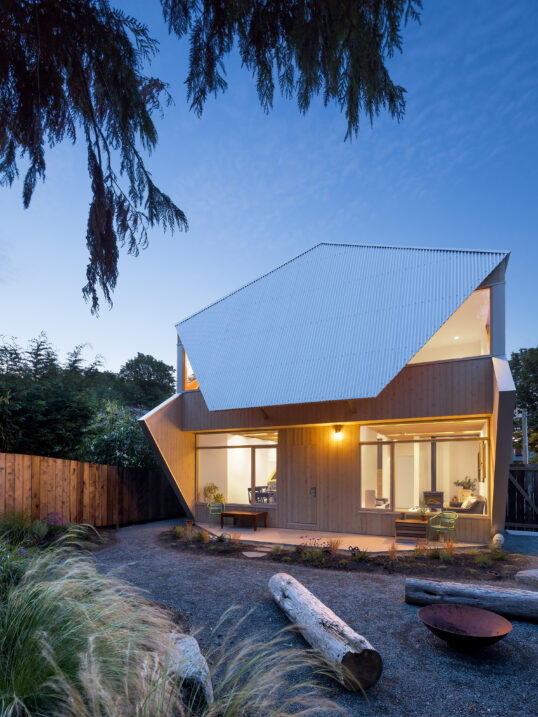
D’Arcy Jones Architects | Double Header Duplex, Victoria, BC, 2020. Image credit: Sama Jim Canzian
Do you teach? What is the interplay between your teaching and practice?
I served as the 2026 visiting scholar and professor at the School of Architecture at Montana State University. My studios and seminars expanded on our current Prix de Rome wood research. Sometimes I serve on thesis committees at the School of Architecture and Landscape at the University of British Columbia. My teaching bridges practice and our studio’s research on finding better ways to design, rooted in irreverence, the everyday, and humour.
Do you prefer to work in a certain scale or typology, or do your projects range in scope? Is there a project type you would like to design for but have not yet?
We are drawn to projects that offer a chance to try out new ideas. We would like to create more art galleries and museums, which were my favourite kinds of buildings to visit as a kid.
When do you consider a project complete?
When the landscape grows in and the building is a bit scratched and dirty.
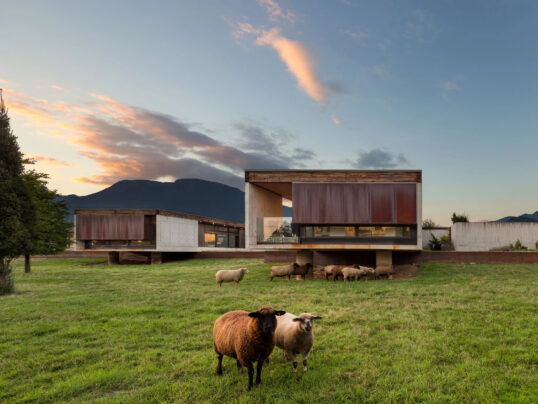
D’Arcy Jones Architects | Ha-ha Housebarn, Agassiz, BC, 2022. Image credit: Sama Jim Canzian
Are there any projects coming up that you’re excited about, and what’s next for your practice as a whole?
We have a 10-unit courtyard housing project in the works, along with some very interesting commercial and residential projects, each with its own unique challenge. We are working on publishing projects and a public design gallery to advocate for more experimental design.
What’s one piece of advice you would give a young architect who wants to start their own firm?
Try to make something good out of those scrappy little first projects that might come from friends or family.
Can you name a person, book, film, or other source of inspiration?
History books with pictures, unpopular music, Western movies, and shows like How It’s Made.
What did you last draw?
A window detail, this morning.
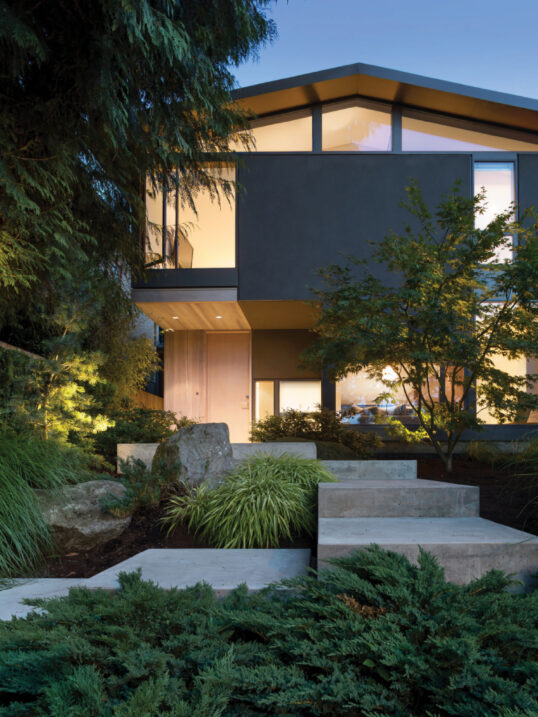
D’Arcy Jones Architects | 430 House, Vancouver, BC, 2013. Image credit: Sama Jim Canzian
What do you need to do your best work?
Trace paper or a laptop at my dining table.