
How Can We Add Value?
At g3arquitectos, Juan Alfonso and María de los Ángeles Garduño Jardon have spent nearly three decades building spaces that strengthen communities, inspire solidarity, and imagine more equitable ways of making cities.
The Architectural League’s biennial Emerging Voices award spotlights North American individuals and firms with distinct design voices that have the potential to influence the disciplines of architecture, landscape architecture, and urban design. This year, the League posed a series of questions to the eight practices that received a 2026 award, prompting each firm or individual to reflect on their working theories and methods, the opportunities and challenges of contemporary practice, and what’s next.
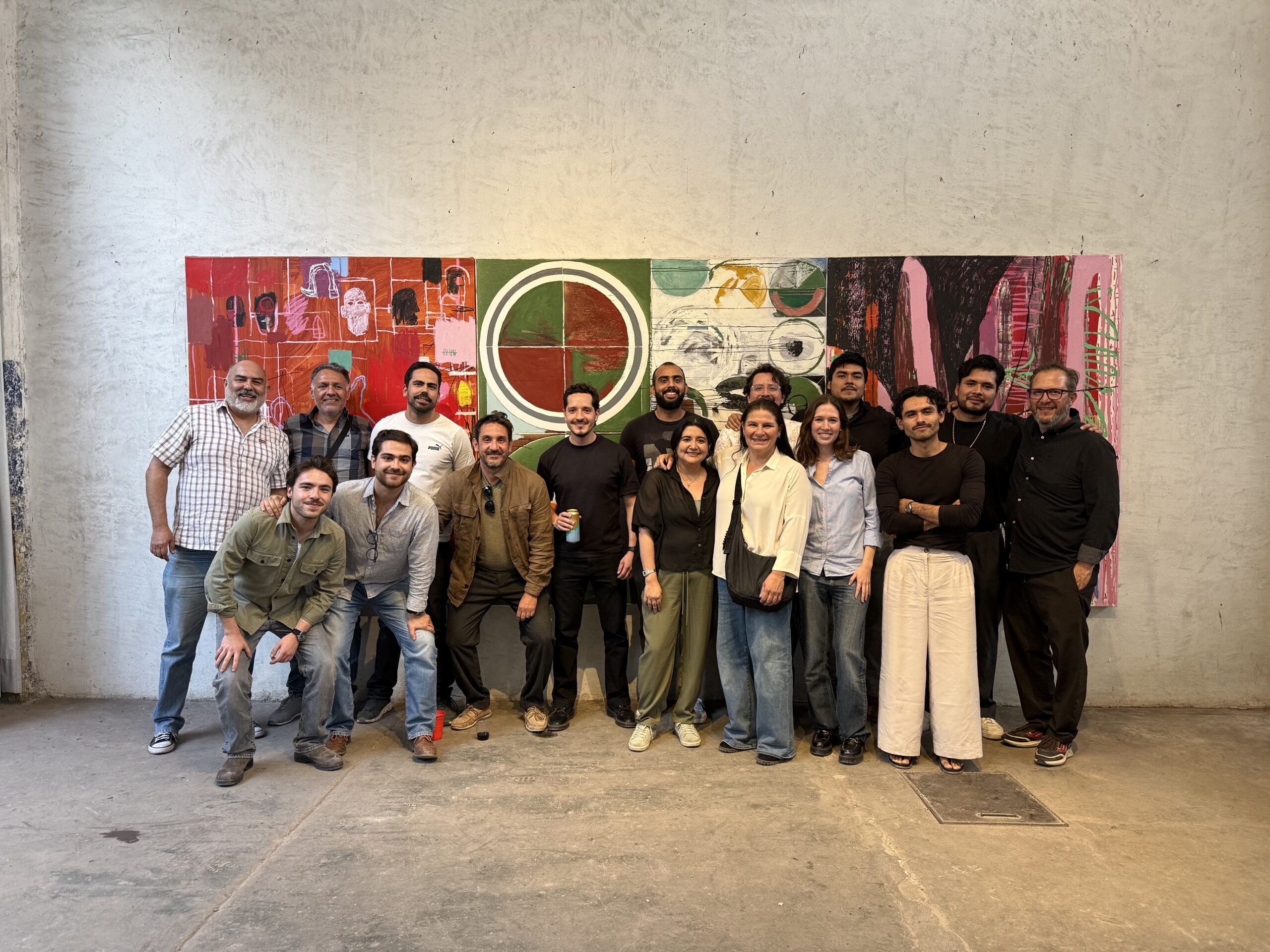
The g3arquitectos team, with María de los Ángeles Garduño Jardon at center right in white top and blue jeans, and Juan Alfonso Garduño Jardon at far right in black shirt and wearing glasses. Image courtesy g3arquitectos
Founded in Querétaro in 1997, architecture firm g3arquitectos has developed a significant portfolio of civic and residential projects in the Central Mexican region, focused on creating conditions for community gathering, celebration, and solidarity. In this interview, firm leaders and co-founders Juan Alfonso Garduño Jardon and María de los Ángeles Garduño Jardon share the principles and stories that have shaped their work over the years, from what unites their projects across a wide range of scales, to exciting upcoming housing work, to the unusual reason that the firm’s third co-founder, Armando González Medina, departed the practice.
***
As an emerging firm, where do you locate your practice, environmentally, socially, and within the design field?
We position our practice primarily within the social realm, given the weight that academic, community-based, and public space projects have within our body of work. For more than twelve years, we have developed interventions in public spaces aimed at strengthening communities. That experience has been fundamental to understanding and later developing larger scale public space projects.
At the same time, we are interested in responding to design challenges, particularly environmental ones, through an expanded context. Beyond the standard tools of architecture, we are interested in engaging with existing resources—material, economic, social, technical, and cultural—through collaborations with other disciplines.
What is the main challenge for your practice in today’s economic, environmental, and political climate?
We would like to produce more community-based projects capable of linking social fabric across larger territories, perhaps reaching populations of up to 10,000 inhabitants. We are interested in projects that, even with limited resources, can truly contribute to improving the conditions of marginalized communities through reflecting and engendering solidarity and cooperation within the communities themselves.
We are excited by the possibility of imagining and building more equitable ways of making cities.
Cover: g3arquitectos, Anonimous | Centro de Desarrollo Comunitario de Tizayuca, Tizayuca, Mexico, 2024. Image credit: Rafael Gamo, camarada estudio. Video Editor: Darlena Chiem
When deciding whether to take on a project or collaboration, what questions do you ask yourselves? What do you ask clients or collaborators?
The first question we ask ourselves is: How can we add value in this particular circumstance? And also: Are we truly capable of adding value?
There are cases in which we quickly recognize that we are not necessarily the most suitable architects for a given commission. For example, we are not interested in pretentious projects. This does not mean we are not interested in large or luxurious projects; we believe luxury is not found in the most conspicuous or expensive materials, but rather in spatial experience, in the relationship with the natural context, and in spaces of silence.
We are interested in projects that allow us to insert values of equity and ecological awareness. We work with developers, and we understand that there must be an economic benefit for them; however, when the only objective is self-benefit, the project ceases to interest us.
We are also always interested in learning from our collaborators and clients, and in constructing projects together. Under those conditions, projects are always attractive to us.
How would you define research in your practice?
We develop urban research and vision projects, mainly linked to transit-oriented development. In architectural projects, our research focuses on strengthening communities through participatory processes and on building with limited resources.
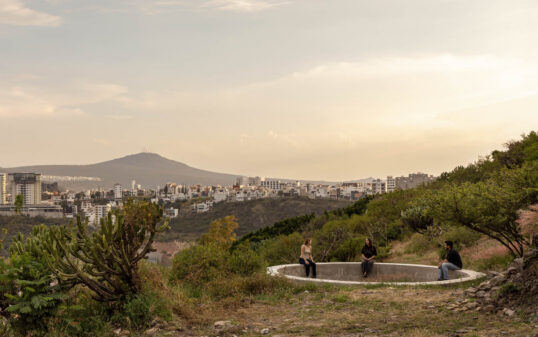
g3arquitectos, Anonimous, Andrés Casal, University of Houston (professor Rafael Longoria, students Sasha Cea-Lovless, Vanessa Huerta, Nicolas Narvacan, Angela Altamirano) | The Chapel of Cerro del Arnuel, Querétaro, Mexico, 2025. Image credit: Ariadna Polo
Do you teach? What is the interplay between your teaching and practice?
Yes, we teach, and we have done so for many years, although less and less lately. María teaches at Instituto Tecnológico y de Estudios Superiores de Monterrey (ITSEM), Querétaro campus, and Alfonso at the Gerald D. Hines School of Architecture at the University of Houston. María commonly works on housing, while Alfonso has focused more on public space.
Academic reflection always ends up informing our professional practice, and vice versa. But it is not only a matter of reflection: there are also concrete transfers of knowledge and skills.
Many years ago, in an academic project where we built a community space, we did not have enough resources to build with off-the-shelf materials, so we learned how to make compressed earth blocks. A few years later, one of our former students started a factory producing those blocks. Four years ago, we hired that same former student to supply blocks for a federal project in Tizayuca. When construction was completed, he donated material for the most recent community project we developed with students.
Do you prefer to work in a certain scale or typology, or do your projects range in scope? Is there a project type you would like to design for but have not yet?
We work across very different scales. We are especially interested in small urban architectural projects, as well as institutional and public-space projects. In any case, we are particularly drawn to projects that can actually be built, that have a real possibility of materializing.
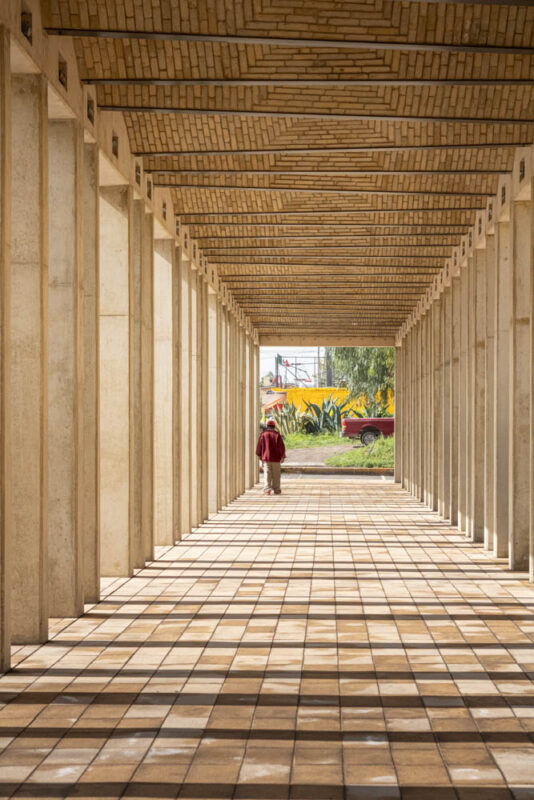
g3arquitectos, Anonimous | Town Hall and Central Garden, Tizayuca, Mexico, 2024. Image credit: Julio Caldera, camarada estudio
When do you consider a project complete?
Never entirely. A project continues to transform through use, time, maintenance, the appropriations of those who inhabit it, and the new relationships it generates.
Are there any projects coming up that you’re excited about, and what’s next for your practice as a whole?
After several years, we are both completing and starting several housing projects, which is very exciting for us. We are interested in rethinking the house and housing through new family, urban, economic, and environmental conditions.
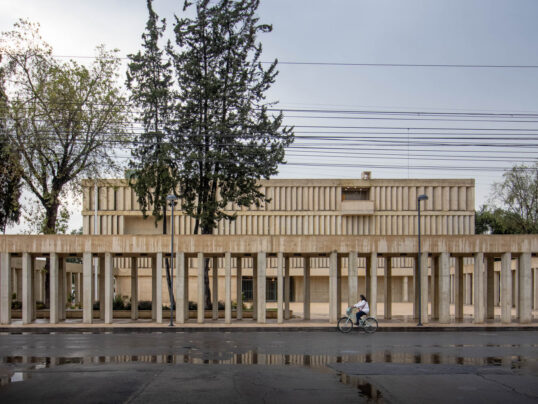
g3arquitectos, Anonimous | Town Hall and Central Garden, Tizayuca, Mexico, 2024. Image credit: Julio Caldera, camarada estudio
How did you meet your partner? How did you decide to practice together?
Armando, María, and Alfonso were classmates in architecture school. We worked on many projects together during university, which is a fairly normal part of the story. The funniest part is how we split up: after ten years of working together, Armando became a professional clown.
The office, g3arquitectos, continues, and Armando is now a very important comic actor in our city.
What’s one piece of advice you would give a young architect who wants to start their own firm?
Learn from the old ones; they have already traveled the road.
Can you name a person, book, film, or other source of inspiration?
Mom and Dad.
What did you last draw?
Sketches to help the mason understand what cannot be fully explained in the drawings.
What do you need to do your best work?
To believe in oneself, trust the team, and fight for one’s ideals.
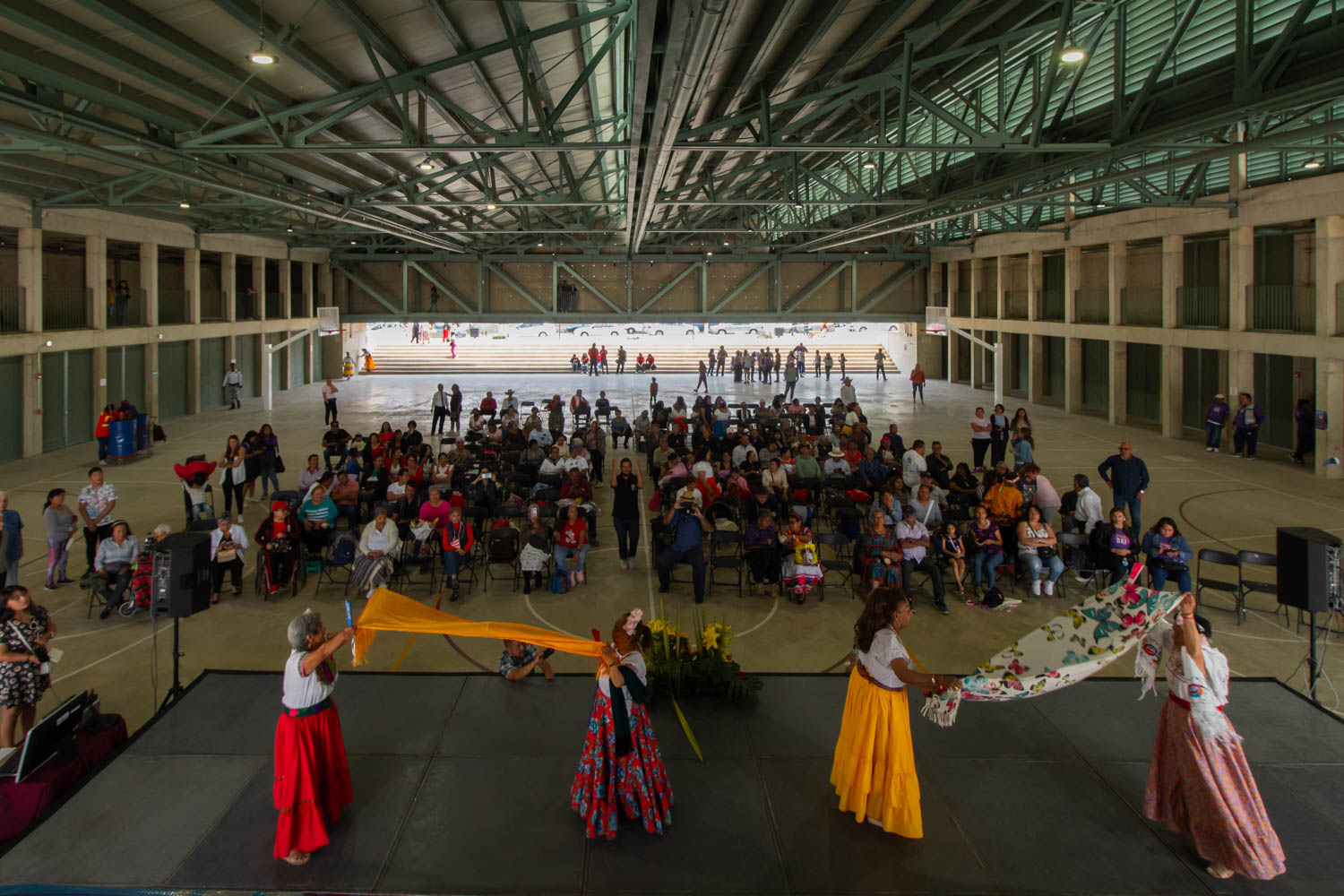
g3arquitectos, Anonimous | Centro de Desarrollo Comunitario de Tizayuca, interior, Tizayuca, Mexico, 2024. Image credit: Rafael Gamo, camarada estudio